
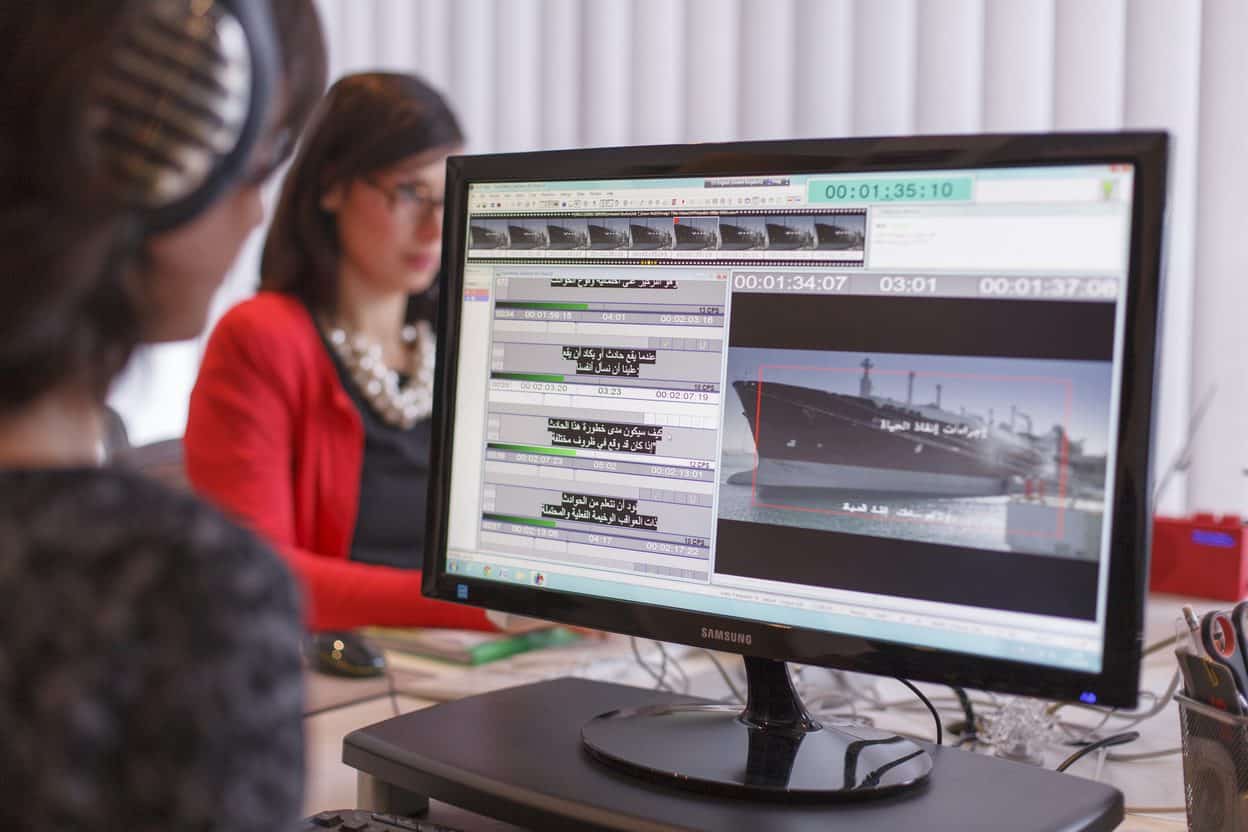
Subtitling · Traditional Chinese
Traditional Chinese subtitling services
Native Traditional Chinese subtitlers for corporate video, eLearning, documentary, broadcast and advertising, working to the glyph standard of the territory you release into. One strand of a complete Chinese offer covering transcripts, voice over scripts and translation of whatever else you hold.
About Traditional Chinese subtitling
Two prescribed lists of shapes, one set of code points
Traditional Chinese is standardised twice, by two authorities who do not agree in every detail. Taiwan's Ministry of Education promulgated its Chart of Standard Forms of Common National Characters in September 1982, fixing 4,808 characters. Hong Kong's Education Bureau issued its own List of Graphemes of Commonly-Used Chinese Characters in 1986, covering 4,762, revised four times since. Both describe the same script and prescribe some of its characters differently.
The consequence for a subtitle file is direct. Those divergent shapes sit at identical code points, so nothing in the text says which version a viewer will see — the font the player loads makes that call. It is why Source Han Sans, which shipped one combined traditional family built on the Taiwanese standard, split it into separate Taiwan and Hong Kong families in 2018.
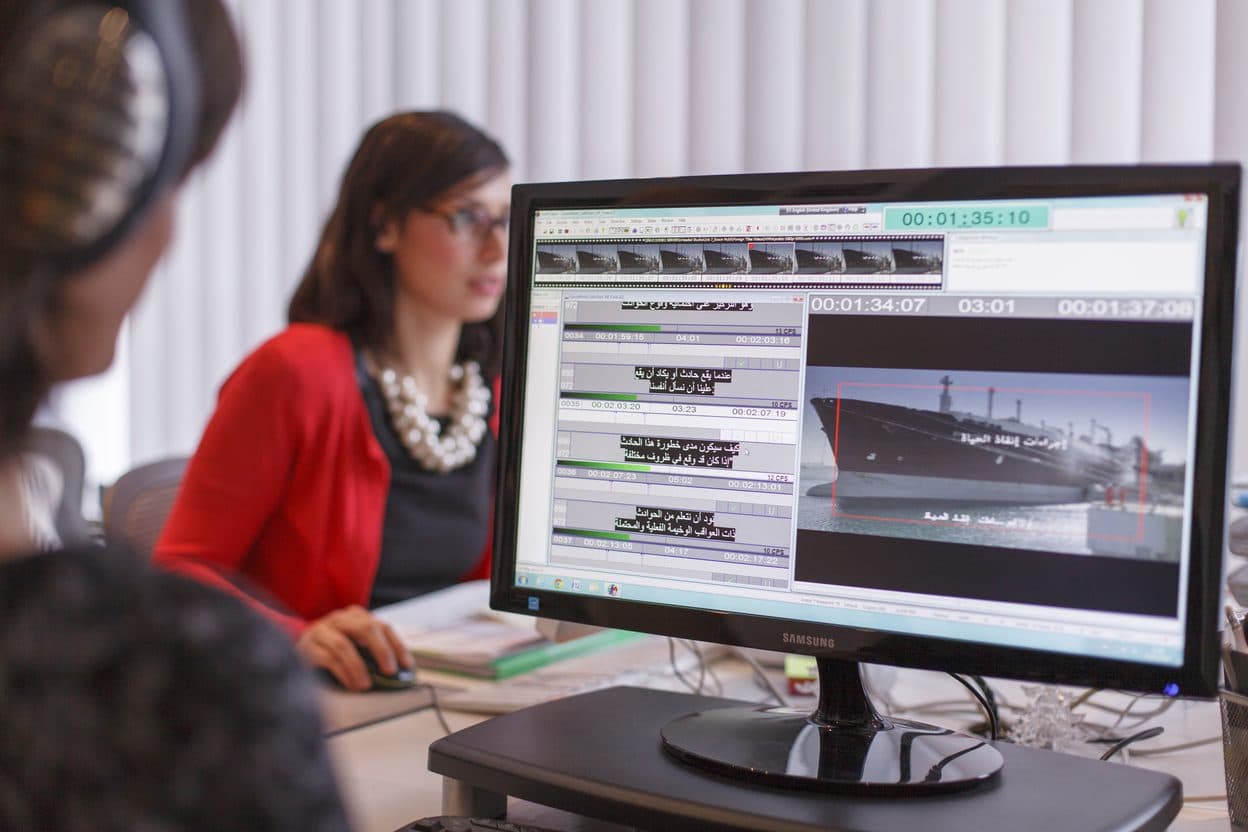
So the territory and the display font are questions we put at the brief rather than discover at QC. A native subtitler from the market you are releasing into writes the file, a second linguist reads it, and it is previewed in the font it will be shown in before anything is approved.

Which do you need?
Open captions, closed captions or SDH
Three different deliverables that people often ask for by the wrong name. Here is the short version.
Open captions
Burnt inSubtitles burnt permanently into the picture. Nobody can switch them off, which is exactly what you want for social feeds that autoplay muted — and in Traditional Chinese it renders the approved glyph forms into the image, beyond the reach of any player font.
- Always visible
- Approved glyph forms rendered in
- Delivered as a finished video file
Closed captions
SwitchableA separate file the viewer can turn on and off, and that can carry several languages at once. The standard for YouTube, Vimeo and the streaming platforms.
- Viewer controls them
- Multiple languages from one video
- Indexed by search engines
SDH
AccessibilitySubtitling for the deaf and hard of hearing: dialogue plus speaker IDs and the sound effects and music cues that carry meaning.
- Speaker identification
- Non-dialogue audio described
- Meets accessibility requirements
Subtitles or captions? The two terms are often used interchangeably. Strictly, subtitles translate the dialogue for viewers who can hear the audio, while captions are same-language and add speaker labels and sound cues for viewers who cannot. We produce either — translated Traditional Chinese subtitles or same-language Traditional Chinese captions and SDH — in whichever form your platform and audience require.
What we subtitle
Traditional Chinese subtitling for every kind of content
Traditional Chinese subtitling covers corporate rollouts, factual and streaming catalogues and campaign work across Taiwan and Hong Kong, and the territory decides both the wording and the shapes. These are the projects we handle most.
Corporate & training video
Internal comms, onboarding and product training subtitled for global teams and LMS delivery.
eLearning & online courses
Timed, readable subtitles for course platforms, MOOCs and instructional video.
Documentary & factual
Festival, broadcast and streaming documentaries, including interview clean-up and on-screen text.
Advertising & social
Burnt-in captions for muted autoplay on Instagram, TikTok, YouTube and paid social.
Streaming & OTT
Platform-spec subtitle and caption files for VOD, OTT and broadcast delivery.
Accessibility (SDH & closed captions)
Same-language SDH and closed captions to meet WCAG and accessibility requirements.
Events, webinars & conferences
Recorded talks, town halls and webinars captioned for on-demand viewing.
E-commerce & product video
Short product and explainer videos captioned to lift conversion and reach.
How can we help you?
Your project manager has everything covered
One point of contact from brief to delivery, and both a linguistic and a technical check on every file.
Brief review
We review your video, your audience and the player, including which territory the file serves and which glyph standard the destination font follows.
Template and translation
Where needed, we create an English subtitle template first, then send it to a native Traditional Chinese subtitler.
Timing and quality checks
Subtitles are timed against the video and checked for reading speed, line length, wording that belongs to the target territory, and format compliance.
Delivery and display check
Files delivered in the format you need, with the glyph forms previewed in the destination font rather than assumed.
Our standards
The specs we work to
Readable subtitles are a matter of measurable limits, not opinion. These are the defaults we apply to Traditional Chinese unless your style guide says otherwise.
Maximum per line
Same count in Taipei and Hong Kong
Maximum on screen
Held to one wherever it fits
Reading speed
Eleven on SDH, seven for children
Minimum duration
Seven seconds maximum
These limits are the same whichever territory you ship to. What the numbers do not tell you is which shapes will be drawn inside them, since the two standards prescribe different forms at identical code points and the player's font decides. Platform guides also ask that wording stay clear of regional dialect. Settle the territory and the display font at the brief and the line you approve is the line that appears.
Deliverables
Professional subtitle formats
We adapt your existing translations into subtitle format or create subtitles from scratch, in Traditional Chinese, English or any other language. And if the project needs a timed script or a plain document instead, we deliver that too.
Standard text-based
Compatible with most platforms and players.
Broadcast & professional
For broadcasters, post houses and streaming delivery specs.
Burnt-in video
A finished file with the subtitles baked into the picture, glyph forms included.
Need a different format? Convert SRT, VTT and more with our free subtitle converter →
| Where it's going | What we deliver |
|---|---|
| YouTube, Vimeo & LMS platforms | SRT or VTT closed captions |
| Netflix, Amazon & broadcast | IMSC, TTML or EBU-STL to platform spec |
| Instagram, TikTok & paid social | Burned-in captions in MP4 (open captions) |
| Premiere, Final Cut & DaVinci Resolve | SRT / VTT that import straight into your edit |
Not sure which you need? Tell us the destination platform and we deliver to its exact spec.
Traditional Chinese specifics
Hong Kong needs characters the rest of the script does not
Big5 never carried everything Hong Kong writes. Place names, surnames and the characters belonging to written Cantonese were simply absent, so in 1995 the government assembled a set for its own departmental correspondence, widened it for public use and renamed it the Hong Kong Supplementary Character Set in 1999. The version in force, HKSCS-2016, was published in May 2017 and holds 5,033 entries: 4,591 characters and 442 symbols.
Where those characters live matters for delivery. Until 2004 many sat in Unicode's Private Use Area, which meant they rendered only if you happened to have the right font; the remapping that followed moved a large share of them into the Supplementary Ideographic Plane, above U+FFFF. A font that draws ordinary traditional text perfectly well can still have nothing at those positions, which is exactly where a Hong Kong file falls over and a Taipei one does not.
That is why we ask which market the file serves before a word is written, and why the preview happens in the font the file will be shown in. A Taipei script and a Hong Kong script are two deliverables. So is a simplified one, which has a readership and a set of conventions of its own, covered on our Simplified Chinese subtitling page.
Since 2008
Subtitling & captioning
100+
Languages covered
ISO 9001 & 14001
Certified processes
24–48h
Typical turnaround
Subtitling rates
Professional Traditional Chinese subtitling
For single videos and straightforward content where accurate, well-timed subtitles are what you need.
- Subtitler from Taiwan or Hong Kong
- Glyph standard fixed at the brief
- Frame-accurate timing
For longer content and recurring projects, including transcription, SDH, burned-in subtitles and multiple output formats.
- Everything in Standard
- Transcription and template
- Separate zh-TW and zh-HK versions
- Multiple output formats
Every project is quoted individually and backed by our Price Match Promise. Send us your video for an exact, no-obligation quote.
Trusted by global brands
We have used GoLocalise on a regular basis for projects in a number of languages. The service we receive is great. The team is always friendly and professional. The voiceovers we receive are of a very high quality and the turnaround is extremely quick. We are very happy to recommend GoLocalise to other businesses.

It was a pleasure to work with David and the team at GoLocalise. David gave me lots of help and advice, guiding me through my first subtitling project. He really knows his stuff! The experience was completely pain-free. I would not hesitate to recommend GoLocalise – outstanding work at a good price.

They're reliable, adaptive and obsessed with quality. And while you can never be 100% guaranteed of perfection, you can be sure GoLocalise will go the extra mile to get it right every time. We've worked with them now for over 5 years and we are truly thankful to have such a strong localisation partner for our business.

Related services
The rest of your Traditional Chinese project
Taiwanese Mandarin voice over
Voice talent recorded in Taipei studios, cast and directed for broadcast.
Learn moreTraditional Chinese transcription
Your Chinese audio written out in the wording of the territory you release into.
Learn moreAll subtitling services
Our full subtitling and captioning offer across 100+ languages.
Learn moreSubtitling & captioning in more languages
Native subtitlers for corporate video, eLearning, streaming, documentary and advertising. Browse another language, or ask us about yours.
Most common questions
Will a single Traditional Chinese file work for both Taiwan and Hong Kong?
For a catalogue title it often will, because platform style asks for wording that keeps clear of regional dialect so that one version travels. What a shared file cannot settle is the shapes: Taiwan and Hong Kong prescribe different forms for some characters, and the font decides which appear. Tell us the territory and we will say whether one version covers you or two are warranted.
Why do the same characters look different depending on where the video plays?
Because the standards diverge while the code points do not. Taiwan follows its Ministry of Education chart of 4,808 standard forms from 1982; Hong Kong follows the Education Bureau list of 4,762 graphemes. Where the two draw a character differently, the file is identical and the rendering is not. Source Han Sans split its Taiwan and Hong Kong families in 2018 for precisely this reason.
What is HKSCS, and does our Hong Kong file need it?
It is the supplementary set the Hong Kong government built because Big5 lacked characters used locally, including those of written Cantonese. HKSCS-2016 holds 5,033 entries. You need it whenever the script reaches for one of those characters, and since many now sit above U+FFFF in the Supplementary Ideographic Plane, the destination font has to cover that range too.
Can you simply convert a Simplified Chinese file into Traditional?
Swapping the characters is the mechanical part and it is not the job. The wording differs between readerships, and once converted the file still has to choose between the Taiwanese and Hong Kong shapes for anything the two standards draw differently. We treat it as a rewrite by a subtitler from the target market, then preview it in the delivery font.
How is Traditional Chinese subtitling priced?
Rates open at £20 for each minute of running time. One pan-regional file is quoted once; two territory versions are quoted as two, because the second is rewritten rather than copied. Programme length, whether a transcript is needed first, an SDH pass, a burnt-in master and the number of delivery formats all move the figure. Every job is itemised under our Price Match Promise.
Our audio is already in Chinese. Can you caption it without translating?
Regularly. Same-language captions and SDH in Traditional Chinese are what accessibility teams specify and what earns attention from someone scrolling with the sound off. The territory question still applies: a Cantonese interview captioned for Hong Kong and a Mandarin one captioned for Taiwan are different deliverables, in wording and in the shapes the font has to draw.
We already hold a subtitle file. Can you build on it?
Send it over. We time and spot against your picture from what exists, rewrite any line that reads as though it came from the other territory, and re-break anything running past the line limit. We also check it against the glyph standard you are delivering to, since a file cut for one market can carry forms the other does not prescribe.
Which editing software are your subtitle files compatible with?
All the common ones. Our SRT, VTT, STL and TTML files carry the traditional characters intact into Premiere Pro, Final Cut Pro, DaVinci Resolve and the major online editors, and we confirm each renders before delivery — including any HKSCS characters that sit outside the basic plane. Where a team would rather not depend on a player font, a burnt-in MP4 or MOV settles it.
Ready to subtitle your video in Traditional Chinese?
Send us your video and we'll come back with an exact, itemised quote.
Worth reading before you brief
Subtitling
English Subtitles and Differences In Spoken and Written Language
Written language and spoken language differ in several ways which affect English subtitles. Subtitles are audiovisual translation mediums that are becoming increasingly popular.
Read the guide →Subtitling
How to Add Captions to a Video: TikTok, IG and YouTube
We add captions in social networks mainly to allow people with hearing disabilities to access our content. Additionally, nowadays, young viewers find captions very useful.
Read the guide →Voice Over
Pashto Voice Over: Complete Guide to Best Practices
Pashto is an Indo-European language spoken primarily in Afghanistan and Pakistan, with an estimated 60 million speakers worldwide. As one of the official languages of Afghanistan, Pashto plays a critical role in the country's politics, culture, and daily life.
Read the guide →Professional voice over services for your audio and video productions
Voice over

- State-of-the-art studios
- Neumann microphones
- On-hand sound engineers
- 1,000+ voice actors
Translation

- 100+ languages covered
- Tailored to your needs
- Stringent quality control
- Dedicated project managers
Subtitling

- Experienced subtitlers
- Industry-standard software
- Burn-in and graphic editing
- Open and closed captions
Transcription

- Improve accessibility
- Reach a wider audience
- Boost SEO and video views
- Maximise video engagement