
Subtitling · Igbo
Igbo subtitling services
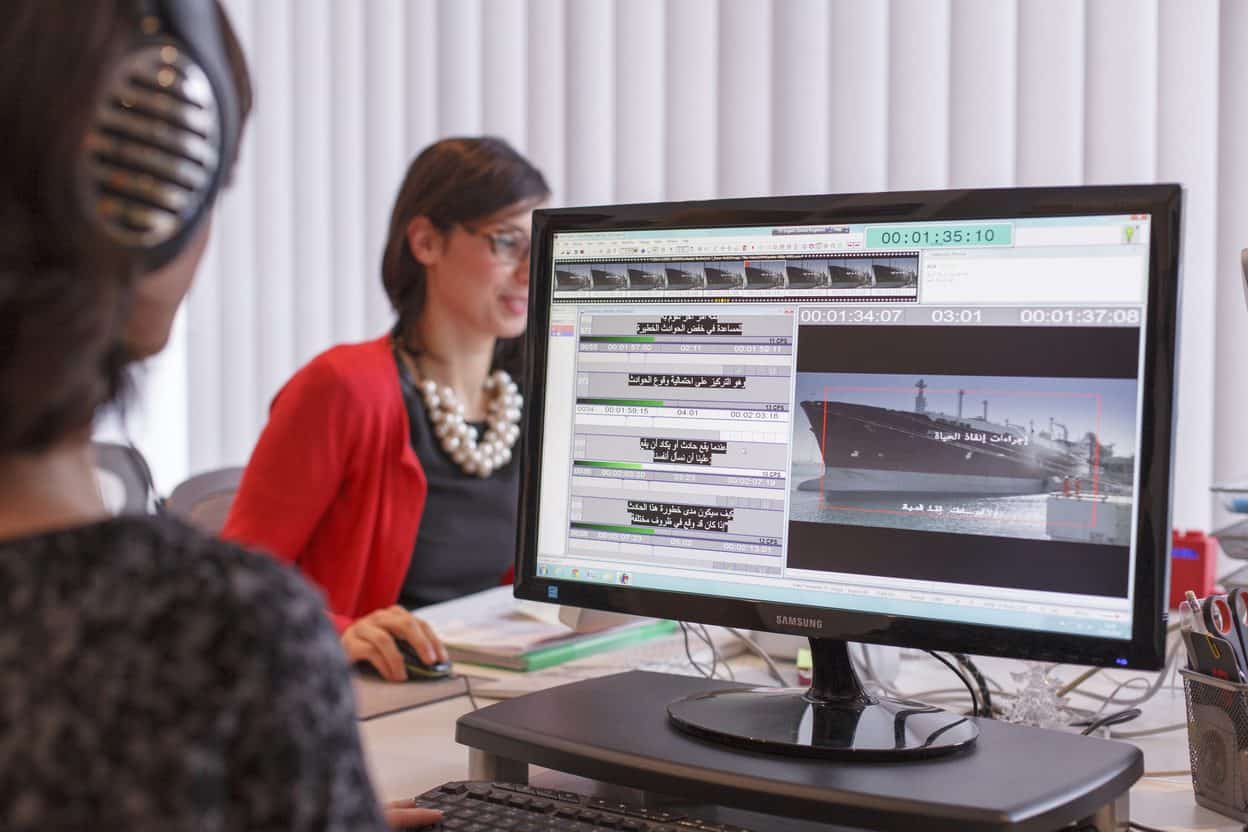
Corporate video, eLearning, documentary, broadcast and advertising, subtitled by native Igbo linguists. The dotted vowels arrive intact and every cue is read for the ambiguity Igbo spelling leaves open. Igbo subtitles, voice over scripts and translation all sit inside one project.
About Igbo subtitling
The marks Igbo writes, and the one it leaves to the listener
Igbo writes three of its vowels with a dot below, ị, ọ and ụ, and those are ordinary letters rather than decorated ones. Put a plain i, o or u in their place and the word is misspelled. What the Ọnwụ orthography does not write is tone, and Igbo tone is phonemic: the single spelling akwa covers cry, egg, cloth and bed, and the page gives no clue at all which one is meant.
That combination makes an Igbo file quietly deceptive. The dots are visible, so the text looks fully marked, nothing renders as a box, and the distinction that is genuinely absent leaves no trace on screen. A reader of prose recovers the word from the paragraph around it. A viewer has one cue, and if that cue does not settle which *akwa* is meant, nothing further down the file will.
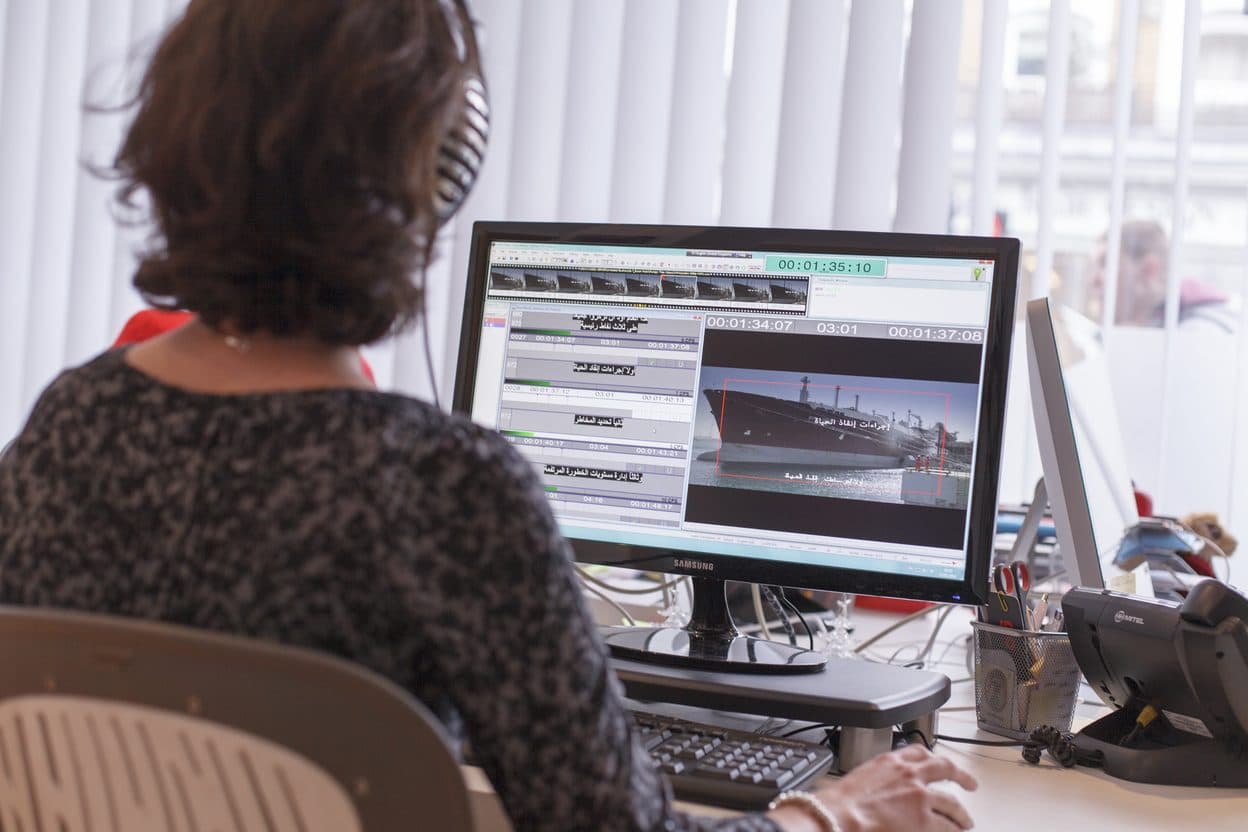
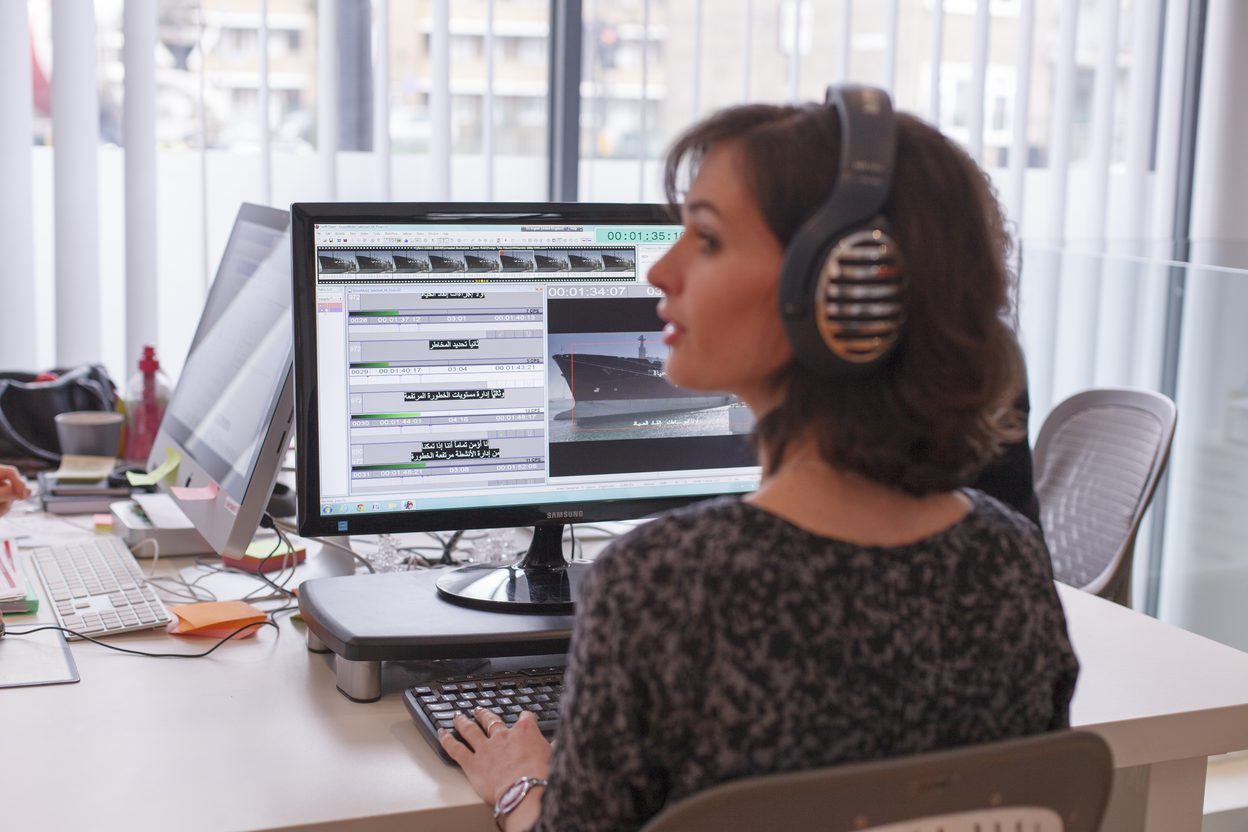
At GoLocalise, we work with native Igbo subtitlers who choose wording that only reads one way, working from audio where the tone is audible rather than from a script where it is not. The dotted vowels then get the same treatment as any other letter: confirmed in the font your file will actually play in.
Which do you need?
Open captions, closed captions or SDH
Three different deliverables that people often ask for by the wrong name. Here is the short version.
Open captions
Burnt inSubtitles burnt permanently into the picture. Nobody can switch them off, which is exactly what you want for social feeds that autoplay muted — and in Igbo it fixes the dotted vowels in the picture, so no player font gets a say in them.
- Always visible
- Dotted vowels fixed in the picture
- Delivered as a finished video file
Closed captions
SwitchableA separate file the viewer can turn on and off, and that can carry several languages at once. The standard for YouTube, Vimeo and the streaming platforms.
- Viewer controls them
- Multiple languages from one video
- Indexed by search engines
SDH
AccessibilitySubtitling for the deaf and hard of hearing: dialogue plus speaker IDs and the sound effects and music cues that carry meaning.
- Speaker identification
- Non-dialogue audio described
- Meets accessibility requirements
Subtitles or captions? The two terms are often used interchangeably. Strictly, subtitles translate the dialogue for viewers who can hear the audio, while captions are same-language and add speaker labels and sound cues for viewers who cannot. We produce either — translated Igbo subtitles or same-language Igbo captions and SDH — in whichever form your platform and audience require.
What we subtitle
Igbo subtitling for every kind of content
Igbo subtitling covers broadcast and film drama, public health and development communication, and corporate video aimed at south-eastern Nigeria, for an audience that reads published Igbo and notices when a cue does not settle.
Corporate & training video
Internal comms, onboarding and product training subtitled for global teams and LMS delivery.
eLearning & online courses
Timed, readable subtitles for course platforms, MOOCs and instructional video.
Documentary & factual
Festival, broadcast and streaming documentaries, including interview clean-up and on-screen text.
Advertising & social
Burnt-in captions for muted autoplay on Instagram, TikTok, YouTube and paid social.
Streaming & OTT
Platform-spec subtitle and caption files for VOD, OTT and broadcast delivery.
Accessibility (SDH & closed captions)
Same-language SDH and closed captions to meet WCAG and accessibility requirements.
Events, webinars & conferences
Recorded talks, town halls and webinars captioned for on-demand viewing.
E-commerce & product video
Short product and explainer videos captioned to lift conversion and reach.
How can we help you?
Your project manager has everything covered
One point of contact from brief to delivery, and both a linguistic and a technical check on every file.
Brief review
We review your video, your audience and the player, including whether its font carries ị, ọ and ụ or quietly falls back to plain vowels.
Template and translation
Where needed, we create an English subtitle template first, then send it to a native Igbo subtitler.
Timing and quality checks
Subtitles are timed against the video and checked for reading speed, line length, the dotted vowels, and any cue that could be taken as two different Igbo words.
Delivery and display check
Files delivered in the format you need, with the dots confirmed on the destination player and each cue reading one way only.
Our standards
The specs we work to
Readable subtitles are a matter of measurable limits, not opinion. These are the defaults we apply to Igbo unless your style guide says otherwise.
Maximum per line
A dotted vowel counts as one
Maximum on screen
Bottom-weighted, split at the clause
Reading speed
Eased where a cue reads two ways
Minimum duration
Up to seven at the top end
Netflix publishes timed-text guides for more than fifty languages and Igbo is not one of them, so these four figures are ours rather than anyone else's. The Ọnwụ alphabet is Latin and its letters take Latin width, so the character and reading-speed limits carry over untouched. The figure we do move is duration: where a cue could honestly be taken two ways, the viewer gets longer on it.
Deliverables
Professional subtitle formats
We adapt your existing translations into subtitle format or create subtitles from scratch, in Igbo, English or any other language. And if the project needs a timed script or a plain document instead, we deliver that too.
Standard text-based
Compatible with most platforms and players.
Broadcast & professional
For broadcasters, post houses and streaming delivery specs.
Burnt-in video
A finished file with the subtitles baked into the picture, dotted vowels included.
Need a different format? Convert SRT, VTT and more with our free subtitle converter →
| Where it's going | What we deliver |
|---|---|
| YouTube, Vimeo & LMS platforms | SRT or VTT closed captions |
| Netflix, Amazon & broadcast | IMSC, TTML or EBU-STL to platform spec |
| Instagram, TikTok & paid social | Burned-in captions in MP4 (open captions) |
| Premiere, Final Cut & DaVinci Resolve | SRT / VTT that import straight into your edit |
Not sure which you need? Tell us the destination platform and we deliver to its exact spec.
Igbo specifics
Who reads Igbo, and what a stripped file has really lost
Around 34 million people speak Igbo as a first language, almost all of them in south-eastern Nigeria, where it is one of three languages holding national status alongside Hausa and Yoruba. The work that reaches us is mostly broadcast and film drama, public health and development communication, and corporate video for organisations operating across the south-east. Very little of it is casual writing, and all of it is held to published standards.
Igbo text typed without the dots is common, and unlike the missing tone it is a real error. Most keyboards ship no Igbo layout, so ị, ọ and ụ come out as i, o and u somewhere between the writer and us. Putting them back is a reading job rather than a replacement job: which vowel belongs there follows from the word, so a native subtitler does it against the audio.
Tone marks for Igbo do exist, acute for high and grave for low, but they live in dictionaries and language teaching rather than in published prose or broadcast subtitles. Setting them into a caption file would make it look like a textbook to the audience it is aimed at. So the ambiguity is not a defect to be repaired in the file at all. It is settled upstream, in the choice of words.
Since 2008
Subtitling & captioning
100+
Languages covered
ISO 9001 & 14001
Certified processes
24–48h
Typical turnaround
Subtitling rates
Professional Igbo subtitling
For single videos and straightforward content where accurate, well-timed subtitles are what you need.
- Native Igbo subtitler
- Dotted vowels confirmed
- Frame-accurate timing
For longer content and recurring projects, including transcription, SDH, burned-in subtitles and multiple output formats.
- Everything in Standard
- Transcription and template
- SDH and burnt-in
- Multiple output formats
Every project is quoted individually and backed by our Price Match Promise. Send us your video for an exact, no-obligation quote.
Not sure what your Igbo subtitles will cost?
Send us the video — or just its running time — and we come back with an itemised quote: running time, languages and output formats priced line by line, with nothing hidden. No obligation, and if you find a like-for-like price lower, we will match it.
- Free, itemised quote
- No obligation
- Price Match Promise
Trusted by global brands
We have used GoLocalise on a regular basis for projects in a number of languages. The service we receive is great. The team is always friendly and professional. The voiceovers we receive are of a very high quality and the turnaround is extremely quick. We are very happy to recommend GoLocalise to other businesses.
It was a pleasure to work with David and the team at GoLocalise. David gave me lots of help and advice, guiding me through my first subtitling project. He really knows his stuff! The experience was completely pain-free. I would not hesitate to recommend GoLocalise – outstanding work at a good price.
They're reliable, adaptive and obsessed with quality. And while you can never be 100% guaranteed of perfection, you can be sure GoLocalise will go the extra mile to get it right every time. We've worked with them now for over 5 years and we are truly thankful to have such a strong localisation partner for our business.
Related services
The rest of your Igbo project
Subtitling & captioning in more languages
Native subtitlers for corporate video, eLearning, streaming, documentary and advertising. Browse another language, or ask us about yours.
Subtitling we have delivered
Real projects, real deadlines, and the files that went live.
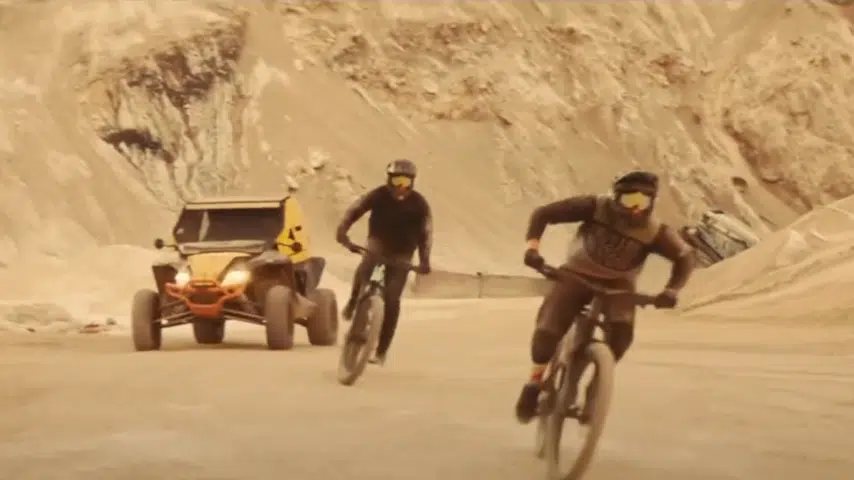
Subtitling · European French
Return of the Goat II
Elevating cycling narratives with multilingual subtitling.
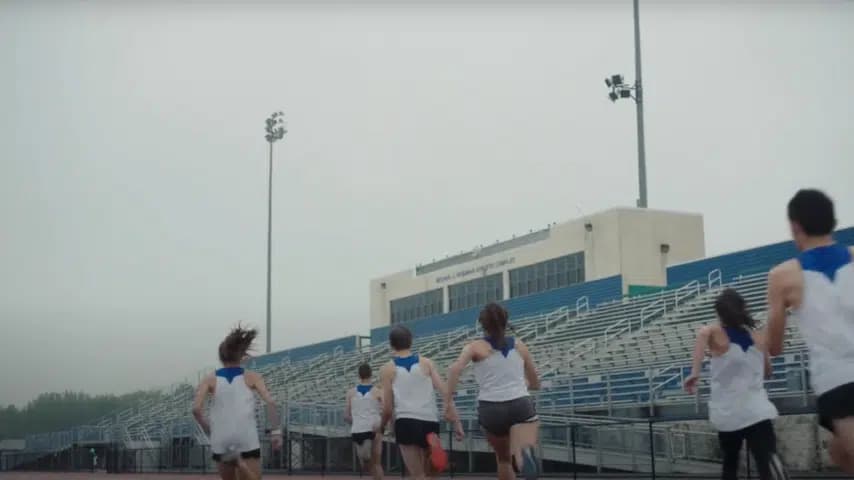
Subtitling · Indonesian
Pathways: Hope After Suicide Loss
Bridging cultures through subtitling: a journey of hope.
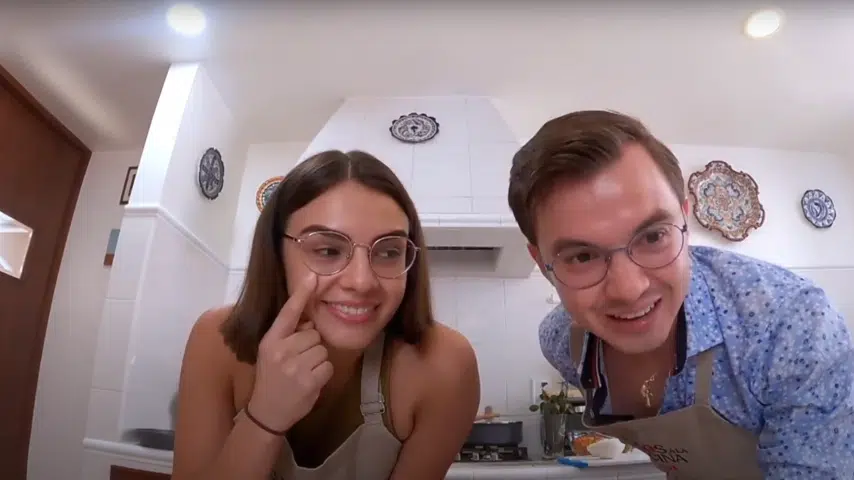
Subtitling · English
‘Todos a la Cocina’ Cooking Show
Enhancing global reach through expert subtitling.
Most common questions
Why do Igbo subtitles carry no tone marks?
Because standard written Igbo does not use them. The Ọnwụ orthography marks the dotted vowels ị, ọ and ụ but leaves tone off the page entirely, and tone-marked Igbo belongs to dictionaries and teaching material rather than to published text or broadcast captions. Adding the marks would make your file read as a language course to the audience watching it. We settle the ambiguity in the wording instead.
If tone is not written, how do you keep the meaning clear on screen?
By writing each cue so it only reads one way. A spelling such as akwa covers several unrelated words, and prose lets a reader work backwards from what surrounds it, which a subtitle does not. Our subtitlers work from the Igbo audio, where the tone is plainly audible, and where the obvious phrasing would be ambiguous on its own they pick a wording that is not. That is most of the craft in an Igbo file.
Our Igbo text has plain i, o and u instead of ị, ọ and ụ. Can you fix it?
Yes, and it comes up constantly, because very few keyboards offer an Igbo layout and the dots get dropped at typing. Restoring them is not something you can automate: whether a vowel takes a dot depends on which word it belongs to, and a wrong guess produces something an Igbo reader stops on. A native subtitler reads the file against the audio and corrects it as part of the job.
Will ị, ọ and ụ display correctly on our platform?
Usually, and we confirm it rather than assume it. All three have single Unicode code points, U+1ECB, U+1ECD and U+1EE5, in a block plenty of display fonts leave out. So there are two failures worth watching for: an empty box where the letter should be, and the quieter one, where something in the chain strips the dot and leaves a plain vowel that still looks like a word. Tell us where the file is going and we will check it there.
What does Igbo subtitling cost per minute?
Igbo subtitling is priced by the minute of finished video, from £20, and the Igbo-specific part of the work is inside that rate rather than billed on top. What moves the figure is running time, whether we transcribe before translating, whether you want SDH or a burned-in version, and how many output formats leave with the job. Every project gets its own quote, with the Price Match Promise behind it.
Do you caption Igbo footage in Igbo, or only translate into it?
Both, and they are two different jobs. Translating an English video into Igbo subtitles is one; same-language Igbo captions and SDH for footage that is already in Igbo is another. Captioning Igbo audio is where the tonal question is easiest to settle, because the subtitler is listening to the speaker rather than reading someone else's script, and can hear which word was said before deciding how to write it.
We have an Igbo transcript already. Will you work from it?
Yes, send it over. We spot and time against your transcript or SRT, and the first pass looks at two things: whether the dotted vowels survived whatever saved the file last, and whether any cue can be read as a word other than the one intended. If there is no transcript we start from the Igbo audio. Either route, the file gets the same linguistic and technical QA before it comes back to you.
Do your Igbo subtitle files open in our editing software?
They do. Igbo SRT, VTT, STL and TTML import into Premiere Pro, Final Cut Pro, DaVinci Resolve and the browser-based editors with ị, ọ and ụ intact. The thing to watch is a tool or a CMS that normalises text on the way in and flattens them without saying so, which is why we re-check after any conversion in your chain. If you would rather take the font out of the question altogether, we deliver a burned-in MP4 or MOV.
Ready to subtitle your video in Igbo?
Send us your video and we'll come back with an exact, itemised quote.
Worth reading before you brief
Translation
Unlock Global Audiences with Video Translation
Video translation refers to the process of converting the audio, captions, and/or subtitles of a video from one language to another. With the increasing globalization of businesses, organizations, and individuals, the importance of translate video has grown exponentially.
Read the guide →Subtitling
What is closed captioning? Difference from subtitles
An explanation of closed captioning and how it differs from subtitles, open captions, and SDH.
Read the guide →Translation
How much does it cost to translate a video? Video translation rates in 2026
What drives the cost of translating a video — length, word count, subtitling vs voice-over — with typical per-word, per-minute and per-day rates.
Read the guide →Professional voice over services for your audio and video productions
Voice over

- State-of-the-art studios
- Neumann microphones
- On-hand sound engineers
- 1,000+ voice actors
Translation

- 100+ languages covered
- Tailored to your needs
- Stringent quality control
- Dedicated project managers
Subtitling

- Experienced subtitlers
- Industry-standard software
- Burn-in and graphic editing
- Open and closed captions
Transcription

- Improve accessibility
- Reach a wider audience
- Boost SEO and video views
- Maximise video engagement