
Translation · Chinese (Traditional)
Chinese (Traditional) translation services
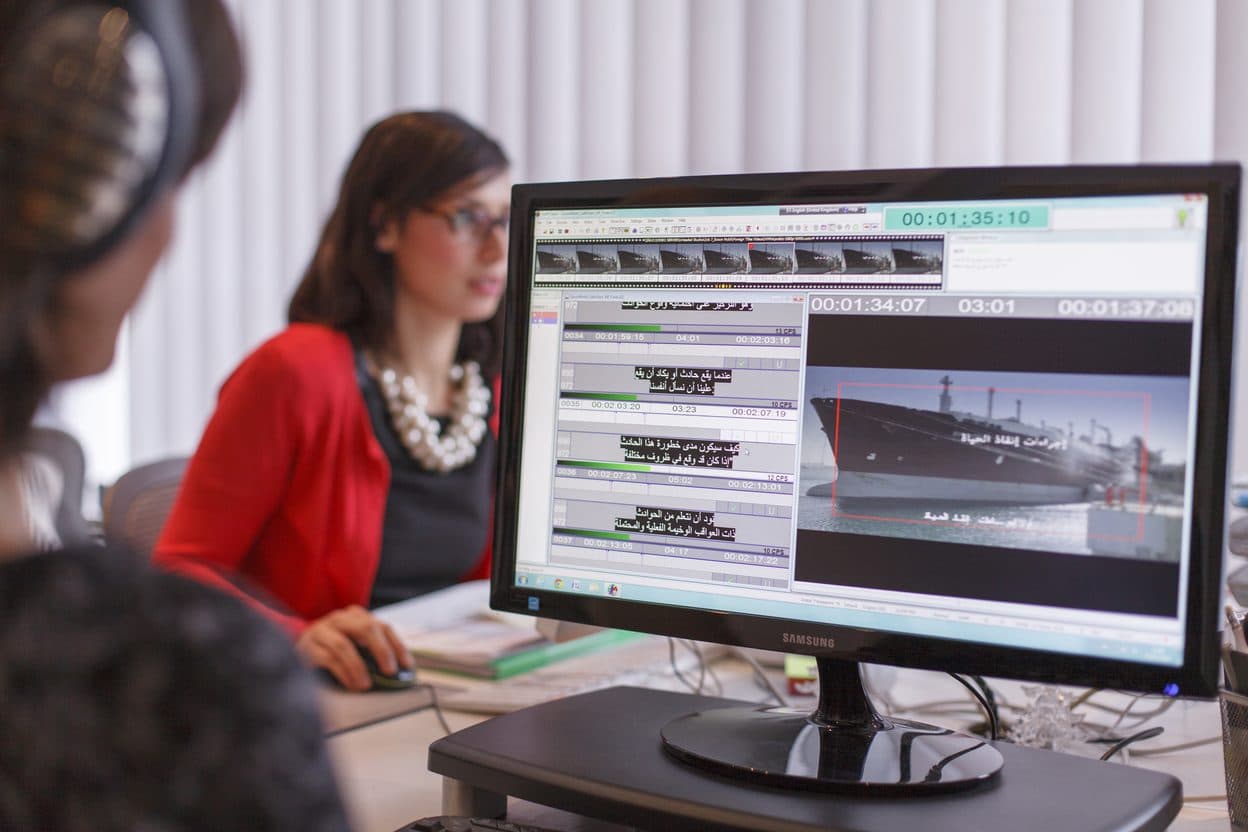
Audiovisual translation is our specialisation, but our native Taiwanese and Hong Kong translators also handle any text — corporate documents, technical and marketing material, articles and eLearning. Traditional is two markets, and we ask which one before we start.
EN · 00:04
The software is ready to download.
ZH-TW · 00:04
軟體已開放下載。
About Chinese (Traditional) translation
«Traditional Chinese» is not a destination — it is two
Taiwan and Hong Kong both write in traditional characters, and a translation made for one does not simply serve the other. The vocabulary diverges, and so does what sits underneath it: Taiwan speaks Mandarin, Hong Kong speaks Cantonese, which more than 88% of its population uses at home. Send Taiwan-localised copy to a Hong Kong audience and, as the industry puts it, some terms will feel off.
So the first question is never «traditional or simplified». It is which market — because that is what decides the words, and the script follows from it rather than the other way round.
The second thing worth knowing is that converting from simplified does not get you here. Simplification merged distinct characters into one, so going back means choosing: 干 has to become 干, 乾 or 幹 depending on whether the sentence means shield, dry or do. A converter guesses. At GoLocalise we translate from your source instead, and every text is reviewed by a second native linguist before delivery.
Which Chinese do you actually need?
Nobody briefs a project in «traditional» or «simplified» — they brief a market. This is what each one means, and the two questions it answers are separate: who speaks it, and how it is written.
| Target market | Spoken language | Writing system |
|---|---|---|
| Mainland China | Mandarin | Simplified |
| Singapore | Mandarin | Simplified |
| Taiwan | Mandarin Taiwan | Traditional |
| Hong Kong | Cantonese | Traditional |
| Macau | Cantonese | Traditional |
The two columns move independently: the same spoken Cantonese is written in traditional characters for Hong Kong and in simplified for Guangdong.
It works in both directions
A video in Cantonese or Taiwanese Mandarin that you want subtitled into English gets you an English subtitle file, worked from a Chinese source.
A video in English that you want subtitled for Taiwan, Hong Kong or mainland China gets you a Chinese subtitle file, worked from an English source.
Same table, read from either end.
You do not have to settle any of this before getting in touch — tell us what you have and what you need it for, and we will tell you which pair that means. There is more on how it plays out across a whole project in our English to Chinese Audio and Video Translation Guide.
How can we help you?
Your project manager has everything covered
One point of contact from brief to delivery, and a second linguist on every text before it reaches you.
Brief review
We review your source material and your audience, and agree up front the decisions this language forces before anyone starts translating.
Market confirmed, then linguist assigned
Taiwan or Hong Kong is settled first, because it decides the vocabulary. Then your project goes to a native translator from that market with experience in the relevant field.
Translation and review
The text is translated and then checked by a second native linguist for accuracy, consistency, and register.
Delivery and consistency check
Files are delivered in the format you need, with the choices agreed at the brief applied consistently from the first line to the last.
Regional varieties
Taiwan, Hong Kong and Macau
Taiwan writes traditional Chinese over Mandarin, and its technical and everyday vocabulary has gone its own way — «software» is 軟體 there, and neither the mainland nor Hong Kong writes it that way.
Hong Kong and Macau also write traditional, but over Cantonese. Standard Written Chinese follows Mandarin grammar, so a Hong Kong text is already a translation of sorts from the language its readers speak — and Cantonese-specific vocabulary and characters surface in anything written to sound local. Mainland China and Singapore use Simplified Chinese instead: a separate service, not this one with the characters swapped.
Areas of expertise
What we specialise in
From corporate video and eLearning to documentary, advertising and subtitles — always audiovisual, with the terminology of your market confirmed by a native translator, never carried over from the other one.
Corporate and brand video
Company films and internal communications, written to fit the shot rather than overflow it.
eLearning and training video
Course modules and training films, with terminology kept consistent across the programme.
Documentary and interviews
Factual programming and interviews, where the register shifts between speakers and has to survive the move.
Advertising and social video
Campaigns and short-form video, cut to land inside the time available.
Subtitles and captions
Frame-accurate subtitles kept within a comfortable reading speed.
Voice over and dubbing scripts
Scripts timed to the original, ready for a native voice in the booth.
Built for video and audio
Getting Traditional Chinese right on screen
Traditional Chinese raises a question English scripts never surface: which of the two traditional-script markets is this for, and who speaks what underneath it.
Taiwan and Hong Kong are not interchangeable
Both write traditional characters, but the vocabulary differs and so does the spoken language behind it — Mandarin in Taiwan, Cantonese in Hong Kong. Copy localised for one reads slightly foreign in the other, which is exactly the effect you were paying to avoid.
Conversion from simplified has to guess
Simplification merged distinct characters into one, so the return trip is ambiguous: 干 becomes 干, 乾 or 幹 depending on the sentence. An automatic converter picks one and moves on, in text your audience will read closely.
Even the character shapes are prescribed differently
Taiwan and Hong Kong each publish their own standard forms for the same code points, which is why type families ship separate TW and HK variants. It is a rendering question rather than a wording one, and our subtitling team handles it — but it tells you how far apart the two markets sit.
Timed, not dumped
We deliver spotted subtitle files and two-column voice-over scripts timed to the original — never a loose document that still needs spotting.
Deliverables
How your Chinese (Traditional) translation arrives
Subtitle files
SRT, VTT, STL or TTML, burnt in or as separate files, ready to drop into your edit.
Written for your market, not converted
Every term is chosen for Taiwan or Hong Kong usage from the source text, not carried over from a mainland script.
Dual-column scripts
Source and target side by side with timecodes, the format the studio records from.
Reviewed, never single-pass
Every script is checked by a second native linguist before it reaches the studio.
Translation rates
Professional Chinese (Traditional) translation
For internal documents, correspondence and material where accuracy is the main requirement.
- Native subject-matter translator
- Second-linguist review
- Subtitle files or a timed script
For marketing, eLearning and technical content, with review, terminology management and layout adjustment.
- Everything in Standard
- Terminology management
- Layout and expansion handled
- Dedicated project manager
Every project is quoted individually and backed by our Price Match Promise. Send us your files for an exact, no-obligation quote.
Trusted by global brands
We have used GoLocalise on a regular basis for projects in a number of languages. The service we receive is great. The team is always friendly and professional. The voiceovers we receive are of a very high quality and the turnaround is extremely quick. We are very happy to recommend GoLocalise to other businesses.

It was a pleasure to work with David and the team at GoLocalise. David gave me lots of help and advice, guiding me through my first subtitling project. He really knows his stuff! The experience was completely pain-free. I would not hesitate to recommend GoLocalise – outstanding work at a good price.

They're reliable, adaptive and obsessed with quality. And while you can never be 100% guaranteed of perfection, you can be sure GoLocalise will go the extra mile to get it right every time. We've worked with them now for over 5 years and we are truly thankful to have such a strong localisation partner for our business.

Related services
The rest of your Chinese (Traditional) project
Taiwanese Mandarin voice over
Native Taiwanese Mandarin voice actors, recorded in broadcast-quality studios.
Learn moreCantonese voice over
For Hong Kong, where the spoken language is Cantonese rather than Mandarin.
Learn moreChinese (Traditional) subtitling
Frame-accurate subtitles in traditional characters, burnt in or as separate files.
Learn moreAll translation services
Our full audiovisual translation offer across 100+ languages.
Learn moreAudiovisual translation in 100+ languages
Native translators for subtitles, voice over and any content. Browse another language, or ask us about yours.
Most common questions
How much does Chinese (Traditional) translation cost?
Chinese (Traditional) translation is priced per word for text and per minute for audiovisual, depending on volume, subject matter and turnaround, with market-specific terminology research included rather than billed separately. Send your files and we'll come back with a free, itemised quote, backed by our Price Match Promise.
Is Traditional Chinese the same for Taiwan and Hong Kong?
No, and this is the decision worth getting right first. Both write traditional characters, but everyday and technical vocabulary differs, and underneath them the spoken languages differ too: Mandarin in Taiwan, Cantonese in Hong Kong, where more than 88% of people speak it at home. Copy localised for one market does not automatically read naturally in the other — some terms simply feel off. We confirm the market at the brief and assign a translator from it.
Can't you just convert our Simplified Chinese script to Traditional?
Not reliably, and this direction is the harder one. Simplification merged several distinct traditional characters into a single simplified character, so converting back means choosing between them: 干 has to become 干, 乾 or 幹 depending on whether the sentence means shield, dry or do, and 后 has to become 后 or 後. An automatic converter has to guess from context and will sometimes guess wrong. We translate from your source text instead.
Are your Chinese (Traditional) translations done by native linguists?
Yes. Native Taiwanese or Hong Kong linguists translate directly into traditional Chinese from your source material, and a second native linguist from the same market independently reviews every text, confirming that terminology and register match that audience rather than reading like a converted mainland original.
Which market should I choose if my video is going to both Taiwan and Hong Kong?
Tell us and we will be straight with you about the trade-off. For most marketing and brand work the two are worth doing separately, because the vocabulary differences are exactly where a reader notices that copy was not written for them. For internal, technical or reference material one version often serves both, and we will flag the handful of terms where the markets diverge so you can decide.
Do you provide Chinese (Traditional) subtitling and voice over as well?
Yes — translation, subtitling and voice over all come from one team, working to a single glossary throughout. For voice over the market matters even more, because Taiwan records in Mandarin and Hong Kong in Cantonese: they are different actors, not different accents.
Do you deliver Chinese (Traditional) subtitles and voice-over scripts, not just documents?
Yes — audiovisual is our specialisation. We deliver spotted SRT/VTT and timed two-column voice-over scripts, plus translated text when you need it.
What about Macau?
Macau writes traditional characters and speaks Cantonese, so it is served by the same work as Hong Kong in almost every case. Where a project is specifically for Macau we will say so at the brief rather than assume it.
How quickly can a Chinese (Traditional) translation project be delivered?
Most short documents are delivered within 24 to 48 hours. Word count, subject complexity and turnaround all move the date, and your project manager will confirm the timeline at the start.
What do you need from us to quote Chinese (Traditional) translation?
Less than people expect: the document, script or subtitle file, its word count, what the text is actually for, and the date you need it by. A draft is fine — we would rather quote on what exists than wait for a final version that eats your deadline. A named project manager comes back with an itemised quote, normally within four working hours.
How quickly will we hear back, and who will we be dealing with?
More than half of enquiries get a reply within thirty minutes during office hours (Monday to Friday, 9am to 6pm UK time), and the itemised quote normally follows within four working hours. After that you have one dedicated project manager who owns the job from brief to final file — not a ticket queue, and not a different name on every email. If it is easier, call +44 207 095 5730 and ask for them by name.
We are still pitching and the budget is not signed off. Can we still get a Chinese (Traditional) quote?
Yes, and it is one of the commonest reasons people get in touch. Tell us it is for a pitch and you get a figure you can put in front of your own client, itemised so it stands up to being picked apart, with no obligation and no follow-up sales calls if the pitch goes elsewhere. If it lands, the quote still holds and we already know the project.
Ready to start your Chinese (Traditional) translation project?
Tell us whether it is for Taiwan or Hong Kong, send the files, and we'll come back with an exact, itemised quote.
Professional voice over services for your audio and video productions
Voice over

- State-of-the-art studios
- Neumann microphones
- On-hand sound engineers
- 1,000+ voice actors
Translation

- 100+ languages covered
- Tailored to your needs
- Stringent quality control
- Dedicated project managers
Subtitling

- Experienced subtitlers
- Industry-standard software
- Burn-in and graphic editing
- Open and closed captions
Transcription

- Improve accessibility
- Reach a wider audience
- Boost SEO and video views
- Maximise video engagement