
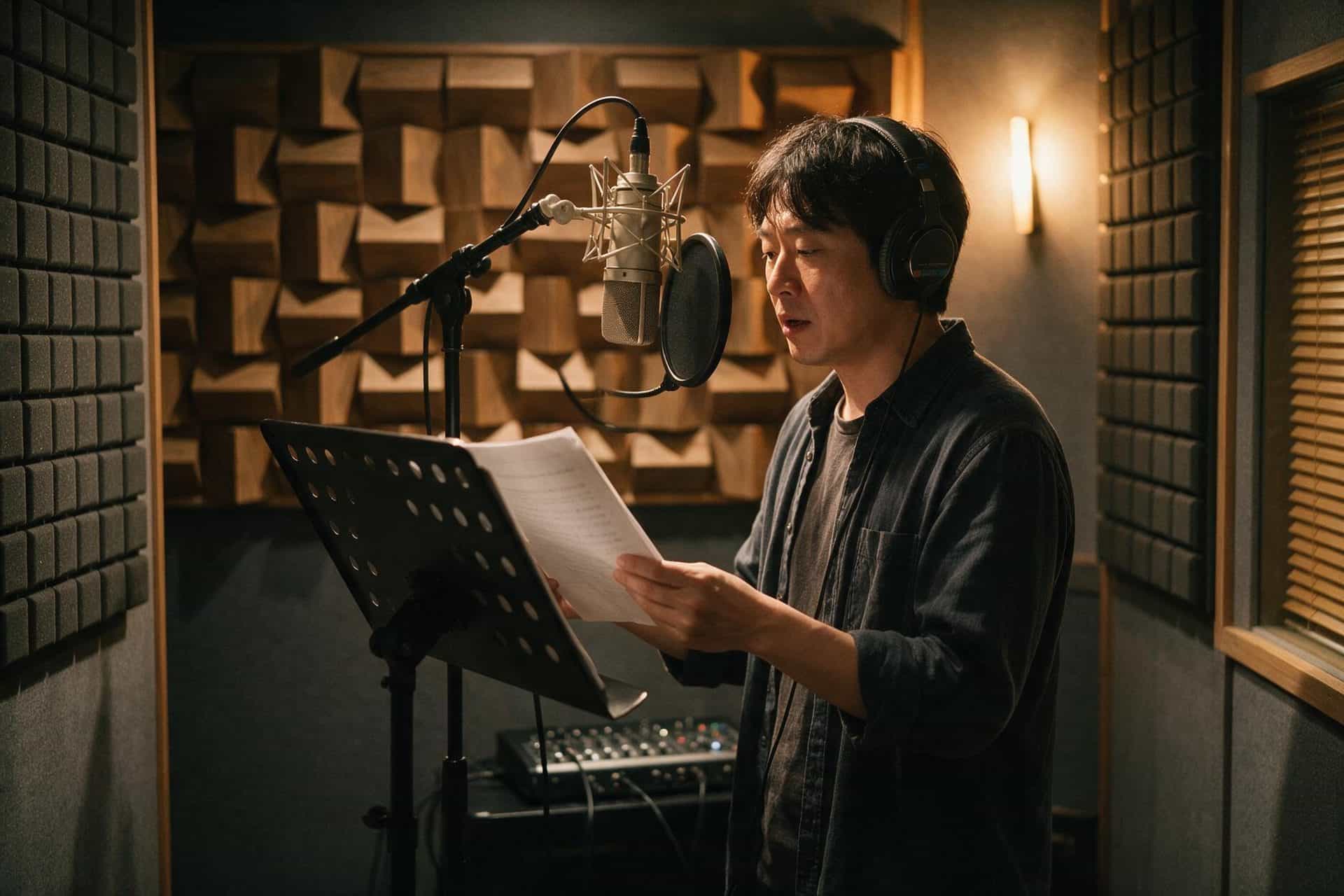
Voice Over · Taiwanese Mandarin
Taiwanese Mandarin voice over services
Native Taiwanese Mandarin voice actors and Traditional-character subtitles. The script decision comes first, and it is not just a font.
繁
Traditional characters
3 of 5
Voices based in London
48h
Delivery
Calling Taiwanese Mandarin voice talent
We're expanding our Taiwanese Mandarin roster
Taiwanese Mandarin is a language we're actively growing. If you're a Taiwanese Mandarin voice actor, we'd love to hear your demos and put you forward for paid work.
About the variety
The first decision is the character set, not the voice
Taiwan, Hong Kong and Macao write Chinese in Traditional characters. Mainland China and Singapore use Simplified. These are not fonts or styles — they are different character forms, and the choice has to be made before anything with text on it is produced.
Simplified subtitles put in front of a Taiwanese audience are read with effort, and more to the point they are recognised as coming from somewhere else. So it is a positioning decision as much as a technical one, in a context where the provenance of material does not go unnoticed. Get it right at the storyboard stage and it costs nothing; get it wrong and you re-cut.
Then there is the audio. Taiwanese Mandarin does not sound like Beijing Mandarin. The clearest marker is that it does not use erhua — the retroflex «-r» ending so characteristic of northern Mainland speech. Beyond that, the intonation is softer, the rhythm carries the influence of Taiwanese Hokkien, and a good deal of everyday vocabulary differs — precisely the everyday vocabulary that fills a corporate video or a training module.
A Mainland voice actor reading for Taiwan is placed within a sentence, the same way a Madrid voice is placed instantly by a Mexican audience. We cast native Taiwanese speakers, and our Mainland Mandarin service is a separate roster for the other market.
One naming point worth being precise about: this page covers Taiwanese Mandarin, the variety of Mandarin spoken in Taiwan. Taiwanese Hokkien is a different language, not a variety of Mandarin, and we do not currently hold Hokkien talent — if that is what your project needs, tell us and we will be straight with you about it.
Bring us the problem, not the purchase order. Our notes come back free of charge, along with a quote broken down so you can see what each part costs. Free casting as well: we brief the Taiwanese Mandarin voices on your project and send back their reads for you to compare. Start a Taiwanese Mandarin voice over quote, or send a rough outline and we will fill in the gaps.
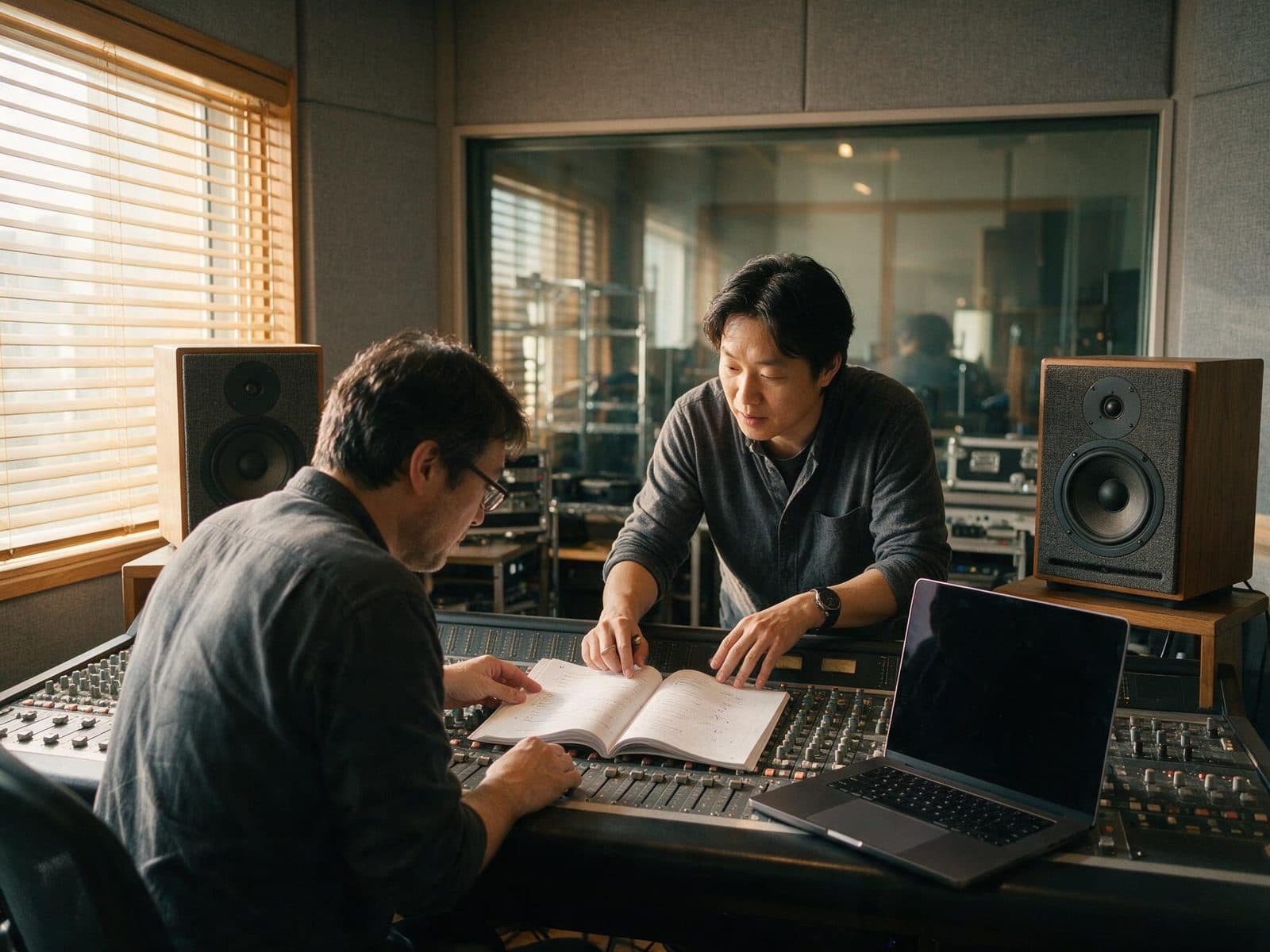
Getting Taiwanese Mandarin right
What to decide before recording
Two of these are about text, and they are the ones that cost money when missed.
Traditional characters for Taiwan
Taiwan, Hong Kong and Macao read Traditional; the Mainland and Singapore read Simplified. Different character forms, not different fonts. Decide this before any on-screen text is designed.
No erhua
The retroflex -r of northern Mainland speech is the most audible giveaway. Its absence is part of what makes a read sound Taiwanese rather than imported.
Everyday vocabulary differs
The divergence is strongest in ordinary words — exactly the register a corporate or eLearning script lives in. We adapt rather than record Mainland copy unchanged.
Taiwanese Hokkien is a separate language
This page is Mandarin as spoken in Taiwan. Hokkien is not a variety of Mandarin, and we do not currently hold Hokkien talent — ask us and we will tell you honestly.
How we can help
One partner for the whole Taiwan job
Voice over & narration
Native Taiwanese Mandarin for corporate video, eLearning, advertising, documentary and IVR, directed for tone and pace.
Translation & script adaptation
Traditional-character translation by native Taiwanese linguists, adapted rather than converted from a Mainland version.
Subtitling & captions
Subtitles in Traditional characters, so the on-screen text belongs to the same market as the read.
100+ languages under one roof
London studios + global talent network
5.0★ from 149 reviews
Content types
Taiwanese Mandarin voice over for every kind of content
Whatever you're making, we cast the right voice in Taiwanese Mandarin. Explore by use case.
Most common questions
Can we use our Mainland Mandarin recording for Taiwan?
Not without it being noticed. Taiwanese Mandarin lacks the erhua retroflex ending typical of northern Mainland speech, its intonation is softer, and a good deal of everyday vocabulary differs — which is the register most corporate and eLearning scripts live in. A Taiwanese audience places a Mainland reader within a sentence. We cast native Taiwanese speakers and keep a separate roster for Mainland Mandarin.
Traditional or Simplified characters?
Traditional for Taiwan, Hong Kong and Macao; Simplified for the Mainland and Singapore. They are different character forms rather than different fonts, so this is not something that can be swapped late. Simplified subtitles shown to a Taiwanese audience are harder to read and, more importantly, mark the content as produced for somewhere else. Settle it before any on-screen text is designed.
Can we just convert our Simplified script to Traditional automatically?
Conversion gets you most of the way and then leaves the errors that matter. Some Simplified characters map to more than one Traditional character depending on meaning, and vocabulary differences survive conversion untouched — the text ends up technically Traditional but still reading as Mainland copy. We have a native Taiwanese linguist adapt it rather than relying on the conversion alone.
Do you record Taiwanese Hokkien?
Not currently. Taiwanese Hokkien is a separate language rather than a variety of Mandarin, and we do not hold Hokkien talent, so we would rather say so than approximate it. This page covers Mandarin as spoken in Taiwan. If your project specifically needs Hokkien, tell us and we will come back to you honestly about what we could arrange.
Do you have Taiwanese voices based in London?
Yes, three of our five. You can filter the library above for London-based talent, which also makes attended sessions in our Central London studios straightforward if you want to direct in the room rather than over a link.
Should we produce Taiwan and Mainland versions together?
If both markets matter, yes, and scheduling them together is cheaper than commissioning them separately. What we would not recommend is producing one and stretching it to cover both — the text needs different characters and the audio needs different actors, so the saving evaporates once you account for the re-cut.
Will our English timings still work?
Usually with some slack. Mandarin tends to run shorter than English in syllable count, which more often leaves room than takes it — though dense technical content can go the other way. We flag anything awkward at translation stage rather than compressing the read.
What do you use Taiwanese Mandarin voice over for?
Corporate video and internal communications, eLearning and compliance training, advertising aimed at the Taiwanese market, technology and semiconductor-sector content, tourism, documentary narration, and app and product localisation.
Can you deliver to our platform's audio specification?
Your Taiwanese Mandarin audio is delivered to your specification: uncompressed WAV, MP3 where size matters, stems where the mix happens elsewhere, at the LUFS target you set.
What do you need from us to quote Taiwanese Mandarin voice over?
Less than people expect: the script, or the draft of it, its total running time or word count, where the recording will be used, and the date you need it by. If the script is not signed off yet, send the draft anyway — we would rather quote on what exists than wait for a version that eats your deadline. A named project manager comes back with an itemised quote, normally within four working hours.
How quickly will we hear back, and who will we be dealing with?
More than half of enquiries get a reply within thirty minutes during office hours (Monday to Friday, 9am to 6pm UK time), and the itemised quote normally follows within four working hours. After that you have one dedicated project manager who owns the job from brief to final file — not a ticket queue, and not a different name on every email. If it is easier, call +44 207 095 5730 and ask for them by name.
We are still pitching and the budget is not signed off. Can we still get a Taiwanese Mandarin quote?
Yes, and it is one of the commonest reasons people get in touch. Tell us it is for a pitch and you get a figure you can put in front of your own client, itemised so it stands up to being picked apart, with no obligation and no follow-up sales calls if the pitch goes elsewhere. If it lands, the quote still holds and we already know the project.
Brands that trusted us with their voice
Casting, direction and recording for campaigns that ran in several markets at once.

Voice Over · Flemish
AXA — Redefining Standards
Multilingual mastery for instructional videos: a Flemish voiceover journey.
Voice Over · Czech
Betfair
Crafting authenticity in localisation: a Czech voiceover production.

Voice Over · Cantonese
BlackBerry Worldwide
Multilingual voiceover project for BlackBerry's innovative campaign.
Complete your Chinese coverage
Services that pair with Taiwanese Mandarin
Mandarin voice over
Mainland China, in Simplified characters.
Cantonese voice over
Hong Kong — Traditional characters, different language.
Taiwanese Mandarin subtitling
Taiwan and Hong Kong prescribe different character lists.
From £400
/ €500 / $550
per hour in the recording studio
That hourly rate is the Basic Studio Fee: the recording session itself, with the voice actor, the casting, the direction, the studio and the engineer included. Any buyout — the usage fee — is added on top and quoted separately: it depends on the markets the recording runs in, the media it runs on and how long you licence it for. Every line is itemised, and all of it carries our Price Match Promise.
Taiwanese Mandarin is not mainland Mandarin
Same language on paper, different accent, different vocabulary and a different set of assumptions about what sounds professional. A Beijing read in a Taiwanese campaign is noticed immediately, and the ones that notice are the audience. We cast in Taipei for Taiwan, and the script gets a pass for the island's own wording before anyone steps into the booth.
Full breakdown by market, spoken language and script: the market table on the Mandarin page. Longer piece on how the choice plays out over a whole project: English to Chinese Audio and Video Translation Guide.
Either way, none of it has to be settled before you write to us.
Sound Taiwanese to a Taiwanese audience
Tell us the market and we'll settle the characters and the casting before you commit — with a free, no-obligation quote.
Worth reading before you brief
The complete solution to localise your content
Voice over

- State-of-the-art studios
- Neumann microphones
- On-hand sound engineers
- 1,000+ voice actors
Translation

- 100+ languages covered
- Tailored to your needs
- Stringent quality control
- Dedicated project managers
Subtitling

- Experienced subtitlers
- Industry-standard software
- Burn-in and graphic editing
- Open and closed captions
Transcription

- Improve accessibility
- Reach a wider audience
- Boost SEO and video views
- Maximise video engagement