
Subtitling · Sinhala
Sinhala subtitling services
Corporate video, eLearning, documentary, streaming and advertising, subtitled by native Sinhala linguists and signed off on screen rather than on paper. Sinhala subtitles, recording scripts and document translation are handled by one team on one project.
About Sinhala subtitling
Sinhala is stored in one order and drawn in another
Around 18 million people read Sinhala, almost all of them in Sri Lanka, where it is one of the country's official and national languages. For a subtitle, the interesting part of the language is not its vocabulary. It is the writing system: an abugida whose vowels are written as marks on the consonant, above it, below it, after it or in front of it, which means the order in the file is not the order on the screen.
Take the kombuva, U+0DD9. It is typed and stored after its consonant and it is drawn to the left of it. Four further vowel signs are split marks that come apart into two pieces and land on either side of the letter. None of this is ornament a renderer may skip. The sequence has to be reordered before anything is drawn, and software that lays glyphs out in stored order gets Sinhala visibly wrong.
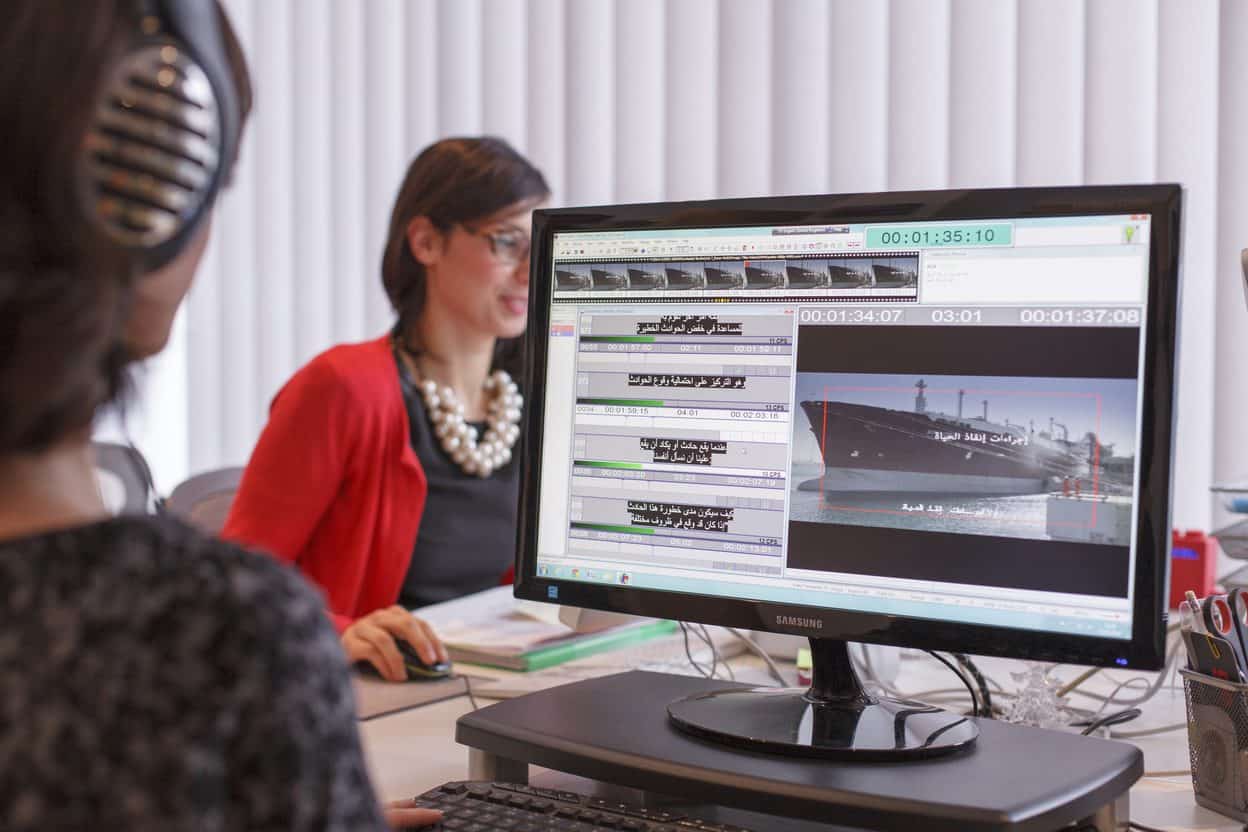
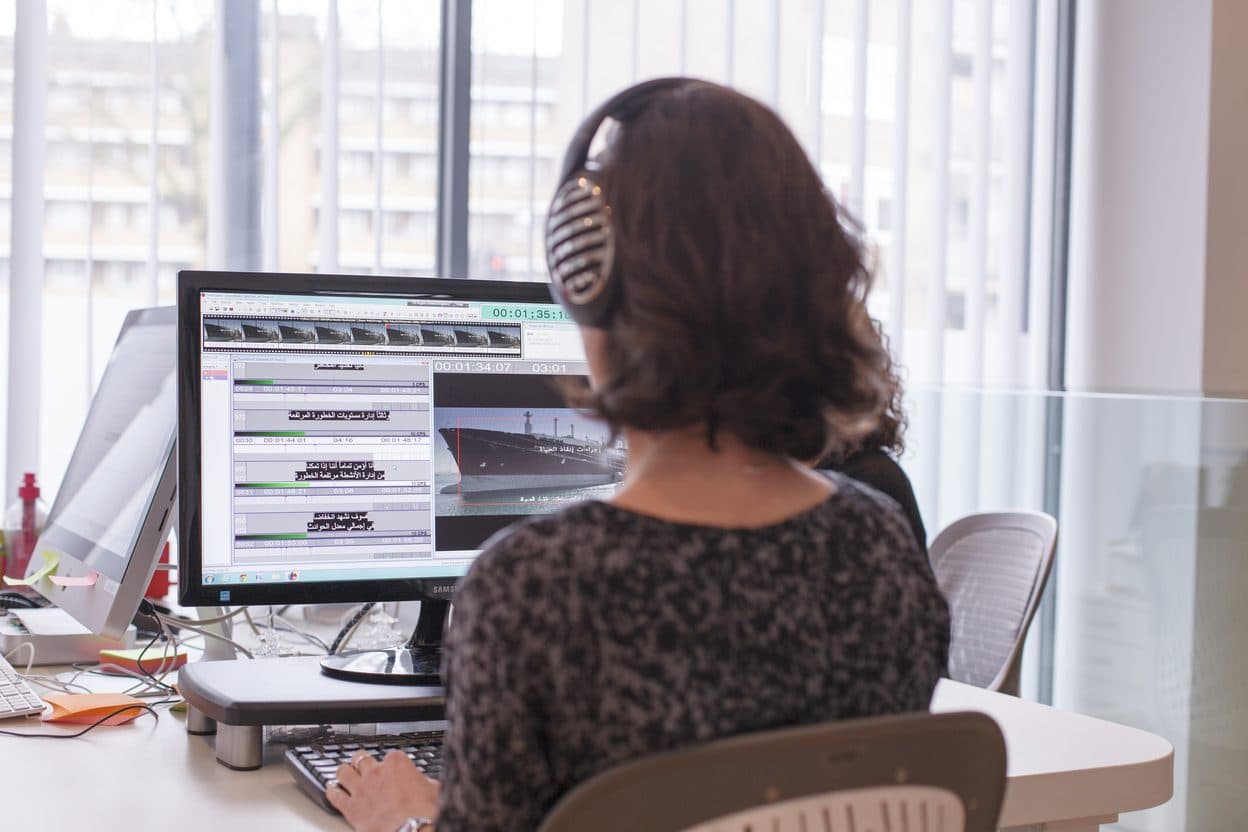
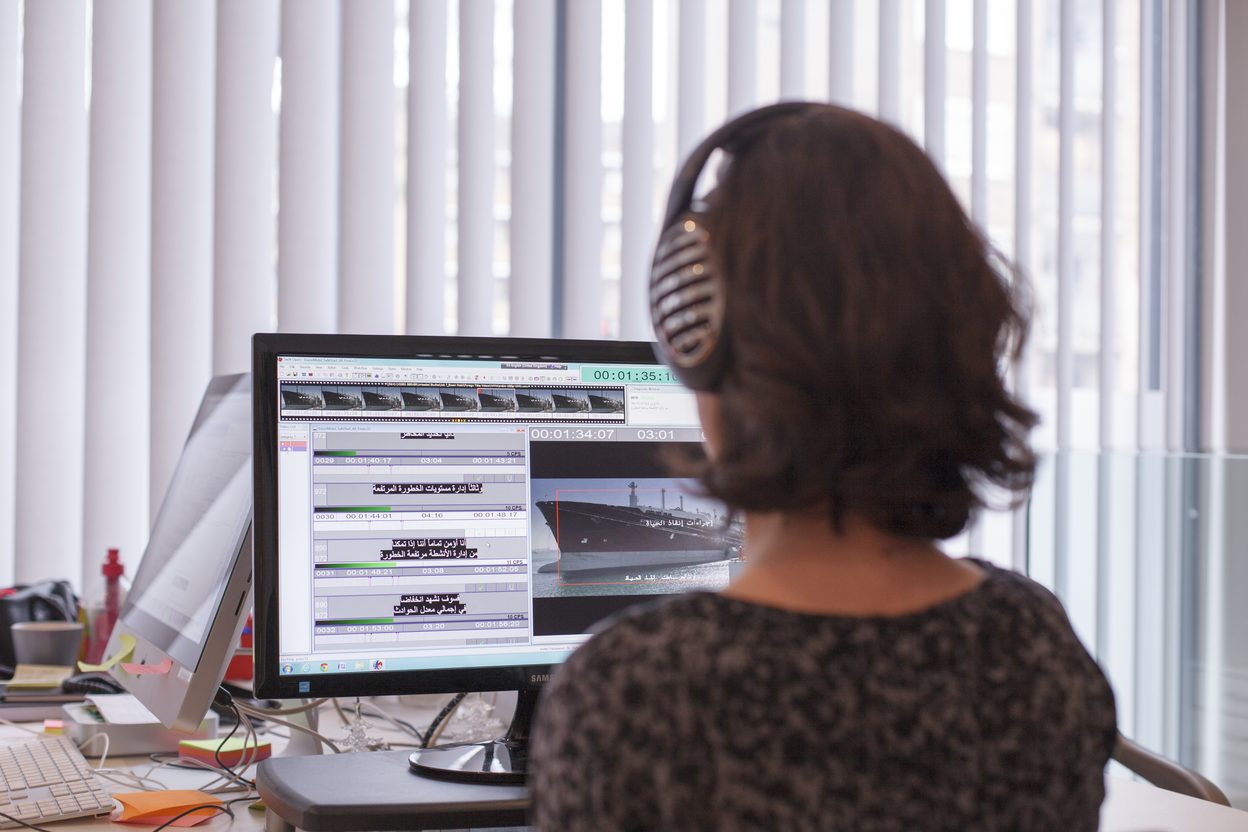
A native Sinhala subtitler writes the text, and at GoLocalise it is then looked at twice: once for the language and once for the way it renders. That second pass is the one that catches a conjunct which has quietly come apart, or a vowel mark parked on the wrong side of the letter it belongs to. Sinhala transcription, recording scripts and document translation run through the same team.
Which do you need?
Open captions, closed captions or SDH
Three different deliverables that people often ask for by the wrong name. Here is the short version.
Open captions
Burnt inSubtitles burnt permanently into the picture. Nobody can switch them off, which is exactly what you want for social feeds that autoplay muted — and in Sinhala the reordering happens once, at our end, with no later engine left to redo it.
- Always visible
- Reordering settled at our end
- Delivered as a finished video file
Closed captions
SwitchableA separate file the viewer can turn on and off, and that can carry several languages at once. The standard for YouTube, Vimeo and the streaming platforms.
- Viewer controls them
- Multiple languages from one video
- Indexed by search engines
SDH
AccessibilitySubtitling for the deaf and hard of hearing: dialogue plus speaker IDs and the sound effects and music cues that carry meaning.
- Speaker identification
- Non-dialogue audio described
- Meets accessibility requirements
Subtitles or captions? The two terms are often used interchangeably. Strictly, subtitles translate the dialogue for viewers who can hear the audio, while captions are same-language and add speaker labels and sound cues for viewers who cannot. We produce either — translated Sinhala subtitles or same-language Sinhala captions and SDH — in whichever form your platform and audience require.
What we subtitle
Where Sinhala subtitles end up
The work runs across corporate video, eLearning, documentary and social for a Sri Lankan audience, and the display pass goes with every one of them. These are the formats that come through most often.
Corporate & training video
Internal comms, onboarding and product training subtitled for global teams and LMS delivery.
eLearning & online courses
Timed, readable subtitles for course platforms, MOOCs and instructional video.
Documentary & factual
Festival, broadcast and streaming documentaries, including interview clean-up and on-screen text.
Advertising & social
Burnt-in captions for muted autoplay on Instagram, TikTok, YouTube and paid social.
Streaming & OTT
Platform-spec subtitle and caption files for VOD, OTT and broadcast delivery.
Accessibility (SDH & closed captions)
Same-language SDH and closed captions to meet WCAG and accessibility requirements.
Events, webinars & conferences
Recorded talks, town halls and webinars captioned for on-demand viewing.
E-commerce & product video
Short product and explainer videos captioned to lift conversion and reach.
How can we help you?
Your project manager has everything covered
One point of contact from brief to delivery, and both a linguistic and a technical check on every file.
Brief review
We settle the player, the encoder and the font your Sinhala will be shown in, alongside whatever delivery spec the platform imposes on the file.
Template and translation
Where needed, we create an English subtitle template first, then send it to a native Sinhala subtitler.
Timing and quality checks
Cues are timed to picture and measured for reading speed and for line width, then read back on screen to confirm that every vowel sign and every conjunct has landed where it belongs.
Delivery and display check
Files go out in the format you need, with the rendered result seen on the destination player rather than trusted to the file.
Our standards
The specs we work to
Readable subtitles are a matter of measurable limits, not opinion. These are the defaults we apply to Sinhala unless your style guide says otherwise.
Maximum per line
House default, still to be validated
Maximum on screen
Break between clusters, never inside
Reading speed
Lower on children's programmes
Minimum duration
Seven seconds at the outside
**No platform has published a style guide for Sinhala**, so these four are our own defaults carried over from Latin-script work, and we treat them as open to validation against your broadcaster's spec rather than settled. We also apply them to the line as drawn rather than to the string in the file, and that distinction earns its keep here: a mark stacked over a letter adds no width at all, while a split vowel sign adds width on both sides of it.
Deliverables
Professional subtitle formats
We adapt your existing translations into subtitle format or create subtitles from scratch, in Sinhala, English or any other language. And if the project needs a timed script or a plain document instead, we deliver that too.
Standard text-based
Compatible with most platforms and players.
Broadcast & professional
For broadcasters, post houses and streaming delivery specs.
Burnt-in video
A finished file with the subtitles baked into the picture, shaping included.
Need a different format? Convert SRT, VTT and more with our free subtitle converter →
| Where it's going | What we deliver |
|---|---|
| YouTube, Vimeo & LMS platforms | SRT or VTT closed captions |
| Netflix, Amazon & broadcast | IMSC, TTML or EBU-STL to platform spec |
| Instagram, TikTok & paid social | Burned-in captions in MP4 (open captions) |
| Premiere, Final Cut & DaVinci Resolve | SRT / VTT that import straight into your edit |
Not sure which you need? Tell us the destination platform and we deliver to its exact spec.
Sinhala specifics
Reordering, split vowel signs and the engine in between
The shaping specification for the script states it flatly: prebase vowels and the prebase components of split vowel signs reorder to the start of the cluster, and a Sinhala font's lookups have to be written against the sequence that comes out of that reordering rather than the one that went in. Four features are required of the font before a single word can be drawn correctly. What a viewer ends up seeing is decided by the engine between the file and the glass.
The four split signs, U+0DDA, U+0DDC, U+0DDD and U+0DDE, are taken apart by the shaping engine before any font feature runs at all, and the halves are then placed independently. Conjuncts lean on the same machinery: an al-lakuna followed by a zero-width joiner is what tells the font to hide the virama and bind two consonants into one form. Strip that joiner out in a routine clean-up and the bound form quietly comes undone.
So the check that counts is the one done on screen. We load the finished file into the player or the encoder it is heading for and read it there, because a font missing a required feature raises no error at all — it simply draws something else instead. Burnt-in delivery gets the same treatment, since the burn-in tool runs a shaping pass of its own and can reach a different answer from the player you tested in.
Since 2008
Subtitling & captioning
100+
Languages covered
ISO 9001 & 14001
Certified processes
24–48h
Typical turnaround
Subtitling rates
Sinhala subtitling by native linguists
For single videos and straightforward content where accurate, well-timed subtitles are what you need.
- Native Sinhala subtitler
- Rendering read back on screen
- Frame-accurate timing
For longer content and recurring projects, including transcription, SDH, burned-in subtitles and multiple output formats.
- Everything in Standard
- Transcription and template
- SDH and burnt-in
- Multiple output formats
Every project is quoted individually and backed by our Price Match Promise. Send us your video for an exact, no-obligation quote.
Not sure what your Sinhala subtitles will cost?
Send us the video — or just its running time — and we come back with an itemised quote: running time, languages and output formats priced line by line, with nothing hidden. No obligation, and if you find a like-for-like price lower, we will match it.
- Free, itemised quote
- No obligation
- Price Match Promise
Trusted by global brands
We have used GoLocalise on a regular basis for projects in a number of languages. The service we receive is great. The team is always friendly and professional. The voiceovers we receive are of a very high quality and the turnaround is extremely quick. We are very happy to recommend GoLocalise to other businesses.

It was a pleasure to work with David and the team at GoLocalise. David gave me lots of help and advice, guiding me through my first subtitling project. He really knows his stuff! The experience was completely pain-free. I would not hesitate to recommend GoLocalise – outstanding work at a good price.
They're reliable, adaptive and obsessed with quality. And while you can never be 100% guaranteed of perfection, you can be sure GoLocalise will go the extra mile to get it right every time. We've worked with them now for over 5 years and we are truly thankful to have such a strong localisation partner for our business.

Related services
The rest of your Sinhala project
Subtitling & captioning in more languages
Native subtitlers for corporate video, eLearning, streaming, documentary and advertising. Browse another language, or ask us about yours.
Subtitling we have delivered
Real projects, real deadlines, and the files that went live.
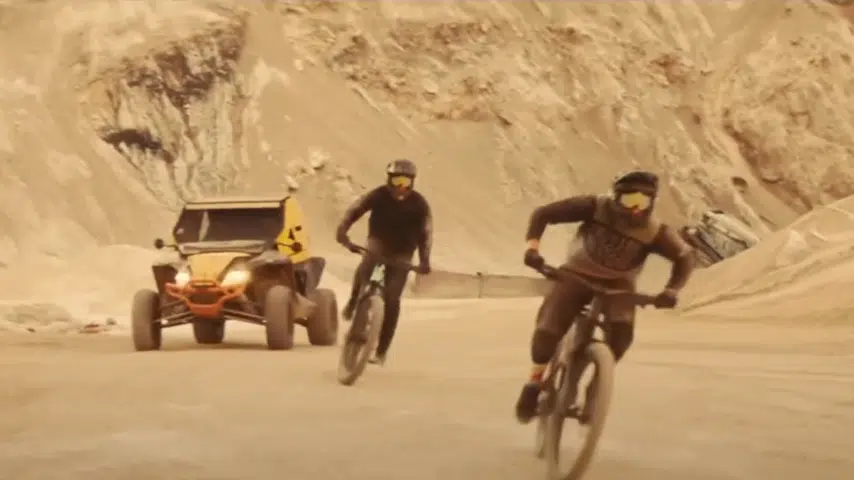
Subtitling · European French
Return of the Goat II
Elevating cycling narratives with multilingual subtitling.
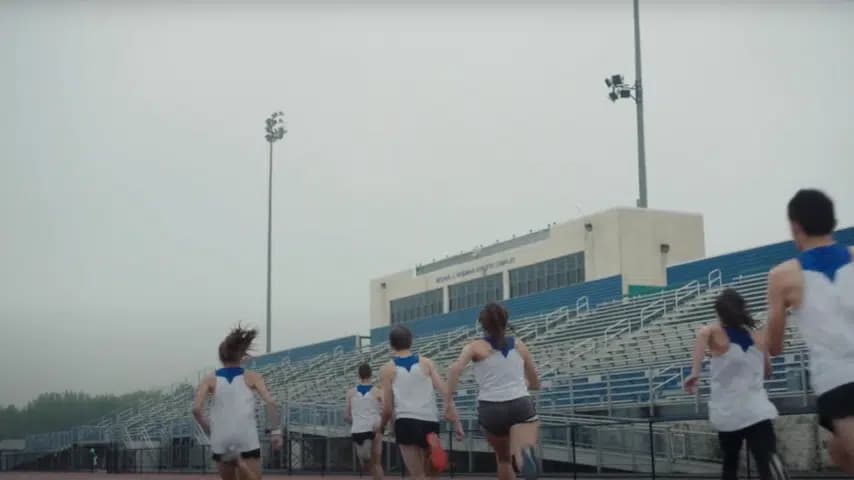
Subtitling · Indonesian
Pathways: Hope After Suicide Loss
Bridging cultures through subtitling: a journey of hope.
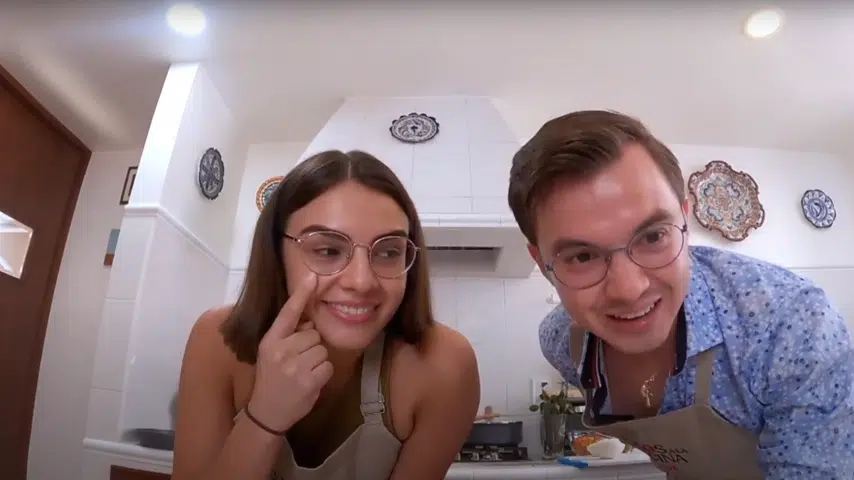
Subtitling · English
‘Todos a la Cocina’ Cooking Show
Enhancing global reach through expert subtitling.
Most common questions
Why do some Sinhala vowel signs appear in front of the consonant they belong to?
Because that is how the script is read, even though the file keeps them the other way round. The kombuva, U+0DD9, is typed after its consonant and drawn to the left of it, and four other vowel signs come apart into halves that sit on either side of the letter. A shaping engine reorders the sequence at display time. Marks turning up in odd positions point at that engine rather than at the subtitler.
Will our player draw the conjuncts the way they should look?
That depends on the font and the engine behind it, which is exactly why we test instead of assuming. A Sinhala conjunct is formed by an al-lakuna and a zero-width joiner, and the font has to carry the substitution features that act on that pair. We open the delivered file in the player or encoder you name and read the result there. Tell us the target at the brief and the check is built into the job.
Can you supply burnt-in Sinhala subtitles we can trust on any device?
Yes, and burn-in is often the calmer route for this script. Once the text is part of the picture the reordering has already happened at our end, and every downstream player is simply playing video. We render the master, watch it back, and confirm that clusters, split vowel signs and bound consonant forms are drawn correctly. You get the master as MP4, MOV or ProRes with the Sinhala fixed in place.
Is there a published subtitling standard for Sinhala?
Not one we can point you at. The platform style guides published for South Asian languages cover Tamil, Telugu, Malayalam, Kannada, Marathi, Hindi and Bangla, and Sinhala is not among them. So we publish our own defaults and say plainly that they are defaults: forty-two characters, two lines, seventeen characters a second, one second minimum. Where your broadcaster sets a spec of its own, that wins and we build the file to it.
What is the per-minute rate for Sinhala subtitling?
The rate opens at £20 for each minute of video, and the display checks this script needs sit inside that figure rather than on top of it. Running time drives most of the total. A transcript, an SDH pass, burnt-in output and each further delivery format push it up from there. Pricing is itemised per job, and our Price Match Promise stands behind whatever we send you.
When the audio is already Sinhala, can you simply caption it?
That is standard work here. Where the soundtrack is already Sinhala we caption it in Sinhala, adding SDH where speaker labels and sound description are wanted, which is what accessibility teams generally ask for and what keeps a video usable in a feed playing without sound. A transcript is produced first, and the display pass runs on those files exactly as it does on translated ones.
Our Sinhala SRT was made elsewhere. Is it usable?
Usually. Your file becomes the starting point: we re-spot it to picture, adjust any line running long once it is drawn, and restore joiners that a previous export has dropped. Flag it early if the text has been through a converter or a legacy font, because those arrive with clusters already broken and take longer to put right. Where no transcript exists at all, we write one from the audio.
Which editors will these Sinhala files open in?
The usual set. Our VTT, SRT, STL and TTML deliverables open in DaVinci Resolve, Premiere Pro, Final Cut Pro and the browser-based editors with the Sinhala intact. They will not all shape the text identically, though, so if the edit suite is where the subtitles end up being burned in, say so and we will check what comes out of that suite as well.
Ready to subtitle your video in Sinhala?
Send us your video and we'll come back with an exact, itemised quote.
Worth reading before you brief
Subtitling
English Subtitles and Differences In Spoken and Written Language
Written language and spoken language differ in several ways which affect English subtitles. Subtitles are audiovisual translation mediums that are becoming increasingly popular.
Read the guide →Subtitling
What is closed captioning? Difference from subtitles
An explanation of closed captioning and how it differs from subtitles, open captions, and SDH.
Read the guide →Etymology
False Friends Examples in Translation
What are false friends? People who previously learned a new language or two have probably heard this phrase. But for starters, false friends in translation are pairs of words or phrases that sound identical but hold different meanings.
Read the guide →Professional voice over services for your audio and video productions
Voice over

- State-of-the-art studios
- Neumann microphones
- On-hand sound engineers
- 1,000+ voice actors
Translation

- 100+ languages covered
- Tailored to your needs
- Stringent quality control
- Dedicated project managers
Subtitling

- Experienced subtitlers
- Industry-standard software
- Burn-in and graphic editing
- Open and closed captions
Transcription

- Improve accessibility
- Reach a wider audience
- Boost SEO and video views
- Maximise video engagement