
For museums, galleries & visitor attractions
Localisation for museums, galleries and attractions
An audio guide is not one recording. It is eighty short ones that have to sound like the same person, say every artist's name correctly, and arrive named exactly as your handsets expect. We produce guides, gallery AV and audio description in 110 languages.
110
Languages
30 min
Typical reply
2008
Doing this since
Why attractions come to us
Eighty tracks, one voice, nothing out of order
Most localisation jobs are one piece of content in several languages. A visitor attraction is the reverse: a great many short pieces in each language, recorded over weeks, that have to sound as though they were spoken in one sitting by someone who knows the collection. Split that across three freelancers and a visitor hears three different guides between the entrance and the café.
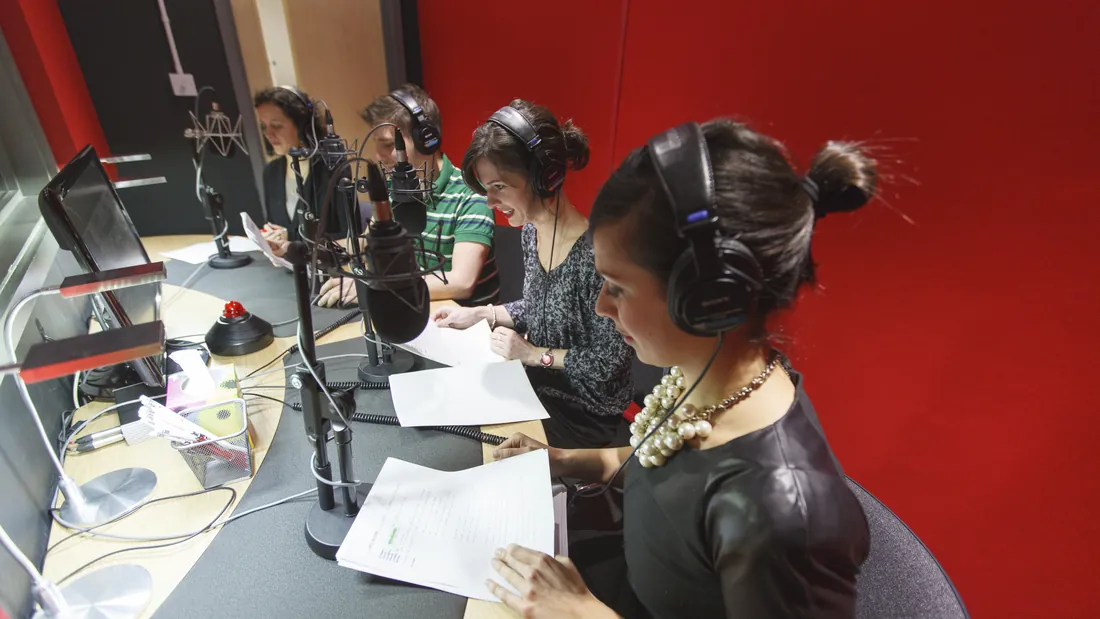
We have done this for a national museum. For the V&A Museum of Childhood we cast five actors as the storytellers of its dolls' house collection — three or four voices each, around eighteen characters between them — and recorded, sound-designed and delivered nearly three hours of audio, split into short files in the format their playback took. The case study is here.
The other half of the job is the part nobody writes into the brief: the delivery has to match the hardware. Handsets, apps and wall-mounted players each expect their own file naming, format and levels. A track that is right but numbered wrong is a visitor pressing 34 and hearing 43, and that reads as a broken guide, not a naming error.
What we produce
The audio and text a visitor actually meets
Usually it starts as a script document per stop and a question about how many languages the budget will stretch to.
Audio guides
Full multilingual guides, recorded to your platform's file spec.
Exhibition audio and AV
Films, installations and cast-voiced audio storytelling, with sound design.
Orientation films
The piece at the entrance that has to work for everybody.
Audio description
For visitors with sight loss, written and voiced for the object in front of them.
Captioned gallery film
Open or closed captions for AV playing in a room with no headphones.
Family and children's trails
A different script and a different register, not the adult one read slower.
App and web content
The guide that lives on a visitor's phone, and the pages that sell the ticket.
Panel and label translation
Wall text and labels, translated to the same glossary as the audio.
New acquisitions and additions
Single tracks added later that still match the ones around them.
What a guide needs that a single recording does not
The parts that decide whether a guide feels finished
One narrator per language
Booked for the whole guide, kept on file for what comes later.
A pronunciation list per language
Agreed with curators before recording, not fixed afterwards.
Delivered to your platform
Named and numbered for your handsets or app, ready to load.
Access quoted in
Audio description, captions and transcripts costed from the start.
Additions that still match
A new acquisition next year sounds like the rest of the guide.
Per-language pricing
So you can see what the fourth language actually costs before you commit.
What an attraction runs into
The four things that go wrong in a guide
The names. Artists, architects, donors, places, dynasties, materials — a guide is made of proper nouns, and a visitor who knows the collection will notice the one that is wrong. We build a pronunciation list from your scripts and agree it with your curators before anyone records, including which names stay in their original language and which are anglicised. For multilingual guides that list is per language, because the German pronunciation of a French painter is not the English one.
One voice, or several by accident. Sessions spread over weeks drift in tone, pace and level. We book a single narrator per language for the whole guide and keep the session settings, so a late addition six months on still matches the tracks either side of it. Your cast stays on file for exactly that reason: new acquisition, same voice.
The files have to fit the system. Tell us the platform and we deliver to its spec — numbering, format, loudness and stops mapped the way it expects — rather than handing over a folder of correctly recorded audio that someone then has to rename by hand the week before you open.
Access is not an add-on. Audio description for visitors with sight loss, captions and transcripts for the AV in the galleries, and plain-language versions where the main script assumes knowledge. These are usually a funding condition and always the right thing; quoting them in from the start is cheaper than retrofitting them after an access audit.
Planning a guide or a new exhibition?
Send the stop list and the languages you are considering. We will come back with an itemised quote per language, so you can see exactly what a fourth or fifth language would add.
How it works
From your scripts to files that load
Send the scripts and the system
Stop list, languages and which platform plays them. That is enough to quote.
Agree names and terms
A pronunciation list per language, signed off by your curators.
One narrator per language
Recorded in our studios, settings kept so later additions match.
Delivered to spec
Named, numbered and formatted for your handsets, app or players.
Everything under one roof
What we can take on
Voice over
Narrators in 110 languages, directed in our own studios.
Translation
Scripts, panels and labels, to one glossary.
Subtitling & captions
Open and closed captions for gallery AV.
Transcription
Curator interviews and oral histories turned into text.
Dubbing
When an exhibition film needs a full voice replacement.
Every language
The full list, with what we do in each one.
Most common questions
How is an audio guide quoted?
Per language, from the stop list. The main driver is total running time rather than the number of stops, so a guide of eighty short tracks and one of thirty longer ones can cost much the same. Voice over starts at £400 for a studio hour and script translation at £0.145 a source word; send the scripts and we will itemise it per language so you can see exactly what a fourth or fifth language would add.
Will the same voice record the whole guide?
Yes, one narrator per language for the whole guide, and we keep them and the session settings on file. That is what lets a track recorded for a new acquisition next year sit beside the original ones without a visitor noticing the join.
How do you handle artists' and place names?
With a pronunciation list built from your scripts and agreed with your curators before anyone records — including which names keep their original pronunciation and which are anglicised. For a multilingual guide the list is per language, because the German pronunciation of a French painter is not the English one. Getting this wrong is what the people who know your collection will hear first.
Can you deliver in the format our handsets need?
Yes. Tell us the platform and we deliver to its spec — file naming, numbering, format and loudness — so the files load rather than needing renaming by hand before you open. If you are still choosing a system, tell us that too and we will match whatever you land on.
Do you produce audio description?
Yes, both the writing and the voicing. Audio description for visitors with sight loss is written against the object or the film rather than adapted from the standard script, and we quote it alongside captions and transcripts for gallery AV rather than treating access as an extra.
Can you add a few tracks later without re-recording the guide?
That is the point of keeping the narrator and the session settings on file. New acquisitions, a re-hang or a corrected stop come back as individual tracks that match the ones either side. It is also why we would rather you did not split a guide across several suppliers.
Do you translate wall panels and labels as well as the audio?
Yes, and to the same glossary, which matters more than it sounds. If the audio calls something one thing and the label beside it calls it another, the visitor assumes one of them is wrong. One glossary across audio, panels, app and website keeps that from happening.
How quickly do you reply?
Over 50% of enquiries get a reply within 30 minutes during UK office hours, and an itemised quote normally comes back within four working hours. If an opening date has moved, call +44 207 095 5730 rather than emailing.


Trusted to deliver by the world's top brands
Click a logo to watch the work we delivered for them.









What a museum said after working with us
GoLocalise were very informative about the process as well as competitive at the tendering stage… They turned the post-production process round very quickly and provided audio tracks in the formats we needed them. In all, they have provided a creative and characterful addition to our exhibition and have brought our ideas to life.
Send us the stop list
The scripts, the languages you are considering and the system that will play them is enough to quote — itemised per language, normally within four working hours.
Professional voice over services for your audio and video productions
Voice over

- State-of-the-art studios
- Neumann microphones
- On-hand sound engineers
- 1,000+ voice actors
Translation

- 100+ languages covered
- Tailored to your needs
- Stringent quality control
- Dedicated project managers
Subtitling

- Experienced subtitlers
- Industry-standard software
- Burn-in and graphic editing
- Open and closed captions
Transcription

- Improve accessibility
- Reach a wider audience
- Boost SEO and video views
- Maximise video engagement