
Subtitling · Arabic
Arabic subtitling services
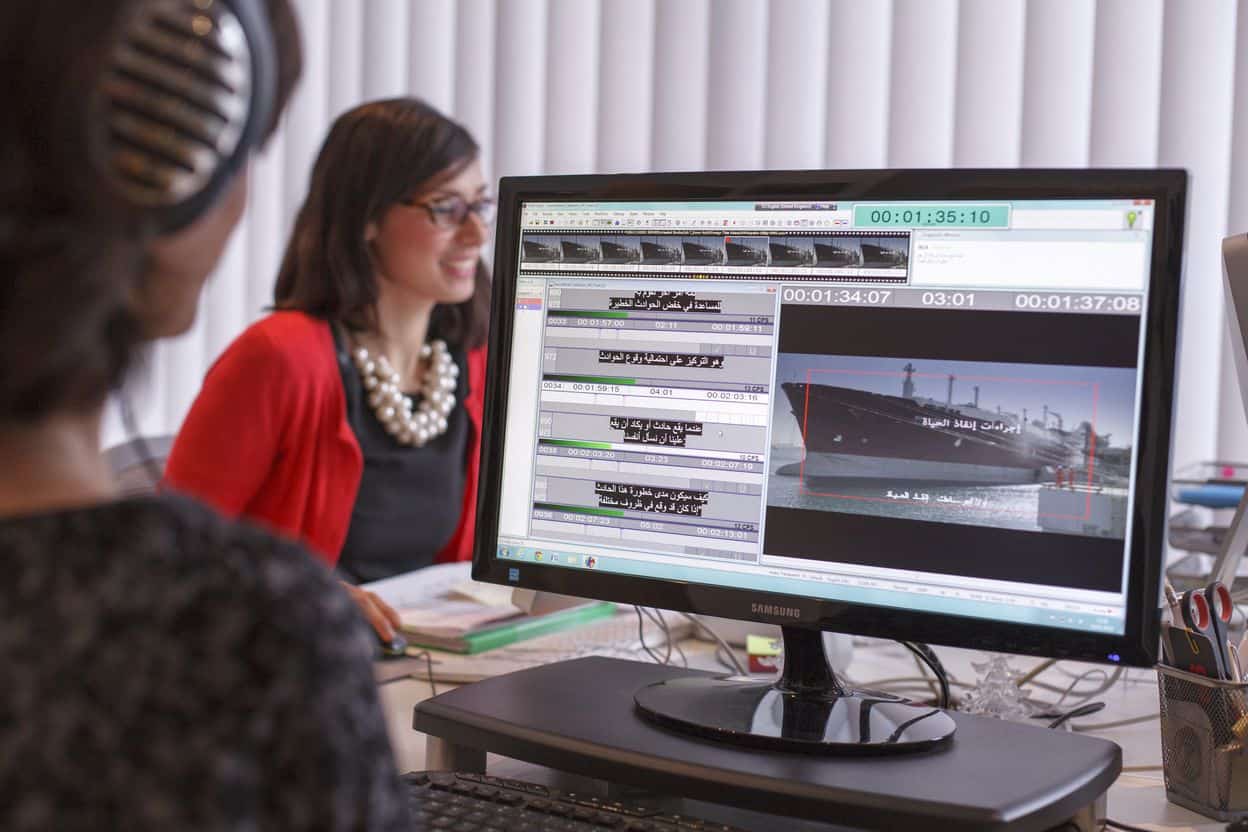
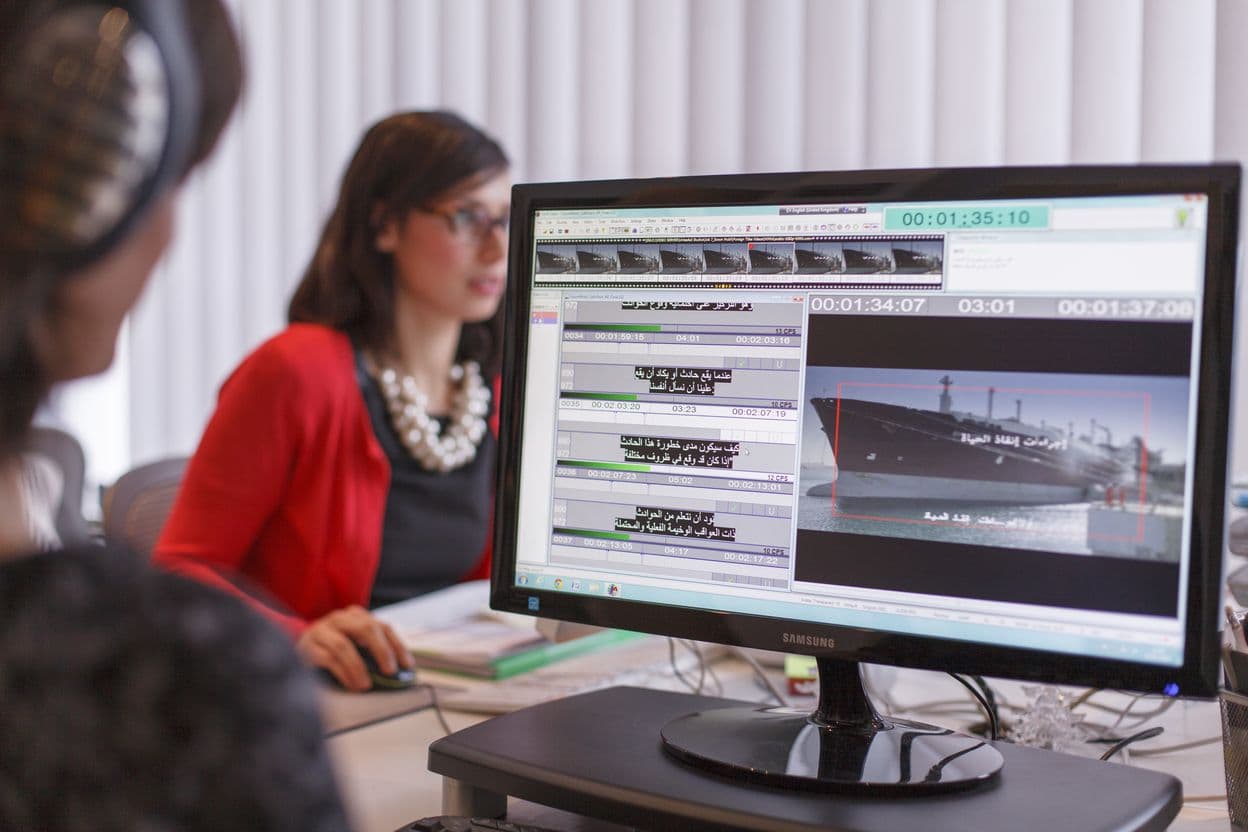
Native Arabic subtitlers for film, corporate video, eLearning, streaming content and advertising. Modern Standard Arabic and regional dialects, delivered in any format your platform requires. Part of a full Arabic language service: subtitles, voice over scripts, and translation of any content you need.
About Arabic subtitling
Arabic subtitles built for the market you are reaching
Arabic is spoken natively by over 310 million people across the Middle East and North Africa, and subtitling into it involves a decision other languages do not force.
Modern Standard Arabic reads as neutral and formal and travels across the whole region. A regional dialect such as Egyptian, Gulf, Levantine or Maghrebi reads as local and familiar to one audience and slightly foreign to the rest.
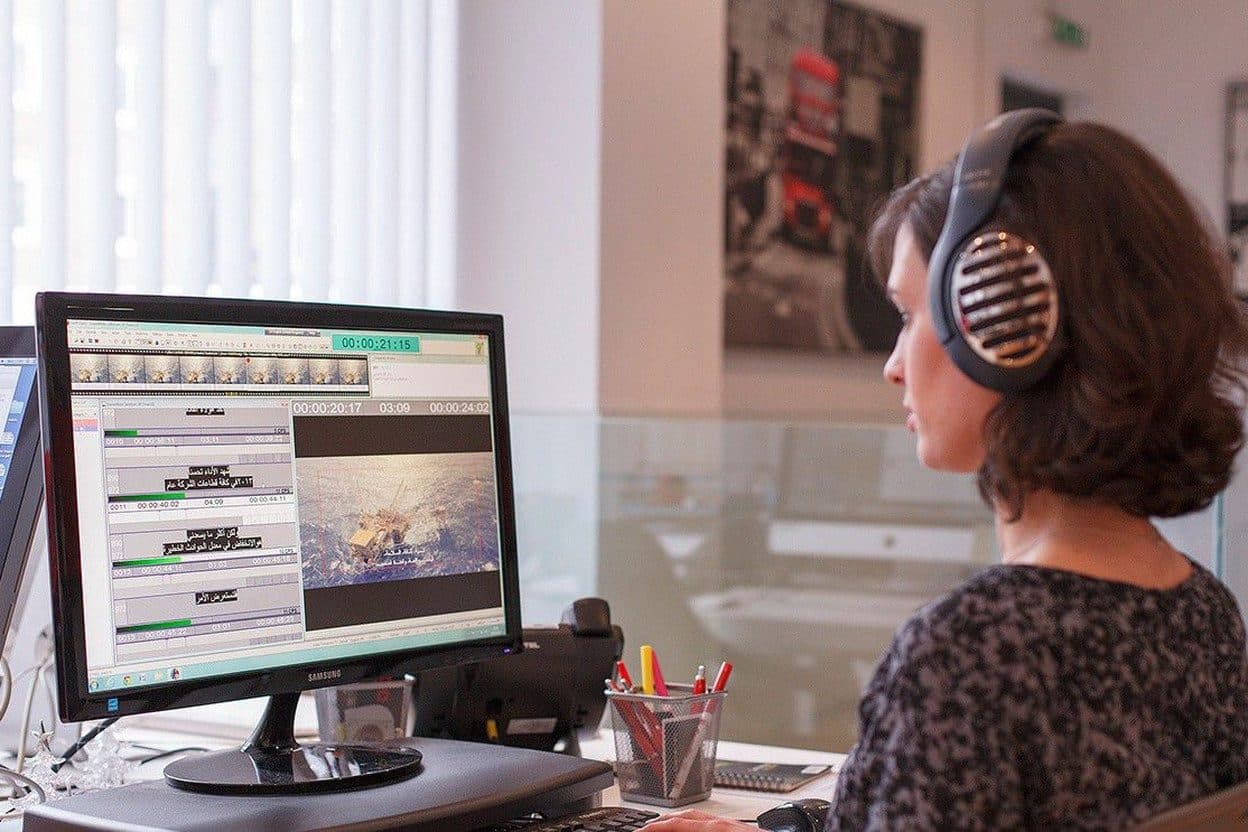
At GoLocalise, we work with native Arabic subtitlers who handle both the linguistic and the technical side of that. We manage every stage, from the source file review through translation, timing, and quality checks to final delivery.
Which do you need?
Open captions, closed captions or SDH
Three different deliverables that people often ask for by the wrong name. Here is the short version.
Open captions
Burnt inSubtitles burnt permanently into the picture. Nobody can switch them off, which is exactly what you want for social feeds that autoplay muted — and in Arabic it also settles the bidirectional question for good.
- Always visible
- Right-to-left rendering fixed at delivery
- Delivered as a finished video file
Closed captions
SwitchableA separate file the viewer can turn on and off, and that can carry several languages at once. The standard for YouTube, Vimeo and the streaming platforms.
- Viewer controls them
- Multiple languages from one video
- Indexed by search engines
SDH
AccessibilitySubtitling for the deaf and hard of hearing: dialogue plus speaker IDs and the sound effects and music cues that carry meaning.
- Speaker identification
- Non-dialogue audio described
- Meets accessibility requirements
Subtitles or captions? The two terms are often used interchangeably. Strictly, subtitles translate the dialogue for viewers who can hear the audio, while captions are same-language and add speaker labels and sound cues for viewers who cannot. We produce either — translated Arabic subtitles or same-language Arabic captions and SDH — in whichever form your platform and audience require.
What we subtitle
Arabic subtitling for every kind of content
Arabic subtitling runs from pan-regional broadcast to corporate and social, each with its own decisions on dialect, RTL layout and on-screen text. These are the formats we subtitle most.
Corporate & training video
Internal comms, onboarding and product training subtitled for global teams and LMS delivery.
eLearning & online courses
Timed, readable subtitles for course platforms, MOOCs and instructional video.
Documentary & factual
Festival, broadcast and streaming documentaries, including interview clean-up and on-screen text.
Advertising & social
Burnt-in captions for muted autoplay on Instagram, TikTok, YouTube and paid social.
Streaming & OTT
Platform-spec subtitle and caption files for VOD, OTT and broadcast delivery.
Accessibility (SDH & closed captions)
Same-language SDH and closed captions to meet WCAG and accessibility requirements.
Events, webinars & conferences
Recorded talks, town halls and webinars captioned for on-demand viewing.
E-commerce & product video
Short product and explainer videos captioned to lift conversion and reach.
How can we help you?
Your project manager has everything covered
One point of contact from brief to delivery, and both a linguistic and a technical check on every file.
Brief review
We review your video, your target audience, and confirm whether Modern Standard Arabic or a regional dialect is the right fit.
Template and translation
Where needed we create an English subtitle template first, then send it to a native Arabic subtitler working in the correct variety.
Timing and quality checks
Subtitles are timed against the video and checked for reading speed, line length, bidirectional runs sitting where they should, and format compliance.
Delivery
The Arabic files your platform asks for — right spec, right date, agreed price.
Our standards
The specs we work to
Readable subtitles are a matter of measurable limits, not opinion. These are the defaults we apply to Arabic unless your style guide says otherwise.
Maximum per line
Same as Latin script — Arabic is not full-width
Maximum on screen
Bidirectional runs kept intact
Reading speed
Seventeen for children’s content
Minimum duration
Seven seconds maximum
On top of that, Arabic runs right to left, which affects line breaking, punctuation placement, and how the file behaves once numbers or Latin script appear inside an Arabic line. Players and editing tools vary in how well they handle bidirectional text, and a file that looks correct in one can break in another.
Deliverables
Professional subtitle formats
We adapt your existing translations into subtitle format or create subtitles from scratch, in Arabic, English or any other language. And if the project needs a timed script or a plain document instead, we deliver that too.
Standard text-based
SRT works across most video platforms and editing tools; VTT is the standard for web and streaming.
Broadcast & professional
STL and EBU-STL for broadcast, TTML for streaming and enterprise delivery.
Burnt-in video
A finished file with the Arabic subtitles baked into the picture.
Need a different format? Convert SRT, VTT and more with our free subtitle converter →
| Where it's going | What we deliver |
|---|---|
| YouTube, Vimeo & LMS platforms | SRT or VTT closed captions |
| Netflix, Amazon & broadcast | IMSC, TTML or EBU-STL to platform spec |
| Instagram, TikTok & paid social | Burned-in captions in MP4 (open captions) |
| Premiere, Final Cut & DaVinci Resolve | SRT / VTT that import straight into your edit |
Not sure which you need? Tell us the destination platform and we deliver to its exact spec.
Arabic specifics
Which Arabic, and what breaks on the way to the screen
Modern Standard Arabic is understood across the entire Arabic-speaking world and is the usual choice for corporate, educational and pan-regional content. A regional dialect connects more directly with one country and suits advertising and entertainment aimed at a single market. We advise on the right fit before the work begins.
The technical half is bidirectional text. Numbers, brand names, and technical terms left in Latin script sit inside a right-to-left line and can display in the wrong order depending on the player. We test files rather than assuming, and flag anything that will not survive a particular platform.
It is also why automatic tools handle Arabic poorly. Diacritics are usually absent from written Arabic, dialect variation confuses recognition, and right-to-left rendering compounds the problem. Beyond accuracy, the timing and line-breaking decisions that make subtitles readable are editorial judgements, so every file we deliver is produced and checked by a native Arabic subtitler.
Since 2008
Subtitling & captioning
100+
Languages covered
ISO 9001 & 14001
Certified processes
24–48h
Typical turnaround
Subtitling rates
Professional Arabic subtitling
For single videos and straightforward content where accurate, well-timed subtitles are what you need.
- Native Arabic subtitler
- Modern Standard or regional dialect
- Frame-accurate timing
For longer content and recurring projects, including transcription, SDH, burned-in subtitles and multiple output formats.
- Everything in Standard
- Transcription and template
- SDH and burnt-in
- Multiple output formats
Every project is quoted individually and backed by our Price Match Promise. Send us your video for an exact, no-obligation quote.
Not sure what your Arabic subtitles will cost?
Send us the video — or just its running time — and we come back with an itemised quote: running time, languages and output formats priced line by line, with nothing hidden. No obligation, and if you find a like-for-like price lower, we will match it.
- Free, itemised quote
- No obligation
- Price Match Promise
Trusted by global brands
We have used GoLocalise on a regular basis for projects in a number of languages. The service we receive is great. The team is always friendly and professional. The voiceovers we receive are of a very high quality and the turnaround is extremely quick. We are very happy to recommend GoLocalise to other businesses.

It was a pleasure to work with David and the team at GoLocalise. David gave me lots of help and advice, guiding me through my first subtitling project. He really knows his stuff! The experience was completely pain-free. I would not hesitate to recommend GoLocalise – outstanding work at a good price.
They're reliable, adaptive and obsessed with quality. And while you can never be 100% guaranteed of perfection, you can be sure GoLocalise will go the extra mile to get it right every time. We've worked with them now for over 5 years and we are truly thankful to have such a strong localisation partner for our business.

Subtitling we've delivered
Have we done something like yours?
Return of the Goat II
Subtitling · European French — a different language from yours, shown because the process is the same
Related services
The rest of your Arabic project
Arabic voice over
Native Arabic voice actors, recorded in broadcast-quality studios.
Learn moreArabic translation
Scripts, subtitles and on-screen text, in the variety your market reads.
Learn moreAll subtitling services
Our full subtitling and captioning offer across 100+ languages.
Learn moreArabic transcription
The transcript your subtitles are cued from, verbatim or clean read.
Learn moreSubtitling & captioning in more languages
Native subtitlers for corporate video, eLearning, streaming, documentary and advertising. Browse another language, or ask us about yours.
Subtitling we have delivered
Real projects, real deadlines, and the files that went live.
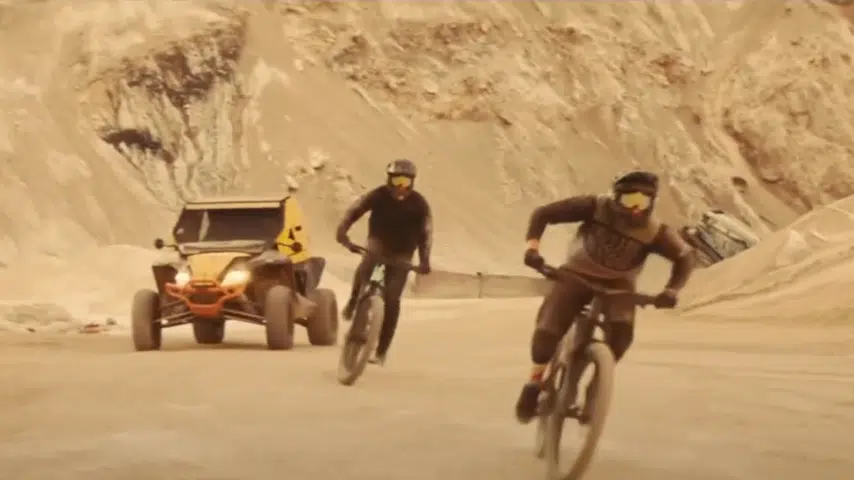
Subtitling · European French
Return of the Goat II
Elevating cycling narratives with multilingual subtitling.

Subtitling · Indonesian
Pathways: Hope After Suicide Loss
Bridging cultures through subtitling: a journey of hope.
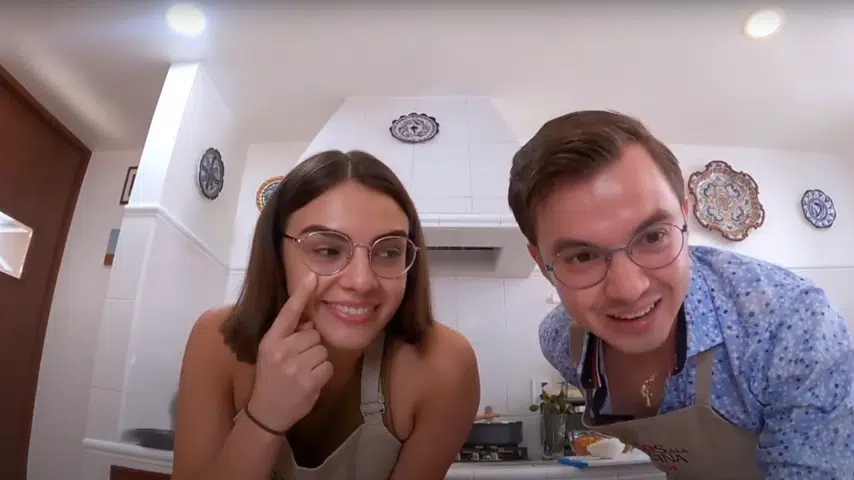
Subtitling · English
‘Todos a la Cocina’ Cooking Show
Enhancing global reach through expert subtitling.
Most common questions
Should my Arabic subtitles be in Modern Standard Arabic or a regional dialect?
Modern Standard Arabic is understood across the entire Arabic speaking world and is the usual choice for corporate, educational, and pan regional content. A regional dialect connects more directly with one country and suits advertising and entertainment aimed at a single market. We advise on the right fit before the work begins.
What is the difference between subtitles, captions, and SDH in Arabic?
Subtitles carry the spoken dialogue for viewers watching in another language. Captions are designed for deaf and hard of hearing audiences and also include sound effects, music cues, and speaker identification. SDH combines both. Which you need depends on your audience, your platform, and in some cases on accessibility requirements attached to distribution.
How do you handle numbers and English words inside Arabic subtitles?
Carefully, because this is where bidirectional text most often breaks. Numbers, brand names, and technical terms left in Latin script sit inside a right to left line and can display in the wrong order depending on the player. We test files rather than assuming, and flag anything that will not survive a particular platform.
Can you use AI to generate Arabic subtitles?
Automatic tools handle Arabic poorly. Diacritics are usually absent from written Arabic, dialect variation confuses recognition, and right to left rendering compounds the problem. Beyond accuracy, the timing and line breaking decisions that make subtitles readable are editorial judgements. Every file we deliver is produced and checked by a native Arabic subtitler.
What subtitle file formats do you deliver?
Whichever your platform or workflow requires. SRT works across most video platforms and editing tools, VTT is standard for web and streaming, STL and EBU-STL are used for broadcast, and TTML is common in streaming and enterprise contexts. We can also deliver burned-in subtitles.
How much does Arabic subtitling cost?
Arabic subtitling is charged by the running minute of video. Right-to-left layout, the choice between Modern Standard Arabic and a regional dialect, and mixed Arabic/Latin on-screen text can each affect the work, alongside running time, transcription, SDH or burned-in output and formats. Each project gets its own quote, with the Price Match Promise behind it.
Do you also add same-language Arabic captions, not just translated subtitles?
Yes. As well as translating into Arabic, we produce same-language Arabic captions and SDH — the closed captioning many broadcasters and brands need for accessibility and muted social. If your video is already in Arabic and you just want accurate RTL on-screen captions, that is core to our Arabic captioning service.
Can you work from our existing Arabic transcript or SRT?
Yes — where a transcript or SRT exists, we work straight from it, making sure right-to-left punctuation and any embedded Latin words or numerals sit correctly. Otherwise we transcribe the Arabic audio first. Every file goes through the same linguistic and technical QA.
Which editing software do your Arabic subtitle files import into?
All of them, in practice. SRT, VTT, STL and TTML files that carry Arabic right-to-left text cleanly into Premiere Pro, Final Cut Pro, DaVinci Resolve and the major online players — or burnt into the picture as a finished MP4/MOV if you would rather not handle bidirectional text yourself.
What do you need from us to quote Arabic subtitling?
Less than people expect: the video, or a link to it, its running time, which platform or broadcaster it is going to, and the date you need it by. A rough cut is fine — we would rather quote on what exists than wait for picture lock and lose a week of your schedule. A named project manager comes back with an itemised quote, normally within four working hours.
How quickly will we hear back, and who will we be dealing with?
More than half of enquiries get a reply within thirty minutes during office hours (Monday to Friday, 9am to 6pm UK time), and the itemised quote normally follows within four working hours. After that you have one dedicated project manager who owns the job from brief to final file — not a ticket queue, and not a different name on every email. If it is easier, call +44 207 095 5730 and ask for them by name.
We are still pitching and the budget is not signed off. Can we still get an Arabic quote?
Yes, and it is one of the commonest reasons people get in touch. Tell us it is for a pitch and you get a figure you can put in front of your own client, itemised so it stands up to being picked apart, with no obligation and no follow-up sales calls if the pitch goes elsewhere. If it lands, the quote still holds and we already know the project.
Ready to subtitle your video in Arabic?
Send us your video and we'll come back with an exact, itemised quote.
Worth reading before you brief
The complete solution to localise your content
Voice over

- State-of-the-art studios
- Neumann microphones
- On-hand sound engineers
- 1,000+ voice actors
Translation

- 100+ languages covered
- Tailored to your needs
- Stringent quality control
- Dedicated project managers
Subtitling

- Experienced subtitlers
- Industry-standard software
- Burn-in and graphic editing
- Open and closed captions
Transcription

- Improve accessibility
- Reach a wider audience
- Boost SEO and video views
- Maximise video engagement