
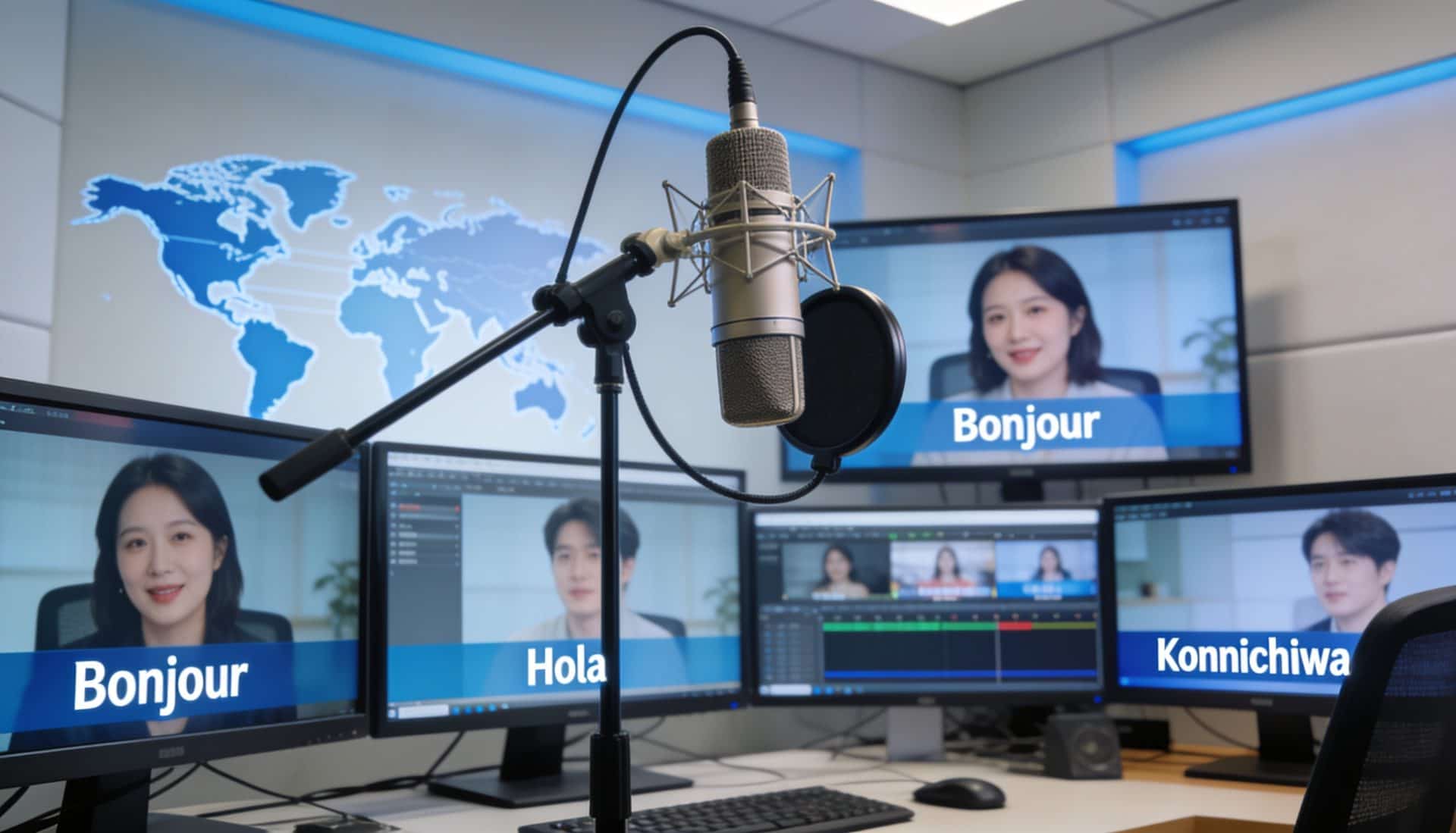
Audio & video translation
Scripts, subtitles and dubbing scripts translated by native linguists in 100+ languages — adapted to fit the timing, the speaker and what is on screen, not swapped word for word.
Professional audio & video translation services
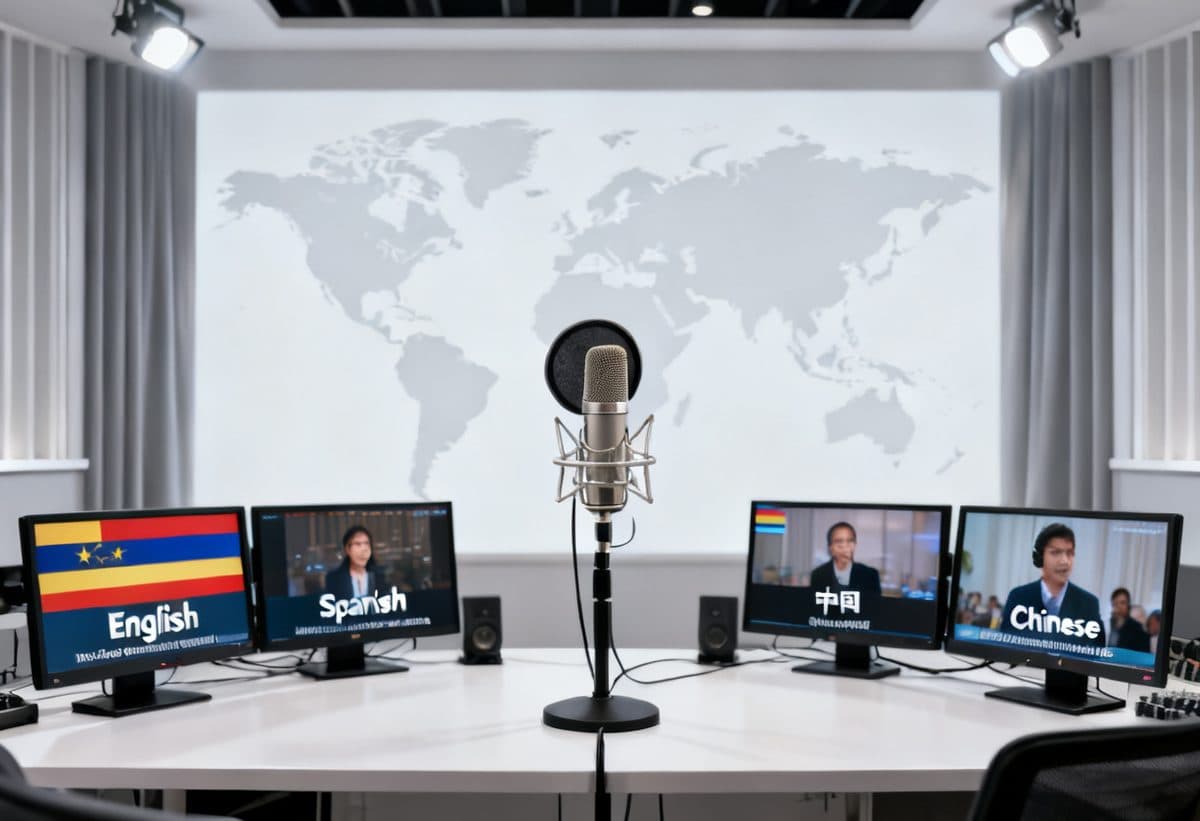
Translating a document is a language problem. Translating a video is a language problem wrapped in a production problem: the new words have to fit the timing, match the speaker, respect what is happening on screen and still sound like something a person would say. Get any of those wrong and even an accurate translation feels off.
That is the job of professional Audio & Video Translation. At GoLocalise, we take finished audio and video content and rebuild it for new markets — through subtitles, voice over or dubbing — with native linguists who translate for the screen rather than for the page.
We cover the full range of audiovisual translation: video translation services, audio translation services (podcasts, e-learning, IVR and audio guides), subtitle translation, and voice over translation — the last a translation adaptation for voice over, written to the same length as the original so it fits the timing when recorded.
- Subtitling, voice over and dubbing under one roof, so the method is chosen to fit your content, not the supplier’s menu
- Native linguists who adapt dialogue for timing, lip movement and how people actually speak
- Transcription included when no script exists — the finished video is all we need to start
- Delivery in whatever your platform requires, from SRT files to fully mixed and synced audio, managed by a translation agency in London that also records the voices
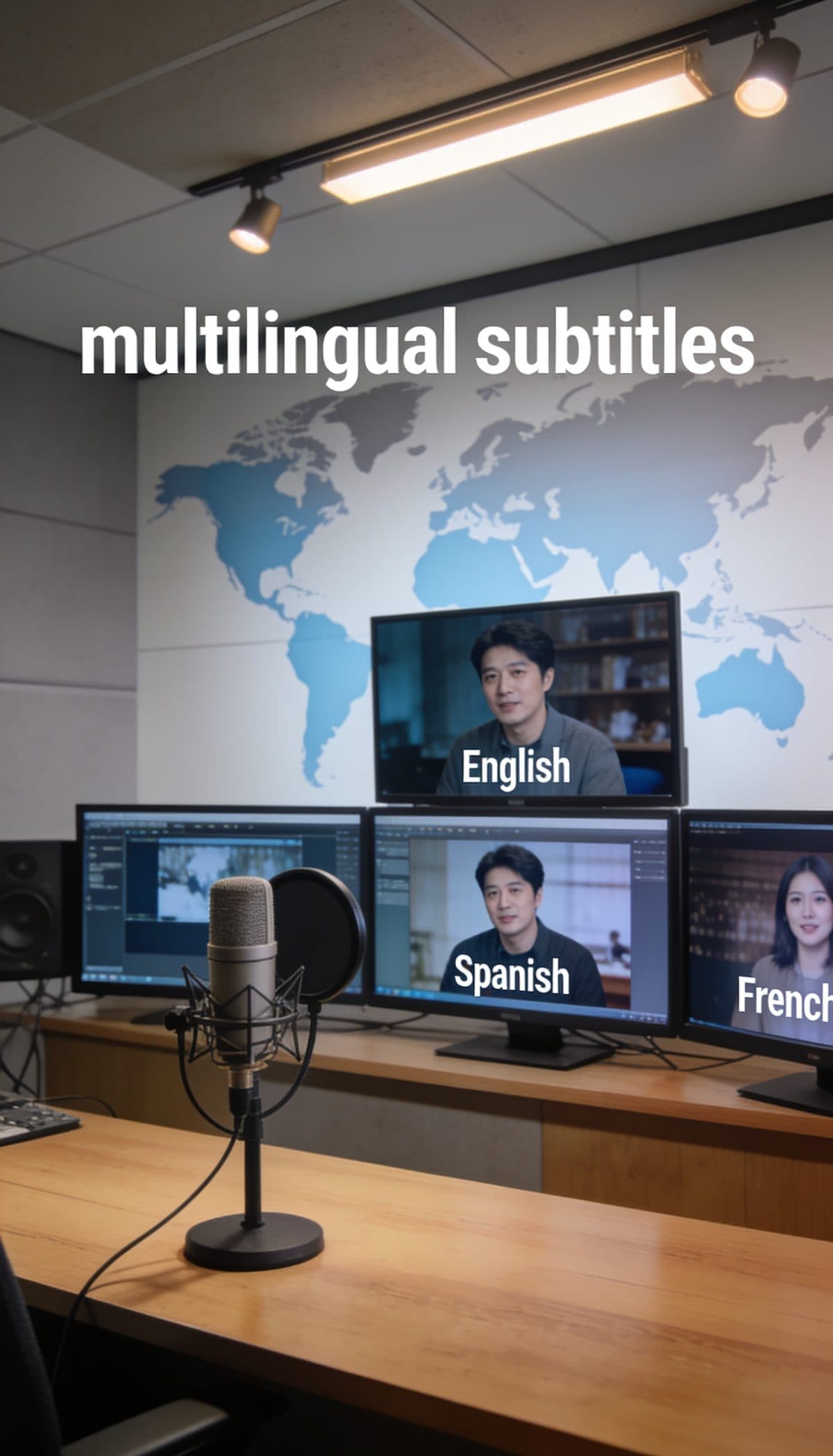
How our audio & video translation services work
Every project moves through the same broad stages: we review your source material, transcribe it where no script exists, translate and adapt the content for the chosen format, produce the subtitles or recordings, and quality-check everything against the original video before delivery.
Source review
Transcription
Translation & adaptation
Subtitling or dubbing
Editing & sync
Quality assurance
Feedback & revisions
Final delivery
One team carries the project from source file to final delivery. That continuity is what keeps an Audio & Video Translation faithful to the original at every step.
Why choose professional audio & video translation for your project?
Auto-generated captions and machine translation have made “good enough” temptingly cheap. They are also where most embarrassing localisation stories start: idioms rendered literally, names mangled, jokes that arrive as threats. For content carrying your brand, the cost of fixing a bad translation publicly is far higher than the cost of doing it properly once.
Spoken language adds constraints that text translation never faces. A sentence that grows thirty percent in translation no longer fits the scene it belongs to. Professional audiovisual translators condense, rephrase and re-time so the message survives intact inside the seconds available.
Video also communicates outside the dialogue. On-screen text, captions, charts, cultural references and even gestures may need adapting alongside the audio. A specialist team catches these because it is looking for them; a text translator working from a script never sees them at all.
And when one piece of content needs several treatments — subtitles for social, voice over for the corporate cut, dubbing for broadcast — a single partner keeps every version telling the same story. Translate each format with a different supplier and the differences will find their way on screen.
How to choose the right audio & video translation service
The first decision is not which provider to use but which method serves your content: subtitles preserve the original voices, voice over carries information over them, and dubbing replaces them entirely. Budget, audience habits and content type all pull on that choice, and a good provider will help you make it rather than sell you their default.
From there, look at language coverage in practice, not on paper. A provider may list forty languages and have real production experience in five. Ask what they have actually delivered in your target language pairs, and for which industries.
Finally, check what happens around the translation: who transcribes when there is no script, how on-screen text is handled, what formats are delivered and who runs quality control against the finished video. These details decide whether you receive ready-to-publish files or a second project.
When we scope audio and video translation work at GoLocalise, these are the four areas we recommend pinning down first
Translation method: subtitles, voice over or dubbing
Language pairs and proven market experience
Handling of scripts, on-screen text and source files
Delivery formats and quality control
Translation rates
Translation is priced per source-language word; the rate is the higher of the source and target language. Every project is quoted individually.
| Languages | GBP | EUR | USD |
|---|---|---|---|
| French (EU), German, Italian, Portuguese, Spanish | from £0.145 | from €0.18 | from $0.20 |
| Eastern European, Dutch, Greek, Turkish | from £0.175 | from €0.22 | from $0.24 |
| Arabic, Asian, French (CA), Hebrew, Indian, Scandinavian | from £0.20 | from €0.28 | from $0.30 |
| Icelandic, Welsh | from £0.25 | from €0.30 | from $0.35 |
Per source-language word. Minimum fee per language from £70 / €90 / $110, up to £120 / €140 / $160 for Icelandic and Welsh. Proofreading available (from £0.09 / €0.11 / $0.125 per word). Creative transcreation for campaign lines and short-form content is quoted separately. Rates exclude VAT where applicable and vary by language pair, volume and turnaround.
Audio & video translation pricing & project options
Audio & video translation pricing depends on video length, the method chosen (subtitles, voice over or dubbing), the number of languages and whether transcription is needed. Because those variables change with every brief, we quote each project individually rather than selling fixed bundles. The tiers below are reference points showing how projects of different scopes are usually structured:

Bronze
A simple and efficient solution for straightforward projects with minimal requirements. Includes:
- Professional voice over recording
- Basic audio editing and clean-up
- Ready-to-use audio delivery

Silver
Ideal for projects that require both voice over and linguistic accuracy across markets. Includes:
- Script localisation or translation
- Professional voice over recording
- Basic audio editing and clean-up
- Delivery adapted to your target audience

Gold
A more complete solution for content that needs to be accessible and ready for distribution across platforms. Includes:
- Script localisation or translation
- Professional voice over recording
- Basic audio editing and clean-up
- Subtitles delivered in SRT format
Custom projects
Most of the audio & video translation work we take on is fully customised. Tell us what you are working with — languages, formats, deadlines — and we will build the quote around it.
Get a tailored quote for your projectAudio & video translation for multilingual and global projects
One video into one language is a translation. One campaign into fifteen languages is an operation: dozens of files, parallel deadlines, and quality that has to hold across every version when no single person speaks them all.
That is precisely where central management earns its place. GoLocalise runs multilingual programmes through one brief and one project manager, applying the same standard to every language so the fifteenth version is as polished as the first.
Native linguists matched to each market
Languages are not interchangeable settings; each market has its own conventions for formality, humour, reading speed and what feels natural coming from a screen.
Every language pair in your project is handled by native linguists working into their own language, matched to your content type and industry rather than pulled from a general pool.
The result reads and sounds local everywhere, instead of translated everywhere.
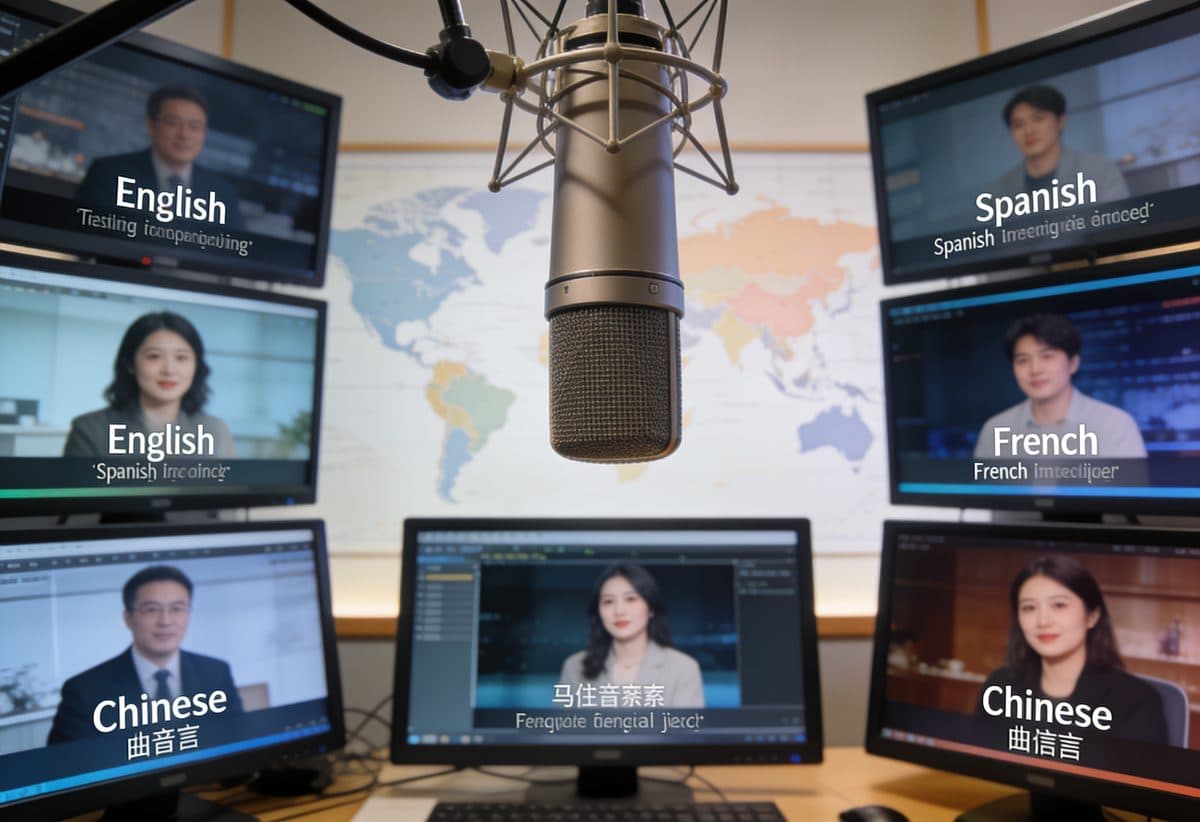
One message across formats and languages
Your content has a voice — and it should be recognisably the same voice whether a viewer meets it subtitled in Madrid, voiced in Berlin or dubbed in São Paulo.
We work from shared reference materials and a single creative brief across all versions, so tone, terminology and key messages stay aligned no matter the format or language.
Wherever your audience presses play, they meet the same brand.
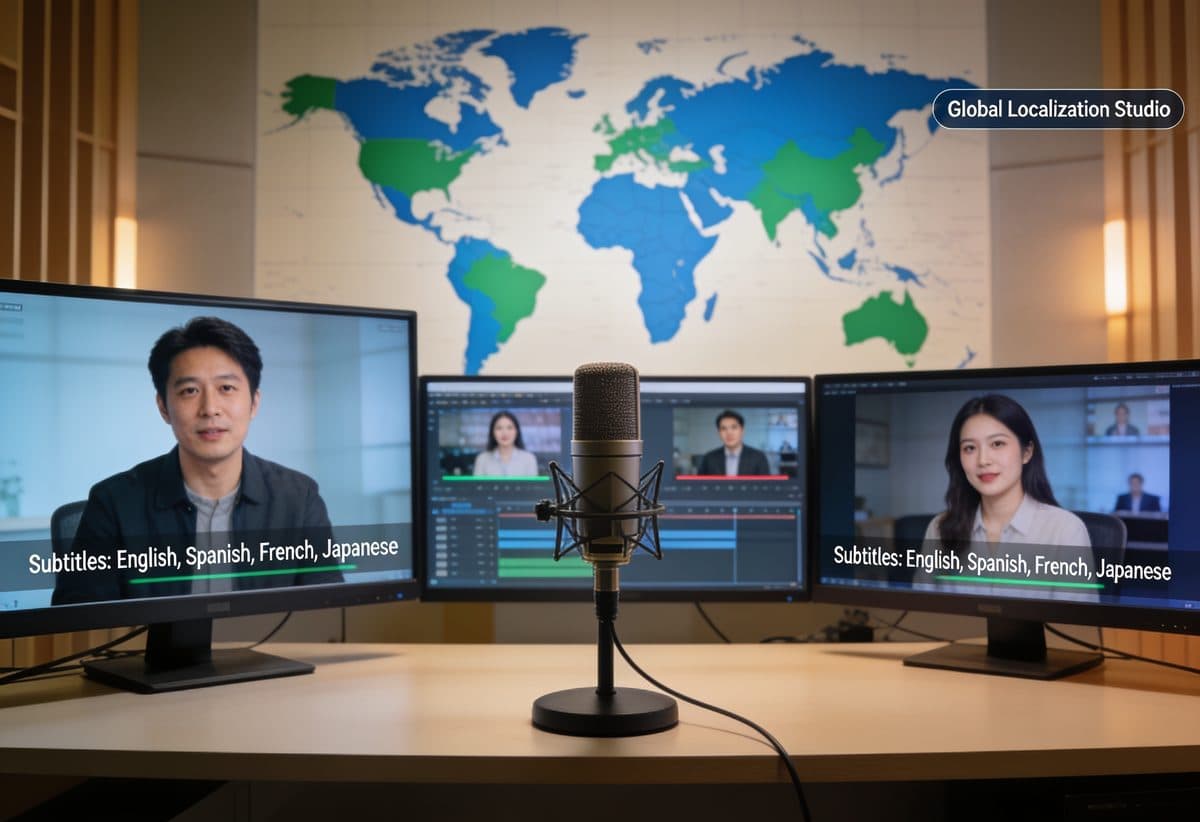
Centralised production and quality control
Multilingual delivery fails in the gaps: between translator and editor, between language teams, between versions of the source video. We close the gaps by keeping the whole production inside one managed workflow.
Every version is checked against the original video for accuracy, timing and technical compliance before it leaves us.
You receive a complete, consistent set of deliverables for every market, on a single agreed timeline.


Trusted to deliver by the world's top brands
Click a logo to watch the work we delivered for them.







What our happy customers say
We have used GoLocalise on a regular basis for projects in a number of languages. The service we receive is great. The team is always friendly and professional. The voiceovers we receive are of a very high quality and the turnaround is extremely quick. We are very happy to recommend GoLocalise to other businesses.

We’ve worked with the GoLocalise team on countless video projects and have always had the same consistent, great experience. Not only are they responsive and quick on turnaround, I can always trust the VO will be done right – they are always 100% clear with communication and ensure their talent is prepared to record by asking necessary questions upfront before recording. Highly recommended and will definitely work with them on future projects.
It was a pleasure to work with David and the team at GoLocalise. David gave me lots of help and advice, guiding me through my first subtitling project. He really knows his stuff! The experience was completely pain-free. I would not hesitate to recommend GoLocalise – outstanding work at a good price.

They’re reliable, adaptive and obsessed with quality. And while you can never be 100% guaranteed of perfection, you can be sure GoLocalise will go the extra mile to get it right every time. Whether that’s hiring extra resources, hopping on multiple calls or even changing their internal processes, they’ll do what it takes. We’ve worked with them now for over to 5 years and we are truly thankful to have such a strong localisation partner for our business.
Our translation services
We specialise in audiovisual translation — adapted for production, not generic documents.
Voice Over Translation & Adaptation
Scripts adapted to the same length as the original, then re-recorded by native voices.
Learn moreTranslation Agency London
Our London audiovisual translation team and global network of linguists.
Learn moreTranslation Rates
How audiovisual translation is priced — and how to get an exact quote.
Learn moreVideo translation by language
Native audiovisual translation, adapted for subtitles, voice over and dubbing. Browse a language, or ask us about any of our 100+ languages.
The list is the language you get back, not the language you send us
A script in Japanese that you want translated into English is an English job: what comes back is your document in English. A document in English that you want for the Japanese market is a Japanese job. Same pair of languages, two different things to buy — and different linguists, because a translator works into their own language.
You never have to settle that before getting in touch — tell us what you have and what you need it for, and we will tell you which pair that is. The full table of languages and services sets it out service by service.
- Afrikaans
- Albanian
- Amharic
- Arabic
- Armenian
- Assamese
- Awadhi
- Azerbaijani
- Basque
- Bengali
- Bhojpuri
- Bosnian
- Bulgarian
- Burmese
- Catalan
- Chinese Simplified
- Chinese Traditional
- Croatian
- Czech
- Danish
- Dari
- Dutch
- English
- Estonian
- Farsi
- Finnish
- Flemish
- French Canadian
- French European
- Galician
- Georgian
- German
- Greek
- Gujarati
- Haitian Creole
- Hebrew
- Hindi
- Hungarian
- Icelandic
- Indonesian
- Italian
- Jamaican Patois
- Japanese
- Kannada
- Kazakh
- Khmer
- Korean
- Latvian
- Lingala
- Lithuanian
- Macedonian
- Malay
- Malayalam
- Marathi
- Nepali
- Norwegian
- Odia
- Pashto
- Polish
- Portuguese Brazilian
- Portuguese European
- Punjabi
- Romanian
- Russian
- Samoan
- Scottish Gaelic
- Serbian
- Sesotho
- Sinhala
- Slovak
- Slovenian
- Somali
- Spanish European
- Spanish Latin American
- Swahili
- Swedish
- Tagalog
- Tamil
- Telugu
- Thai
- Turkish
- Turkmen
- Ukrainian
- Urdu
- Uzbek
- Vietnamese
- Welsh
- Xhosa
- Yoruba
- Zulu
Helpful translation resources
Guides and pages to plan your audio and video localisation.
Subtitling
Broadcast-standard subtitles and captions in 100+ languages.
Explore SubtitlingTranscription
Verbatim or clean-read transcription in 100+ languages.
Explore TranscriptionLocalisation vs translation
Translation moves the words; localisation adapts the whole experience.
Read the guideDubbing vs subtitling
How to take a video global — dub, voice over or subtitle.
Read the guideTranslation rates
How audio and video translation is priced, and how to get a quote.
View ratesVoice over translation
Script adaptation to the same length as the original, ready to record.
ExploreFAQs
What is audio and video translation, and who provides it for corporate content?
Audio and video translation is the adaptation of spoken and on-screen content into other languages, delivered as subtitles, voice over or dubbing — unlike document translation, it has to respect timing, voice and image as well as meaning. GoLocalise is a London-based audiovisual translation and localisation agency, established in 2008, and produces it for corporate video, training, internal comms and product films in over 100 languages, with the subtitling, voice over and dubbing handled by the same team rather than subcontracted on.
Should I choose subtitles, voice over or dubbing?
It depends on your audience, content and budget. Subtitles are fastest and keep original voices; voice over suits corporate and factual content; dubbing offers the most immersive result. We will recommend the right fit during scoping.
How much does audio and video translation cost?
GoLocalise prices audio and video translation on the running time of the video and the method you choose: subtitles from £15 per minute, voice over from £400 / €500 / $550 per hour in the studio with the buyout quoted separately, and dubbing quoted per language. The number of languages and whether the source needs transcribing first also move the total. Send the video and the target markets and the quote comes back itemised line by line, with our Price Match Promise.
Can you translate a video without the original script?
Yes. We transcribe directly from the finished video before translating, so missing scripts never block a project — it simply becomes part of the workflow.
How do I get started with an audio and video translation project?
Send the video, your target languages and where the content will be published. We come back with a recommended method and a quote — most projects are in production within days.
What’s included in an audio and video translation from GoLocalise?
GoLocalise handles the whole chain in house: transcription of the source where there is no script, translation by native linguists, adaptation to timing and on-screen text, then subtitles, voice over or dubbing, quality-checked and delivered in the formats your platform needs. One project manager runs every language of the set, so the versions arrive together and match.
What can I use an audio and video translation for?
We produce audio and video translation for corporate video, eLearning, films, marketing and social media content — all delivered to broadcast quality and ready to publish.
Can you provide audio and video translation in multiple languages?
Yes. We work with native voice actors and linguists across 100+ languages, so you can localise your audio and video translation for global audiences while keeping tone and quality consistent across every version.
Can I see samples before I commit to a audio and video translation?
Yes. Ask us for relevant samples and, for any audio and video translation, we will walk you through our approach and share examples so you know exactly what to expect before you book.
What file formats do you deliver a audio and video translation in?
We deliver your audio and video translation in the formats you need — including SRT, VTT, DOCX and more — checked and ready to use across any platform.
Do you offer video translation and audio translation services?
Yes. Video translation services localise your video through subtitles, voice over or dubbing; audio translation services cover podcasts, e-learning, IVR and audio guides — transcribed, translated and, where needed, re-recorded by native voices.
Do you offer voice over translation?
Yes. Voice over translation is a translation adaptation for voice over — we adapt your script to the same length as the original so it fits the timing, then re-record it with native voice actors. See our dedicated voice over translation page for detail.
Do you translate subtitles?
Yes. We provide subtitle translation in 100+ languages, fitted to on-screen reading speed and delivered in SRT, VTT and other formats ready to publish.
The complete solution to localise your content
Voice over

- State-of-the-art studios
- Neumann microphones
- On-hand sound engineers
- 1,000+ voice actors
Translation

- 100+ languages covered
- Tailored to your needs
- Stringent quality control
- Dedicated project managers
Subtitling

- Experienced subtitlers
- Industry-standard software
- Burn-in and graphic editing
- Open and closed captions
Transcription

- Improve accessibility
- Reach a wider audience
- Boost SEO and video views
- Maximise video engagement