
Subtitling services
A UK subtitling company with its own London studios: subtitles and captions in 100+ languages, transcribed, timed, spotted and formatted to your platform's spec, ready to burn in or drop in as a separate file.
A UK subtitling company in 100+ languages
Video is the preferred format for online content, but more and more often it is consumed in environments where sound isn’t available: public transport, open offices, waiting rooms. Additionally, it is used for people with reduced hearing capacities and for those accessing content from a different language. In that context, subtitles have become a basic production requirement for most projects.
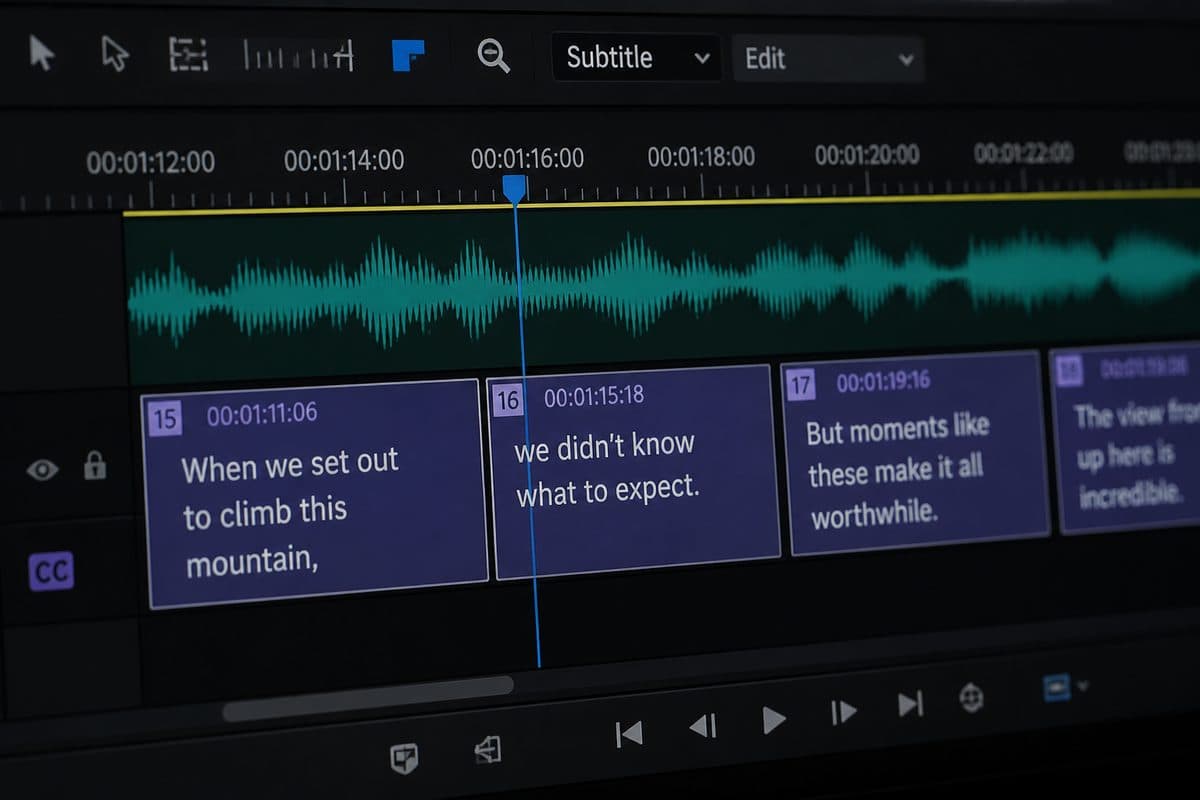
Getting words on screen is the easy part; getting the timing right so a line appears and disappears in sync with the speech, at a reading speed that works for the audience, with line breaks that don’t fragment meaning mid-phrase — that requires genuine skill and professional training.
GoLocalise is a UK subtitling company and audiovisual localisation agency, working out of our own Central-London studios since 2008. We offer subtitling services that cover the full range of content formats and distribution requirements. Whether your project calls for translated subtitles for a global audience, SDH subtitles that meet accessibility standards, or closed captions for broadcast compliance, we match the approach to the brief and deliver files that are ready to use.
- Subtitling services used across corporate video, eLearning, streaming content, film, advertising, and live event recordings
- Translated, SDH, and closed caption subtitle formats available across a wide range of languages
- Files delivered in SRT, VTT, STL, TTML, and other standard formats depending on platform requirements, ready to be broadcasted
- Professional subtitles as a part of a complete strategy that can include multilingual localisation, script adaptation, dubbing and voice over — produced by a subtitling company in London with its own studios.
How our professional subtitling services work
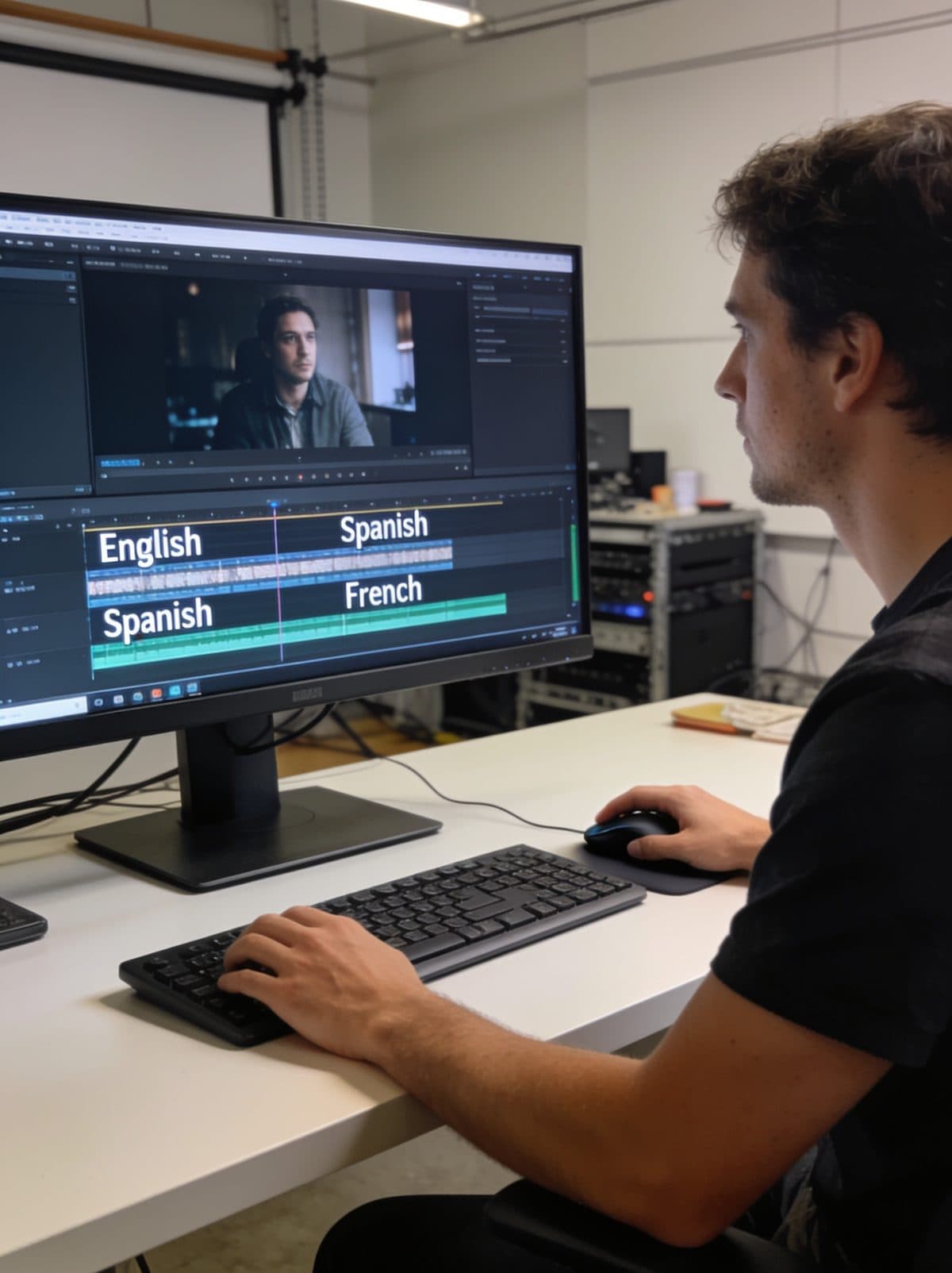
Our subtitling services follow a structured workflow built around the specific needs of each project. From the initial file review through to final delivery, with every stage managed to keep accuracy, timing, and formatting consistent throughout.
File review
Transcription
Timing & spotting
Subtitle creation
Style & formatting
Quality assurance
Feedback & revisions
Final delivery
Why choose a professional subtitling company for your content?
Accessibility legislation is making subtitles a legal requirement for an increasing range of content. Broadcasting regulations, WCAG 2.1 accessibility standards, and platform requirements from services like Netflix, Amazon, and YouTube each set their own standards for caption quality and coverage. For organisations distributing content across multiple platforms and markets, meeting those requirements consistently isn’t something that can be delegated to automated tools or handled informally in-house.
There’s also a clear commercial argument. Subtitled video consistently beats unsubtitled content on completion and engagement rates across every major platform. Viewers who would skip content because they’re in a quiet environment, or who aren’t confident in the language, stay engaged if it is subtitled. Combined with their use for localisation purposes, subtitles make the difference between a video being watched and being scrolled past entirely.
Regarding eLearning and training content, subtitles serve a distinct purpose, as reading and listening simultaneously improves information retention. Organisations rolling out training across multilingual workforces depend on accurate, well-timed subtitles to keep the quality of learning consistent, regardless of which language version an employee is watching.
The consequences of poor subtitling are also worth naming directly. Mistimed cues, awkward line breaks, or a translation that loses the register of the original don’t just look unprofessional. Instead, they signal to the viewer that the content wasn’t made with them in mind. In brand content, that’s a real cost. In compliance or safety training, it’s a risk.
How to choose the right subtitling company for your project
Subtitling requirements vary depending on the content, the audience, and where the file is going. A documentary for a streaming platform has different specifications from a corporate training module on an LMS — and both differ from a social media ad being cut for multiple markets.
At GoLocalise, we review every project before anything goes into production, taking into account the source material, distribution requirements, and which type of subtitling best serves the intended audience.
Getting the approach right from the start means matching the correct subtitlers and style standards to the job — and delivering files that work on the first pass rather than going back on technical corrections.
It also has a direct bearing on cost and timeline. Projects with a clear brief move faster, involve fewer revisions, and consistently produce better results.
Type of subtitles required
Target language and audience
Content format and platform
Timing, style and readability standards
Subtitling rates
Translated subtitles (spotting + translation), priced per minute of video. Every project is quoted individually — send your video for an exact, itemised quote.
| Languages | GBP | EUR | USD |
|---|---|---|---|
| French (EU), German, Italian, Portuguese, Spanish | from £15 | from €22 | from $24 |
| Eastern European, Dutch, Greek, Turkish | from £18 | from €24 | from $27 |
| Asian, Arabic, French (CA), Hebrew, Scandinavian | from £20 | from €26 | from $30 |
Per minute of video. Minimum fee per file from £150 / €200 / $225, up to £225 / €275 / $300 for Asian, Arabic, Hebrew and Scandinavian languages. SDH / closed captions add £2 per minute (€2 / $3). Burn-in (open captions) from £5 per minute, or £50 per file for bulk. Rates exclude VAT where applicable and vary by language, turnaround and complexity.
Subtitling services pricing & project options
Subtitling costs are shaped by several variables: the duration of the content, how many languages are in scope, whether transcription is needed before subtitling can begin, the type of subtitles required, and which formats the finished files need to be in. For this reason, we scope each job individually and price it accordingly. Below are example tiers to give a clear sense of how different types of subtitling projects are typically structured:

Bronze
A simple and efficient solution for straightforward subtitling in the original language. Includes:
- Subtitling in the source language
- Accurate timing and spotting to the video
- Delivery in SRT format

Silver
Ideal for projects that need transcription and subtitles translated for other markets. Includes:
- Transcription of your audio or video
- Subtitling with professional timing and spotting
- Translation into your target language
- Delivery in SRT format

Gold
A complete solution for content that needs to be accessible and ready for distribution across platforms. Includes:
- Transcription of your audio or video
- Translation into multiple target languages
- Subtitling with professional timing and spotting
- Delivery in multiple formats (SRT, VTT, STL, TTML)
Custom projects
Most of the subtitling work we do falls outside any standard tier. If that is your case, contact us and we’ll put together a quote specific to what you need.
Get a tailored quote for your projectSubtitling services for multilingual and global projects
Producing subtitle files in multiple languages gets complicated quickly. During the translation process, languages can make text shorter or longer. For instance, German typically runs around 30% longer than English and that directly affects how subtitles can be timed within the original edit.
Additionally, different markets bring different conventions. Reading speed standards, line-length norms, and the handling of right-to-left languages like Arabic and Hebrew all vary, and working within these standards correctly requires subtitlers who understand them from the inside.
At GoLocalise, multilingual programmes are managed centrally: one brief, one point of contact, and consistent standards across every language in scope to guarantee all versions come out successfully.
Native language subtitlers for every market
Every language version is handled by a native speaker whose primary work is subtitling in that language. Native fluency matters not just for translation quality, but for understanding how the language reads on screen, where ideas break naturally, and how lines can be split without losing meaning.
We match subtitlers by language, content type, and subject matter. Technical, legal, and consumer content each call for different registers, and a native subtitler working in the right domain makes that difference in the output.
When the work is done, we share the content with you for a round of QA. At this point, you can suggest style changes and ensure everything aligns with your brand’s voice.
Consistent style and timing across languages
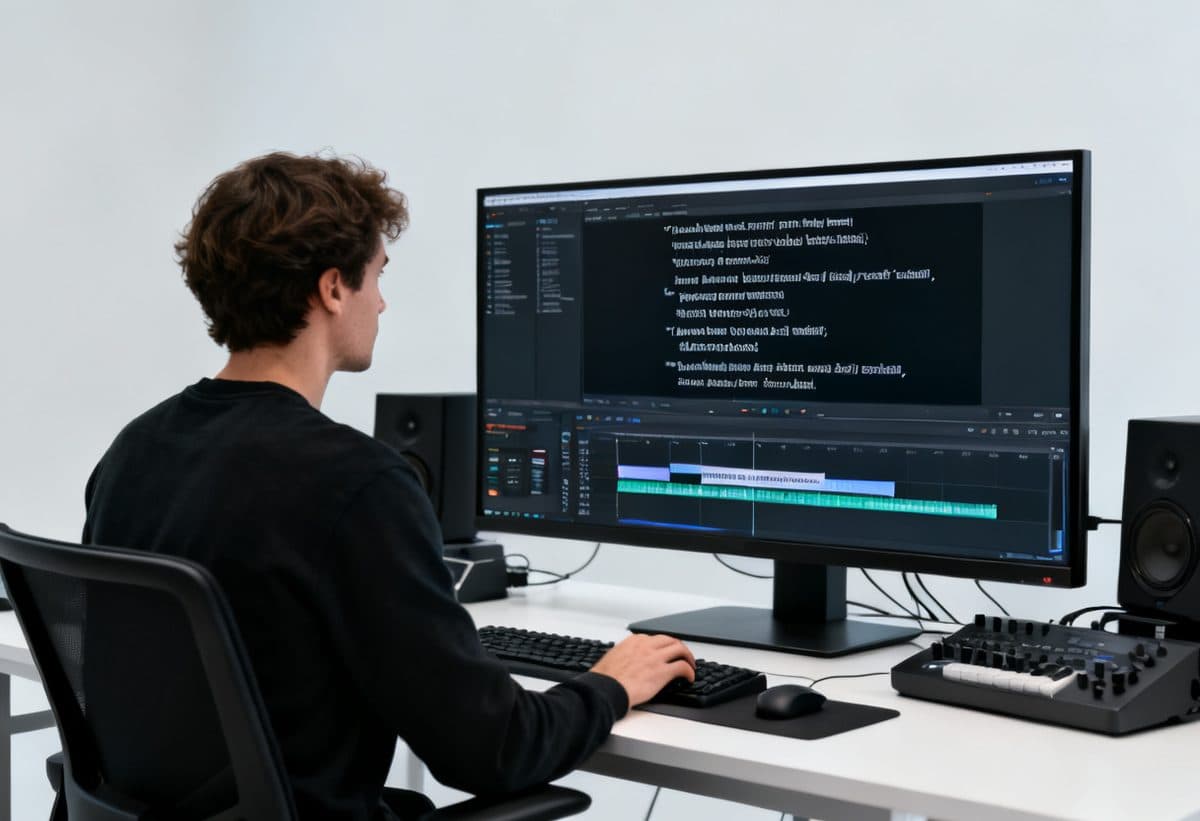
Consistency across a multilingual programme means applying the same reading speed standards, line break approach, and style conventions across every language, adapted correctly for each, so every version feels equivalent to watch.
This requires detailed style documentation and a review process that checks output against the original brief and also in between languages. Without that, quality drifts between language versions in ways that are hard to spot without watching them side by side.
The result is subtitle files that are aligned and clearly feel like they belong to the same production, regardless of the language they’re delivered in.
Centralised production and quality control
Managing many language versions at once creates coordination demands that not any agency can handle. At GoLocalise, a dedicated team tracks all the files across stages (transcription, translation, subtitling, QA, and delivery) to guarantee the workflow runs smoothly, with no delays.
Every file goes through a structured quality check covering linguistic accuracy, timing, and format compliance before it leaves us.
The output is broadcast-quality subtitle files across every language in scope, in the formats you need, on the agreed timeline.


Trusted to deliver by the world's top brands
Click a logo to watch the work we delivered for them.









What our happy customers say
We have used GoLocalise on a regular basis for projects in a number of languages. The service we receive is great. The team is always friendly and professional. The voiceovers we receive are of a very high quality and the turnaround is extremely quick. We are very happy to recommend GoLocalise to other businesses.

We’ve worked with the GoLocalise team on countless video projects and have always had the same consistent, great experience. Not only are they responsive and quick on turnaround, I can always trust the VO will be done right – they are always 100% clear with communication and ensure their talent is prepared to record by asking necessary questions upfront before recording. Highly recommended and will definitely work with them on future projects.
It was a pleasure to work with David and the team at GoLocalise. David gave me lots of help and advice, guiding me through my first subtitling project. He really knows his stuff! The experience was completely pain-free. I would not hesitate to recommend GoLocalise – outstanding work at a good price.

They’re reliable, adaptive and obsessed with quality. And while you can never be 100% guaranteed of perfection, you can be sure GoLocalise will go the extra mile to get it right every time. Whether that’s hiring extra resources, hopping on multiple calls or even changing their internal processes, they’ll do what it takes. We’ve worked with them now for over to 5 years and we are truly thankful to have such a strong localisation partner for our business.
Subtitling projects we've delivered
Real subtitling and captioning work — across film, documentary and streaming.

Subtitling · European French
Return of the Goat II
Elevating cycling narratives with multilingual subtitling.

Subtitling · Indonesian
Pathways: Hope After Suicide Loss
Bridging cultures through subtitling: a journey of hope.
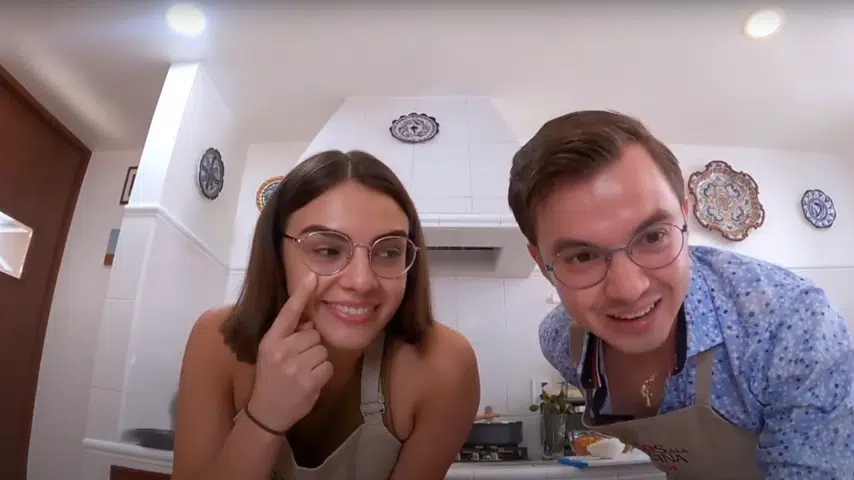
Subtitling · English
‘Todos a la Cocina’ Cooking Show
Enhancing global reach through expert subtitling.
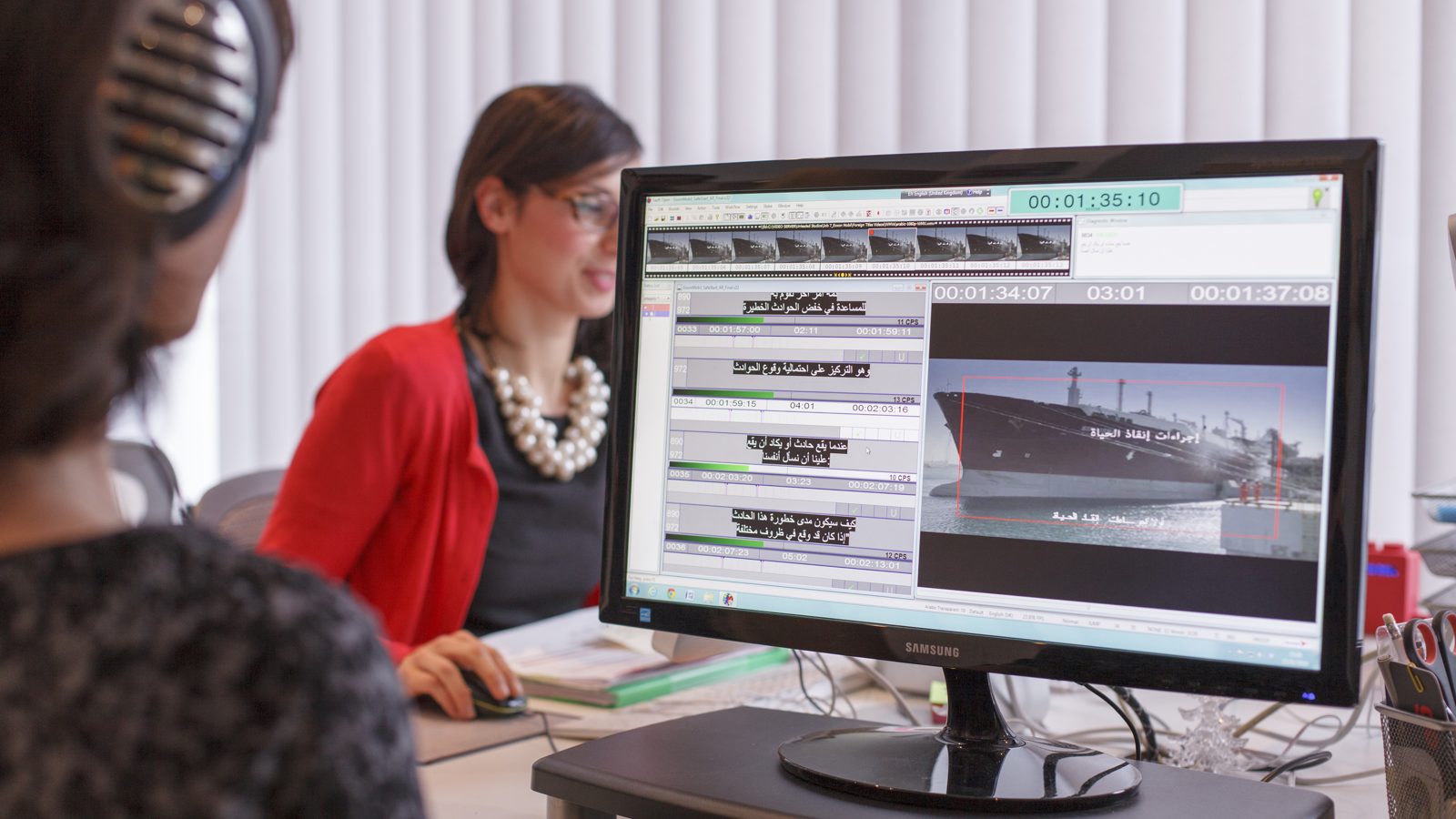
Our subtitling services
Whatever type of subtitles or captions you need, in any format or language.
Closed Captioning Services
Accessibility-ready captions with sound and speaker cues, in every format.
Learn moreSDH Subtitling
Subtitles for the deaf and hard of hearing, to broadcast and streaming spec.
Learn moreYouTube Subtitling
Accurate captions and translated subtitles to grow your channel.
Learn moreSubtitling Company London
Our London subtitling team for film, corporate, eLearning and broadcast.
Learn moreSubtitling Rates
How subtitling is priced per minute — and how to get an exact quote.
Learn moreFree Subtitle Tools
Check reading speed (CPS) and convert between SRT, VTT and other formats — free.
Learn moreSubtitling by language
Native subtitlers and captioners in 100+ languages. Browse a dedicated language page, or ask us about any language.
The list is the language you get back, not the language you send us
A video in Cantonese that you want subtitled into English is an English job: you are buying an English subtitle file, and we cast a Cantonese-speaking subtitler to work from the audio. A video in English that you want subtitled for Hong Kong is a traditional-character job. Same pair of languages, two different things to buy.
You never have to settle that before getting in touch — tell us what you have and what you need it for, and we will tell you which pair that is. The full table of languages and services sets it out service by service.
- Afrikaans
- Albanian
- Amharic
- Arabic
- Armenian
- Assamese
- Awadhi
- Azerbaijani
- Basque
- Bengali
- Bhojpuri
- Bosnian
- Bulgarian
- Burmese
- Catalan
- Chinese Simplified
- Chinese Traditional
- Croatian
- Czech
- Danish
- Dari
- Dutch
- English
- English SDH
- Estonian
- Farsi
- Finnish
- Flemish
- French
- French Canadian
- Galician
- Georgian
- German
- Greek
- Gujarati
- Haitian Creole
- Hebrew
- Hindi
- Hungarian
- Icelandic
- Igbo
- Indonesian
- Italian
- Jamaican Patois
- Japanese
- Kannada
- Kazakh
- Khmer
- Korean
- Latvian
- Lingala
- Lithuanian
- Macedonian
- Malay
- Malayalam
- Marathi
- Nepali
- Norwegian
- Odia
- Pashto
- Polish
- Portuguese Brazilian
- Portuguese European
- Punjabi
- Romanian
- Russian
- Samoan
- Scottish Gaelic
- Serbian
- Sesotho
- Sinhala
- Slovak
- Slovenian
- Somali
- Spanish
- Swahili
- Swedish
- Tagalog
- Tamil
- Telugu
- Thai
- Turkish
- Turkmen
- Ukrainian
- Urdu
- Uzbek
- Vietnamese
- Welsh
- Xhosa
- Yoruba
- Zulu
We subtitle in over 100 languages
Can't see the one you need? We almost certainly cover it.
Helpful subtitling resources
Guides and pages to plan and price your subtitling project.
Subtitling & dubbing glossary
Sub, dub, SDH, CPS, spotting, forced narratives, M&E — defined in plain English.
Open the glossaryHow to choose a subtitling company
Ten questions that separate suppliers — reading speed, platform specs, formats and price.
Read the guideSubtitles vs captions vs SDH
What each one is, and when to use which for reach and compliance.
Read the guideDubbing vs subtitling
Which to choose for a global release — cost, speed and reach compared.
Read the guideAI vs human subtitling
Where automatic captions work, where they fail, and how to choose.
Read the guideSubtitling rates
How subtitling is priced per minute, and how to get an exact quote.
View ratesClosed captioning & SDH
Accessibility-focused captioning for broadcast and streaming.
Explore captioningSubtitle reading speed checker
Check your subtitles are readable — characters per second, in seconds.
Open the toolSubtitle converter
Convert SRT, VTT and SBV files — and clean up or re-time them.
Open the toolFAQs
Are you a UK subtitling company?
Yes. GoLocalise is a UK subtitling company with its own studios in Central London (Stockwell, SW9), working with broadcasters, streaming platforms, agencies and in-house teams since 2008. Project management, scheduling and quality control run from London, while the subtitling itself is done by native linguists in each of the 100+ languages we cover — so a UK point of contact does not mean a UK-only team. We invoice in GBP, EUR or USD.
What should I look for when comparing subtitling companies?
Ask each company for numbers rather than adjectives: the characters-per-second reading speed they work to, whether they build files to your destination platform's published specification or convert a generic SRT at the end, who translates each language and whether they are a native speaker, which file formats they deliver, what the per-minute price includes, and what happens when the video is re-edited. Our buyer's guide sets out the ten questions in full, and we publish our own answers to all ten.
What is the difference between subtitles and captions?
Subtitles transcribe or translate spoken dialogue for viewers watching in a different language. Captions go further — designed for deaf and hard-of-hearing audiences, they also include sound effects, music cues, and speaker identification. SDH (Subtitles for the Deaf and Hard of Hearing) combines both. Which you need depends on your audience, platform, and in some cases distribution requirements.
What types of content need professional subtitling services?
Any video intended for an audience that doesn’t share the original language, or that needs to meet accessibility standards. In practice: corporate training, eLearning, streaming content, advertising, product films, conference recordings, and documentary work. Even single-language content increasingly benefits from subtitles, given how much video is now watched without sound.
How many revisions are included in a subtitling project?
Minor revisions (timing adjustments, wording edits, format corrections) are included. Larger changes, such as re-timing a file after a significant re-edit or retranslating a language version from scratch, fall outside the original scope. Finalising the source content before subtitling begins is the simplest way to avoid this.
What subtitle file formats do you deliver?
GoLocalise delivers SRT, VTT, STL, EBU-STL, TTML and IMSC, plus burned-in subtitles when a platform needs them. SRT works across most video platforms and editing tools, VTT is standard for web and live streaming, STL and EBU-STL are used for UK and European broadcast, and TTML and IMSC are what the streaming platforms ask for. Confirm the destination at the start and we build the file to that specification.
Can you deliver Netflix-compliant subtitle files in multiple languages?
Yes. GoLocalise builds subtitle files to the published timed-text specification of wherever they are going — Netflix, Amazon, Disney+ or a broadcaster — covering character limits, line counts, reading speed, safe area, frame rate and file format, in every language of the set rather than in the first one only. A file that passes one platform will often fail another, so we confirm the destination before the first language is cut. We are not a certified vendor of any platform; we hold files to the same published numbers those platforms do.
How much does professional subtitling cost per minute in the UK?
GoLocalise subtitles from £15 per minute of video for English, and from £18 to £20 per minute for most other languages, quoted on the finished running time rather than on word count. Translated subtitles cost a little more than same-language captions, SDH and closed captions a little more again, and a tight turnaround affects the price. Every quote is itemised, carries our Price Match Promise, and comes back the same working day.
How do you make sure subtitles meet reading speed (CPS) limits?
GoLocalise checks every file against a characters-per-second target before delivery, and condenses the translation to fit rather than letting a subtitle sit on screen too briefly to read. Reading speed is where most rejected files fail, because a translation that runs longer than the original will breach the limit unless somebody rewrites it. The same check is available free on our subtitle reading speed checker.
How do I get started with a subtitling service?
Just send us your script or files, your deadline and any references for the style you want. We will recommend the best approach, share a quote and, once approved, get straight into production with a dedicated project manager as your single point of contact.
Can you provide subtitling in multiple languages?
Yes. GoLocalise subtitles in 91 languages, each with its own page and its own conventions — from right-to-left line breaking in Arabic to character counting in Simplified and Traditional Chinese — handled by native linguists rather than one template applied to every language. One project manager runs all the versions, so tone and timing stay consistent across the set.
Why choose GoLocalise for subtitling service?
GoLocalise has been a trusted voice over and localisation agency since 2008, with more than 1,000 professional voice actors across 100+ languages, native-speaking directors, our own Central-London studios and a Price Match Promise — so you get broadcast-quality results, on time and on budget.
Can I see samples before I commit to a subtitling project?
Yes. Ask GoLocalise for samples in your language pair and format and we will share work of the same kind, walk you through the approach and show you the file you would receive — before you book anything.
Do you offer subtitle translation into other languages?
Yes — subtitle translation is one of our core services. Native linguists translate your subtitles or captions into 100+ languages and fit them to on-screen reading speed, delivered as SRT, VTT and other ready-to-publish files.
The complete solution to localise your content
Voice over

- State-of-the-art studios
- Neumann microphones
- On-hand sound engineers
- 1,000+ voice actors
Translation

- 100+ languages covered
- Tailored to your needs
- Stringent quality control
- Dedicated project managers
Subtitling

- Experienced subtitlers
- Industry-standard software
- Burn-in and graphic editing
- Open and closed captions
Transcription

- Improve accessibility
- Reach a wider audience
- Boost SEO and video views
- Maximise video engagement