Voice Over · Igbo
Igbo voice over services
Native Igbo voice over for south-eastern Nigeria — advertising, public-health and civic campaigns, eLearning, broadcast and drama. Igbo is tonal and ordinary writing does not mark the tones, so the reader has to already know the word.
3
Major languages of Nigeria
Tonal
And unmarked in normal writing
48h
Delivery
Calling Igbo voice talent
We're expanding our Igbo roster
Igbo is a language we're actively growing. If you're an Igbo voice actor, we'd love to hear your demos and put you forward for paid work.
About the language
The page doesn't tell you how to say it
Igbo is one of Nigeria's three major languages, alongside Hausa and Yoruba, and the language of the south-east. Most of the work we take on in it is advertising, public-health and civic campaigns, eLearning, broadcast and drama.
Here is the thing that makes Igbo a voice over problem rather than a translation problem. Igbo is tonal — tone distinguishes words, not just mood. And in ordinary writing, the kind you find in newspapers, on signage and in almost any script that reaches us, the tones are not marked. The diacritics exist and appear in dictionaries and teaching material, but not in normal text.
So an unmarked Igbo script is genuinely ambiguous on the page. The person reading it has to already know which word is meant, because the writing does not say. A non-native cannot work it out from context alone, and a synthetic voice cannot either — it guesses, and it guesses wrong often enough that an Igbo listener notices immediately.
That is the reverse of the situation in Yoruba, next door, where tone is written with accents and the problem is that systems strip them. Same underlying issue, opposite failure mode. In both cases the fix is a native reader who knows the word before they see it.
The second decision is which Igbo. The standard — Igbo izugbe — was assembled from several dialects to give a common written and taught form. It works for formal and institutional material, but some speakers find it a little stiff, and for warmer or dramatic content a regional variety often lands better. Tell us the audience and the tone and we will advise rather than defaulting.
Send it over even if the job is not signed off yet. The script review is on the house. So is the honest opinion about whether the approach is right. A free casting comes with the quote — shortlisted Igbo voices recorded on your script, yours to compare. Get an itemised Igbo quote, or say what you are trying to achieve and we will suggest how.
Getting Igbo right
Before you book the studio
One of these explains why native casting is not optional here.
Unmarked tone means an ambiguous script
Igbo is tonal and normal writing does not mark it. The reader supplies what the page leaves out, which is something only a native speaker can do reliably.
Automated voices guess
With no tone marks in the source, a synthetic read has to infer, and it infers wrongly often enough to be obvious to the audience.
Standard or regional
Igbo izugbe suits formal and institutional work. For warmth or drama, a regional variety usually lands better. It is a brief decision, not a default.
Nigeria takes three languages
Igbo covers the south-east, Hausa the north, Yoruba the south-west. A national campaign needs all three, and we record each.
How we can help
One partner for the whole Nigeria job
Translation & script adaptation
Igbo adaptation by native linguists, with the terminology agreed up front for campaigns that run across several pieces.
Subtitling & captions
Igbo subtitles with the dotted letters (ị, ọ, ụ) checked on delivery, since those are the characters systems tend to drop.
100+ languages under one roof
London studios + global talent network
5.0★ from 149 reviews
Content types
Igbo voice over for every kind of content
Whatever you're making, we cast the right voice in Igbo. Explore by use case.
Most common questions
Why can't we use an automated or AI voice for Igbo?
Because the script does not contain enough information to read aloud. Igbo is tonal — tone distinguishes one word from another — and ordinary written Igbo does not mark the tones. A native reader supplies what the page leaves out, from knowing the language. An automated system has to infer it, and it infers wrongly often enough that an Igbo listener spots it in the first sentence.
Should we record in standard Igbo or a regional variety?
Igbo izugbe, the standard, was assembled from several dialects to serve as a common written and taught form, and it is the right choice for formal, institutional and educational material. Some speakers find it a touch stiff, so for advertising, drama or anything meant to feel warm and local, a regional variety often lands better. Tell us the audience and the tone and we will recommend rather than defaulting.
Will an Igbo recording reach the whole of Nigeria?
No. Nigeria's three major languages divide broadly by region — Igbo in the south-east, Hausa in the north, Yoruba in the south-west — with English as the official language across the country. A national campaign generally needs all three, and often English as well. We record each with its own native talent and can schedule them together, which costs less than separate commissions.
How is this different from Yoruba, which is also tonal?
The tone problem runs in the opposite direction. Yoruba writes its tones with accent marks, and the difficulty is that fonts and systems strip them, so correct copy arrives damaged. Igbo generally does not write them at all, so the script was never unambiguous to begin with. Both end up needing a native reader who knows the word before they see it, but for different reasons.
How big is your Igbo roster?
One signed voice today, with recruitment under way. Igbo has a particular wrinkle worth knowing about: it is a tonal language with a standard literary form, Igbo izugbe, that nobody speaks natively — it was assembled from several dialects. Which means the first question on any brief is whether you want the standard, which sounds formal and official, or a regional read that sounds like a person.
Do you have female Igbo voices?
Not signed at the moment; the Igbo artist on our books is male. A female read means sourcing from Nigeria, which is routine but not instant — tell us in the brief and we will give you a real lead time.
Can I direct the session remotely?
Igbo records through our Nigerian network rather than in London. Direction happens over Source-Connect, Zoom or Teams, and the one-hour offset from the UK makes scheduling easy.
What do you use Igbo voice over for?
Advertising and consumer campaigns, public-health and civic information, financial-inclusion and agricultural content, eLearning and training, broadcast and radio, drama and Nollywood work, and community messaging for Igbo-speaking audiences in Nigeria and the diaspora.
Can you deliver to our platform's audio specification?
Whatever the platform takes for your Igbo files: WAV, MP3 or separated stems, mastered to the loudness figure you give us.
What do you need from us to quote Igbo voice over?
Less than people expect: the script, or the draft of it, its total running time or word count, where the recording will be used, and the date you need it by. If the script is not signed off yet, send the draft anyway — we would rather quote on what exists than wait for a version that eats your deadline. A named project manager comes back with an itemised quote, normally within four working hours.
How quickly will we hear back, and who will we be dealing with?
More than half of enquiries get a reply within thirty minutes during office hours (Monday to Friday, 9am to 6pm UK time), and the itemised quote normally follows within four working hours. After that you have one dedicated project manager who owns the job from brief to final file — not a ticket queue, and not a different name on every email. If it is easier, call +44 207 095 5730 and ask for them by name.
We are still pitching and the budget is not signed off. Can we still get an Igbo quote?
Yes, and it is one of the commonest reasons people get in touch. Tell us it is for a pitch and you get a figure you can put in front of your own client, itemised so it stands up to being picked apart, with no obligation and no follow-up sales calls if the pitch goes elsewhere. If it lands, the quote still holds and we already know the project.
Brands that trusted us with their voice
Casting, direction and recording for campaigns that ran in several markets at once.
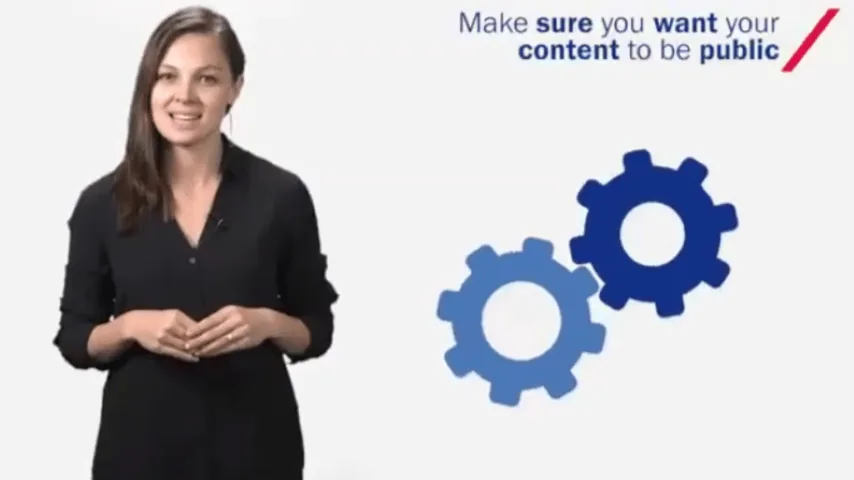
Voice Over · Flemish
AXA — Redefining Standards
Multilingual mastery for instructional videos: a Flemish voiceover journey.
Voice Over · Czech
Betfair
Crafting authenticity in localisation: a Czech voiceover production.
Voice Over · Cantonese
BlackBerry Worldwide
Multilingual voiceover project for BlackBerry's innovative campaign.
Complete your Nigeria coverage
Services that pair with Igbo
Hausa voice over
The north of Nigeria, on its own roster.
Yoruba voice over
The south-west — tonal too, marked differently.
Translation services
Igbo adaptation by native linguists.
Igbo subtitling
Underdots are written; tone, which shifts meaning, isn't.
Igbo transcription
Whose Igbo the transcript ends up being written in.
From £400
/ €500 / $550
per hour in the recording studio
That hourly rate is the Basic Studio Fee: the recording session itself, with the voice actor, the casting, the direction, the studio and the engineer included. Any buyout — the usage fee — is added on top and quoted separately: it depends on the markets the recording runs in, the media it runs on and how long you licence it for. Every line is itemised, and all of it carries our Price Match Promise.
Igbo read by someone who knows the word before they see it
Tell us about your Igbo project and we'll source and audition the right native voice — with a free, no-obligation quote.
The complete solution to localise your content
Voice over

- State-of-the-art studios
- Neumann microphones
- On-hand sound engineers
- 1,000+ voice actors
Translation

- 100+ languages covered
- Tailored to your needs
- Stringent quality control
- Dedicated project managers
Subtitling

- Experienced subtitlers
- Industry-standard software
- Burn-in and graphic editing
- Open and closed captions
Transcription

- Improve accessibility
- Reach a wider audience
- Boost SEO and video views
- Maximise video engagement