
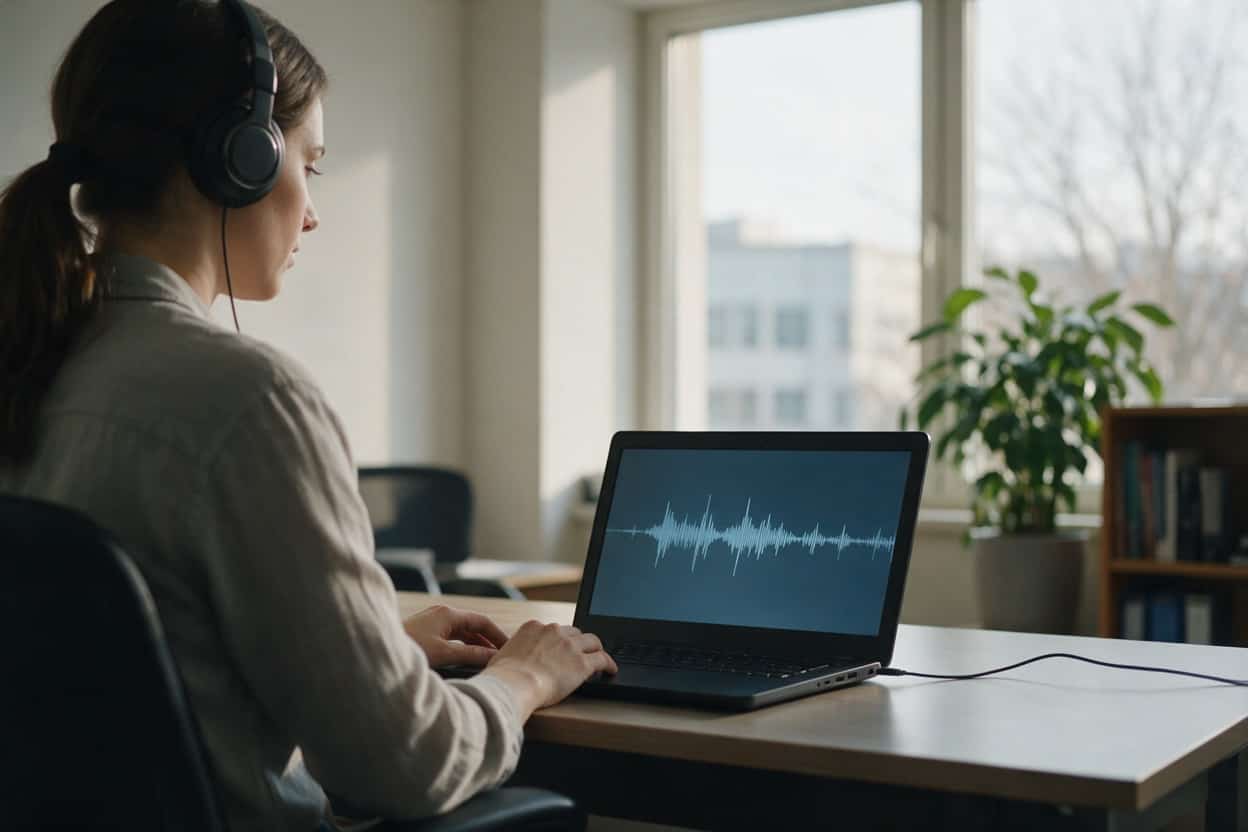
Transcription · Pashto
Pashto transcription services
Native Pashto transcribers for corporate video, eLearning and legal proceedings. Verbatim and clean read, time-coded, spelled to the written standard whichever dialect is speaking. Part of a full Pashto language service: transcripts, subtitles, voice over, and translation of any content you need.
About Pashto transcription
Where Pashto is spoken and how it is written
Pashto is spoken by around 51 million people (2017–2023, via Wikipedia), and is one of the two official languages of Afghanistan and a regional language in Khyber Pakhtunkhwa, Pakistan. It is written in a Perso-Arabic script extended with letters the language needs that Arabic and Persian do not use.
Pashto also has more dialect variation than most of the languages in this batch, running from the south-western dialects around Kandahar to the north-eastern dialects around Peshawar and Jalalabad, with the written standard based on the south-west.
At GoLocalise, we work with professional Pashto transcribers who are native speakers, and we manage every step — file intake and brief, transcription, time-coding, formatting and final delivery — so the transcript you receive is accurate to the audio and ready for its intended use.
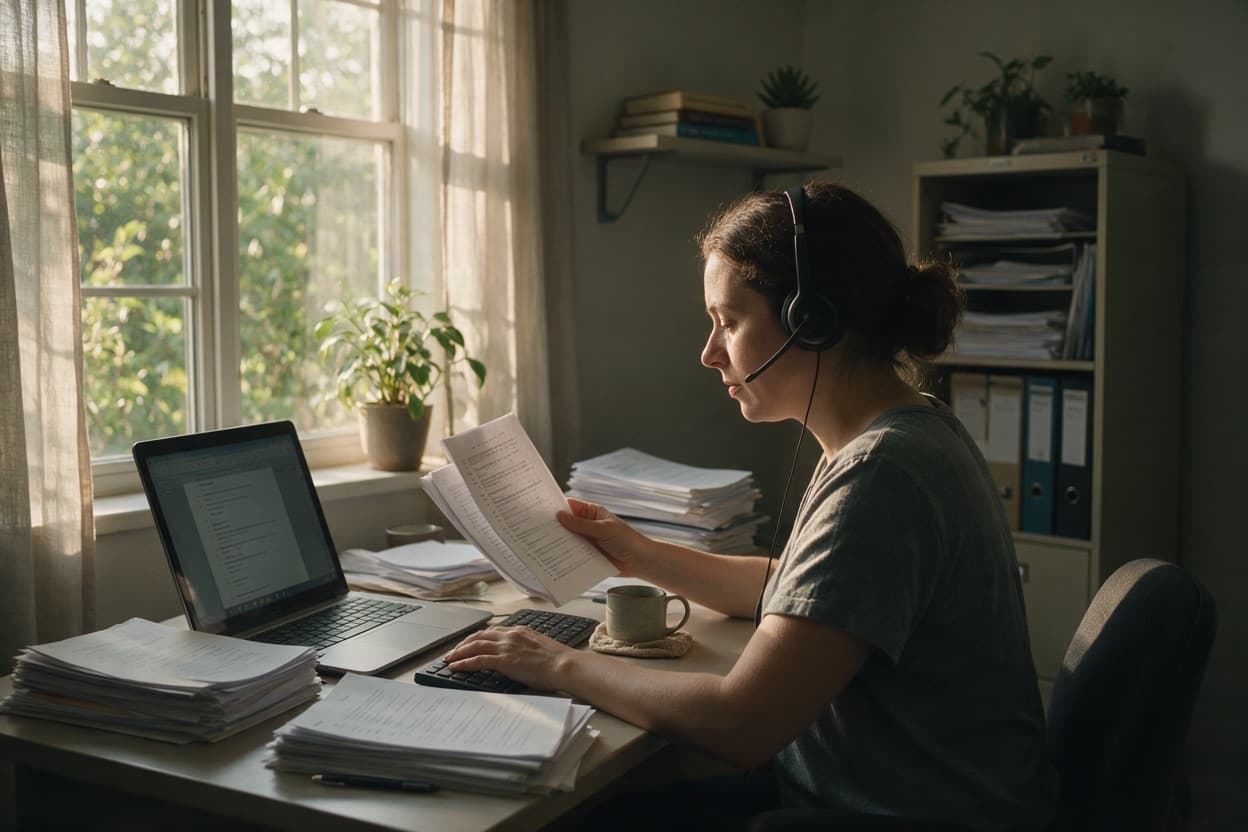
Choose your format
Three ways to transcribe the same recording
The right one depends on what the transcript is for. If you are not sure, tell us the use case and we will recommend it.
Full verbatim
Every wordCaptures every utterance, pause and non-standard pronunciation exactly as spoken, including false starts and overlap.
Best for
Legal proceedings, research interviews, compliance content
Clean read
EditedRemoves filler words, false starts and repeated phrases for readability, while keeping meaning and speaker intent intact.
Best for
Corporate video, interviews for publication, content to be translated
Summarised
Key pointsCondenses the discussion into structured key points rather than a full record of the conversation.
Best for
Executive briefings, legal summaries, research documentation
What's included
What comes with every Pashto transcript
Pashto, English, or both
A source transcript, an English translation, or the two side by side. The translation is produced from the original audio, not from the transcript alone.
Timecodes
Stamped at the interval you need — per speaker turn, per paragraph or at fixed intervals, matched to your edit or subtitle workflow.
Speaker identification
Every turn attributed, by name where you supply them or by role where you don't — including through overlap.
Proofreading pass
A second native Pashto linguist reads the transcript against the audio before it reaches you.
Terminology kept
Legal, medical or technical vocabulary rendered to the convention your sector uses, not paraphrased.
Your format
Plain text, Word, PDF, SRT, VTT or a client-specific template — tell us the next step.
How it works
One project manager, from brief to delivery
A structured workflow, built so accuracy and confidentiality are verified at each stage rather than assumed at the end.
File intake and brief
We review your audio or video, confirm the transcript type (verbatim, clean read, time-coded), and note any terminology, speaker labels or formatting you need.
Transcriber assignment
We match your content to a native Pashto transcriber with the right background, whether legal, medical, corporate or media.
Transcription and QA
The transcriber works directly from your files. A second linguist reviews the transcript against the audio for accuracy, speaker identification and consistency.
Delivery
Formatted transcripts in your chosen format, whether plain text, SRT, VTT or a client-specific template, on budget and on time.
For multi-speaker research, hearings or archive projects, we assign a coordinated team and agree milestones up front.
Who we work with
Industries that rely on Pashto transcription
A written record is a compliance requirement in some sectors and an accessibility one in others. These are the Pashto briefs we see most.
Legal & compliance
Hearings, depositions and arbitration, transcribed verbatim and formatted to requirement.
Technology & manufacturing
Technical briefings, supplier negotiations and training material.
Broadcast & media
Interviews, documentaries and archive footage, with subtitle-ready templates.
Market research
Focus groups and interviews, including sessions with heavy speaker overlap.
Entertainment & gaming
Production material, cast interviews and in-development dialogue.
Academic & research
Lectures, field interviews and research material.
Confidentiality
Who hears your Pashto audio
Pashto transcription often means cross-border trade or humanitarian-sector material, tribal or land-dispute arbitration, or research interviews recorded on the understanding they stay private. So who hears it matters as much as how accurately it is captured.
Your files are uploaded through an encrypted system, handled by a named Pashto transcriber under NDA, and never fed into public speech-to-text tools. We will sign your own confidentiality agreement, follow your retention rules, and delete everything on delivery if your policy requires it.
Encrypted upload
No loose files over email.
NDA as standard
Yours or ours, before we start.
No public AI tools
Your audio never trains anything.
Deletion on request
Files removed on delivery if you need it.
Pashto specifics
In Pashto, two letters change sound by dialect and the standard doesn't move
Two letters in the Pashto alphabet, ښ and ږ, are pronounced very differently depending on where the speaker is from. Wikipedia's account of Pashto dialects is specific about it: 'two of the key phonemes whose pronunciation vary between the different Pashto dialects are ښ and ږ,' and the south-western Kandahar dialect 'retains the original pronunciation of these two phonemes... and does not merge them into other phonemes unlike the northern dialects.' In the north-east, around Peshawar and Jalalabad, they merge into other sounds entirely.
Written Pashto does not follow the speaker's dialect on this point. A language-documentation reference prepared for the Linguistic Data Consortium states plainly that 'the South-West (Kandahar) dialect... is the basis of the standard written form,' and lays out exactly what that means for a listener: ښ is a retroflex sound in Kandahar, but 'a velar fricative [x] in the North East dialect (Peshawari, Jalalabadi)' — the same sound as a completely different letter, خ. A transcriber working from Peshawar audio who writes what they hear, letter for letter, ends up writing the wrong letter.
So the standard spelling of a word doesn't move with the speaker's accent, even though the sound does. Getting ښ and ږ right in a transcript means recognising the word and applying the written norm, not transliterating the local pronunciation syllable by syllable — which is exactly why the file goes to a native Pashto transcriber familiar with both the standard and the dialect on the recording, checked by a second linguist before delivery.
Transcription rates
Professional Pashto transcription
Best for clean read transcripts of corporate video, interviews and internal communications.
- Native Pashto transcriber
- Verbatim or clean read
- Speaker identification
- Proofreading pass
A complete managed service for legal proceedings, multi-speaker research and longer-form content requiring verbatim, time-coded or translated deliverables.
- Everything in Standard
- Subject-specialist linguist
- Timecodes and speaker IDs
- Pashto and English in one pass
Priced by runtime, audio quality, number of speakers and turnaround, and backed by our Price Match Promise. Send us a sample for an exact, no-obligation quote.
Trusted by global brands
We have used GoLocalise on a regular basis for projects in a number of languages. The service we receive is great. The team is always friendly and professional. The voiceovers we receive are of a very high quality and the turnaround is extremely quick. We are very happy to recommend GoLocalise to other businesses.

It was a pleasure to work with David and the team at GoLocalise. David gave me lots of help and advice, guiding me through my first subtitling project. He really knows his stuff! The experience was completely pain-free. I would not hesitate to recommend GoLocalise – outstanding work at a good price.
They're reliable, adaptive and obsessed with quality. And while you can never be 100% guaranteed of perfection, you can be sure GoLocalise will go the extra mile to get it right every time. We've worked with them now for over 5 years and we are truly thankful to have such a strong localisation partner for our business.

Related services
What happens after the transcript
Transcription in more languages
Native transcribers for interviews, meetings, research, media and legal material. Browse another language, or ask us about yours.
Most common questions
Which Pashto transcription format should I ask for?
Clean read suits corporate video, interviews for publication and anything heading for translation: filler words and false starts come out, meaning stays. Verbatim is what legal proceedings, compliance material and research interviews need, because every utterance and pause is on the record. Either way spelling follows the written standard regardless of the speaker's dialect. Your project manager confirms the format against your end use.
Why do ښ and ږ cause problems in Pashto transcription?
Because they sound completely different depending on the speaker's region. In Kandahar they keep distinct retroflex sounds; in Peshawar and Jalalabad they merge into other sounds, including one that matches a different letter entirely. Written Pashto is standardised on the Kandahar dialect, so the correct letter is not always the one that matches what a northern speaker's voice actually sounds like.
Do you write what a Pashto speaker sounds like or the standard spelling?
The standard spelling, applied to the word the speaker actually said. A speaker from Peshawar may pronounce ښ the same way as a completely different letter, but transcribing it as that other letter would misspell the word. A native Pashto transcriber recognises the word from context and dialect knowledge and spells it correctly, not phonetically.
Can automatic transcription handle Pashto dialect variation?
Not reliably. A speech tool trained mainly on one dialect's sounds has no reason to know that a sound in another dialect corresponds to a different letter in the written standard, so it tends to spell by sound rather than by word. A native Pashto transcriber who knows both the standard and the dialect on the recording gets this right, checked by a second linguist.
What does Pashto transcription cost?
There is no flat rate, because no two files take the same work. Runtime, recording quality, how many people are talking, your deadline and whether you also need an English version all move the figure. So does how much dialect variation the audio carries, since that affects how much checking the spelling needs. Every quote carries our Price Match Promise.
How do you protect confidential Pashto recordings?
Upload is encrypted, the file goes to one named Pashto transcriber who has signed an NDA, and nothing is put through public speech-to-text services at any point. If you have your own confidentiality agreement we sign it, if you have retention rules we work to them, and if your policy says the audio goes once the transcript is approved, we delete it.
The recording is poor and several people talk over each other. Is that a problem?
It is normal work. Phone audio, site noise, focus groups and meetings where three people speak at once all get transcribed. What difficult audio changes is time, and occasionally certainty about a word or a dialect form. We listen to a sample first and tell you straight what we expect to be able to capture, rather than handing you a file peppered with inaudible tags.
How will the finished Pashto transcript be delivered?
In whatever the next step needs: plain text, Word, PDF, SRT, VTT or your own template, with timecodes and speaker labels set the way you want them, spelled to the written standard. The script is delivered in Unicode so it displays correctly wherever it lands. Tell us what happens to the transcript after we send it and we format it for that.
Ready to transcribe your Pashto audio?
Send us the files and tell us where the transcript will end up — we'll come back with an exact, itemised quote.
Worth reading before you brief
Voice Over
Pashto Voice Over: Complete Guide to Best Practices
Pashto is an Indo-European language spoken primarily in Afghanistan and Pakistan, with an estimated 60 million speakers worldwide. As one of the official languages of Afghanistan, Pashto plays a critical role in the country's politics, culture, and daily life.
Read the guide →Voice Over
Phonetic Transcription: Understanding Language Sounds
Phonetic transcription is the process of transcribing the sounds of speech into written symbols, using a standardized set of symbols known as the International Phonetic Alphabet (IPA).
Read the guide →Language
Pashto, Dari, and Farsi: language differences
How Pashto, Dari and Farsi differ in history, script, grammar and culture across Afghanistan, Pakistan and Iran.
Read the guide →Professional voice over services for your audio and video productions
Voice over

- State-of-the-art studios
- Neumann microphones
- On-hand sound engineers
- 1,000+ voice actors
Translation

- 100+ languages covered
- Tailored to your needs
- Stringent quality control
- Dedicated project managers
Subtitling

- Experienced subtitlers
- Industry-standard software
- Burn-in and graphic editing
- Open and closed captions
Transcription

- Improve accessibility
- Reach a wider audience
- Boost SEO and video views
- Maximise video engagement