
Transcription · Malagasy
Malagasy transcription services
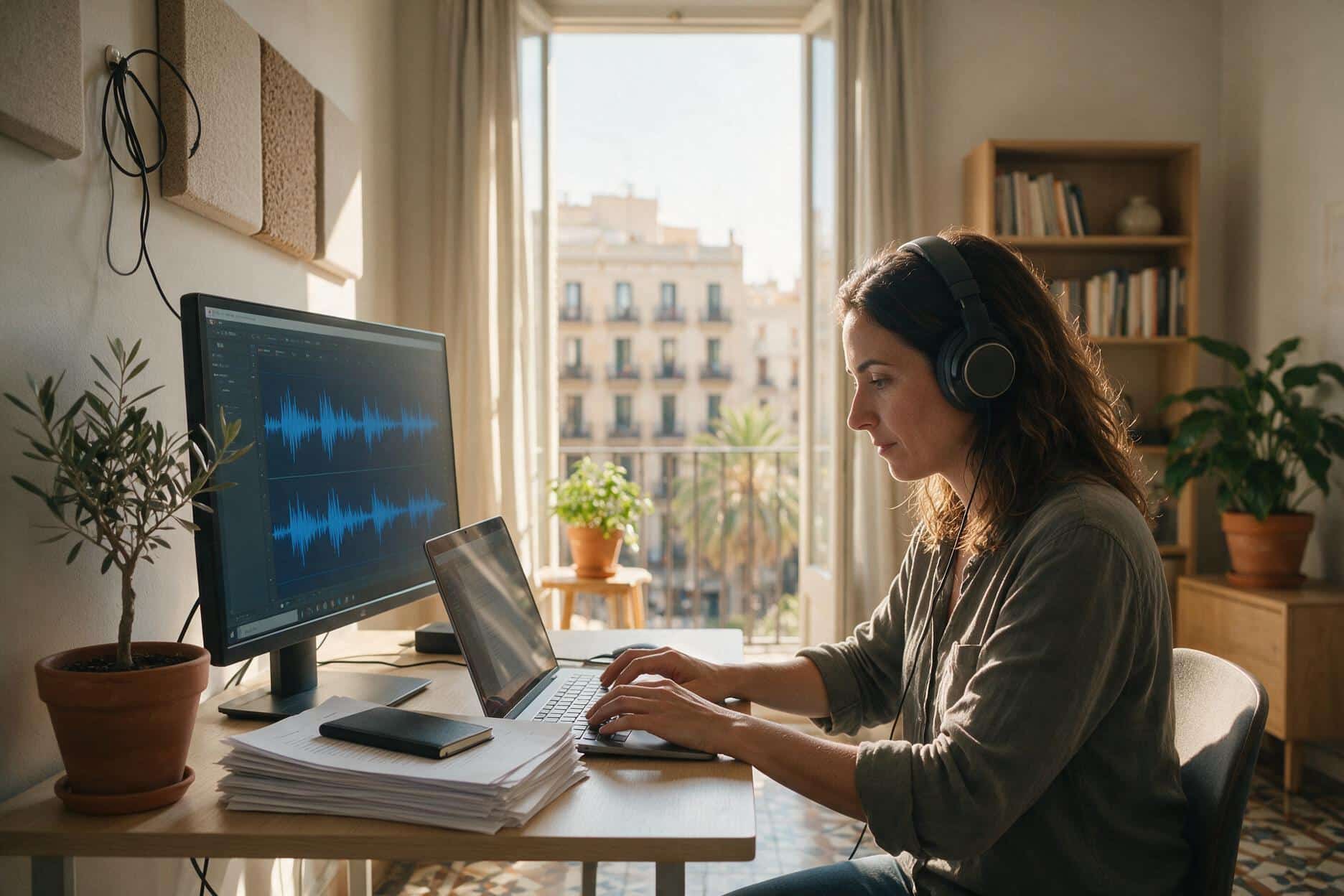
Native Malagasy transcribers for corporate video, eLearning, legal proceedings and more. Verbatim and clean read transcripts, time-coded and delivered to professional and legal standards. Part of a full Malagasy language service: transcripts, subtitles, voice over, and translation of any content you need.
About Malagasy transcription
Where Malagasy is spoken and how it is written
Malagasy is spoken by around 25 million people across Madagascar and the Comoros. The variety that carries the official written standard, Plateau Malagasy, has around 7.5 million first-language speakers.
Standard Malagasy is co-official with French under the 2010 Constitution. The Latin orthography was fixed in 1823 by Radama I, on a system devised by David Jones with the London Missionary Society, and is based on the Merina dialect of the highlands.
At GoLocalise, we work with professional Malagasy transcribers who are native speakers, and we manage every step — file intake and brief, transcription, time-coding, formatting and final delivery — so the transcript you receive is accurate to the audio and ready for its intended use.
Choose your format
Three ways to transcribe the same recording
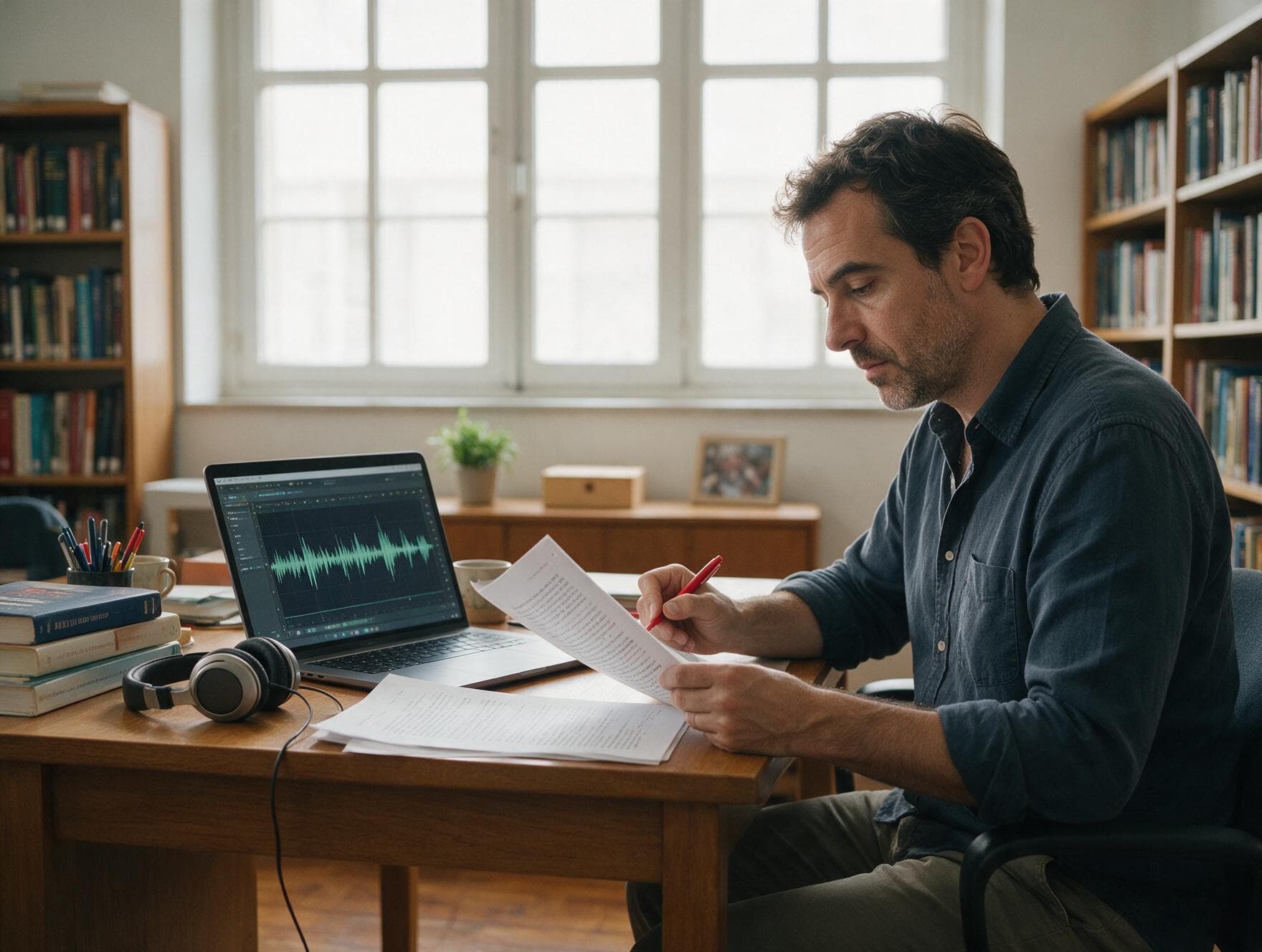
The right one depends on what the transcript is for. If you are not sure, tell us the use case and we will recommend it.
Full verbatim
Every wordCaptures every utterance, pause and non-standard pronunciation exactly as spoken, including false starts and overlap.
Best for
Legal proceedings, research interviews, compliance content
Clean read
EditedRemoves filler words, false starts and repeated phrases for readability, while keeping meaning and speaker intent intact.
Best for
Corporate video, interviews for publication, content to be translated
Summarised
Key pointsCondenses the discussion into structured key points rather than a full record of the conversation.
Best for
Executive briefings, legal summaries, research documentation
What's included
What comes with every Malagasy transcript
Malagasy, English, or both
A source transcript, an English translation, or the two side by side. The translation is produced from the original audio, not from the transcript alone.
Timecodes
Stamped at the interval you need — per speaker turn, per paragraph or at fixed intervals, matched to your edit or subtitle workflow.
Speaker identification
Every turn attributed, by name where you supply them or by role where you don't — including through overlap.
Proofreading pass
A second native Malagasy linguist reads the transcript against the audio before it reaches you.
Terminology kept
Legal, medical or technical vocabulary rendered to the convention your sector uses, not paraphrased.
Your format
Plain text, Word, PDF, SRT, VTT or a client-specific template — tell us the next step.
How it works
One project manager, from brief to delivery
A structured workflow, built so accuracy and confidentiality are verified at each stage rather than assumed at the end.
File intake and brief
We review your audio or video, confirm the transcript type (verbatim, clean read, time-coded), and note any terminology, speaker labels or formatting you need.
Transcriber assignment
We match your content to a native Malagasy transcriber with the right background, whether legal, medical, corporate or media.
Transcription and QA
The transcriber works directly from your files. A second linguist reviews the transcript against the audio for accuracy, speaker identification and consistency.
Delivery
Formatted transcripts in your chosen format, whether plain text, SRT, VTT or a client-specific template, on budget and on time.
For multi-speaker research, hearings or archive projects, we assign a coordinated team and agree milestones up front.
Who we work with
Industries that rely on Malagasy transcription
A written record is a compliance requirement in some sectors and an accessibility one in others. These are the Malagasy briefs we see most.
Legal & compliance
Hearings, depositions and arbitration, transcribed verbatim and formatted to requirement.
Automotive & electronics
Technical briefings, supplier negotiations and training material.
Broadcast & media
Interviews, documentaries and archive footage, with subtitle-ready templates.
Market research
Focus groups and interviews, including sessions with heavy speaker overlap.
Business & shared services
Client calls, process documentation and training material.
Academic & research
Lectures, field interviews and research material.
Confidentiality
Who hears your Malagasy audio
Malagasy transcription often means board material from a head office in the head office, arbitration, pre-release production audio or research interviews recorded on the understanding they stay private. So who hears it matters as much as how accurately it is captured.
Your files are uploaded through an encrypted system, handled by a named Malagasy transcriber under NDA, and never fed into public speech-to-text tools. We will sign your own confidentiality agreement, follow your retention rules, and delete everything on delivery if your policy requires it.
Encrypted upload
No loose files over email.
NDA as standard
Yours or ours, before we start.
No public AI tools
Your audio never trains anything.
Deletion on request
Files removed on delivery if you need it.
Malagasy specifics
A Malagasy transcript can read perfectly and still be wrong, because written Malagasy is one variety and the recording is usually another
ISO 639-3 registers `mlg` as a macrolanguage with eleven member languages, among them Sakalava `skg`, Antankarana `xmv`, Tandroy-Mahafaly `tdx`, Bara `bhr`, Northern and Southern Betsimisaraka `bmm` and `bzc`, Tsimihety `xmw` and Tesaka `tkg`.
The one that carries the official written standard is Plateau Malagasy `plt`, based on the Merina dialect of the capital, with around 7.5 million first-language speakers out of around 25 million Malagasy speakers overall.
Intelligibility across the island is uneven — some varieties are close, others are described as nearly unintelligible to each other's speakers — so a transcriber from Antananarivo is not a safe default for audio recorded in Toliara or Antsiranana.
The decision a human makes, and a tool cannot, is whether to write down the coastal forms actually spoken or to render them into the Merina-based standard. Those are two different documents, and only one of them is what your reader is expecting.
Transcription rates
Professional Malagasy transcription
Best for clean read transcripts of corporate video, interviews and internal communications.
- Native Malagasy transcriber
- Verbatim or clean read
- Speaker identification
- Proofreading pass
A complete managed service for legal proceedings, multi-speaker research and longer-form content requiring verbatim, time-coded or translated deliverables.
- Everything in Standard
- Subject-specialist linguist
- Timecodes and speaker IDs
- Malagasy and English in one pass
Priced by runtime, audio quality, number of speakers and turnaround, and backed by our Price Match Promise. Send us a sample for an exact, no-obligation quote.
Trusted by global brands
We have used GoLocalise on a regular basis for projects in a number of languages. The service we receive is great. The team is always friendly and professional. The voiceovers we receive are of a very high quality and the turnaround is extremely quick. We are very happy to recommend GoLocalise to other businesses.

It was a pleasure to work with David and the team at GoLocalise. David gave me lots of help and advice, guiding me through my first subtitling project. He really knows his stuff! The experience was completely pain-free. I would not hesitate to recommend GoLocalise – outstanding work at a good price.

They're reliable, adaptive and obsessed with quality. And while you can never be 100% guaranteed of perfection, you can be sure GoLocalise will go the extra mile to get it right every time. We've worked with them now for over 5 years and we are truly thankful to have such a strong localisation partner for our business.
Related services
What happens after the transcript
Transcription in more languages
Native transcribers for interviews, meetings, research, media and legal material. Browse another language, or ask us about yours.
Most common questions
My recording is from the coast. Is that still "Malagasy"?
It is Malagasy, but probably not the Malagasy the written standard is based on. ISO 639-3 lists eleven member languages under Malagasy, and the standard follows Plateau Malagasy, the Merina-based variety of the highlands. Around 7.5 million people speak it natively out of around 25 million Malagasy speakers, so most recordings are not in it.
Should the transcript use the words that were actually said, or the standard forms?
This is a decision you should make, not one we should make silently. A verbatim transcript keeps regional lexis and grammar and is what you want for research, legal evidence or dialect work. A standardised transcript converts to the Merina-based written norm and is what you want for publication or for a reader in the capital. We will do either, but not both in one file.
Can one transcriber cover the whole island?
Not reliably. Intelligibility across Malagasy varieties is uneven; some are close, others are described in the literature as nearly unintelligible to speakers of other varieties. We match the transcriber to the region the recording comes from, which is why we ask where it was recorded rather than only what language it is in.
How will the finished Malagasy transcript be delivered?
In whatever the next step needs: plain text, Word, PDF, SRT, VTT or your own template, with timecodes and speaker labels set the way you want them. Tell us what happens to the transcript after we send it and we format it for that, not for us.
Is my audio kept confidential?
Yes. Files are uploaded through an encrypted system, handled by a named transcriber under NDA, and never fed into public speech-to-text tools. We can sign your own confidentiality agreement, work to your retention rules and delete everything on delivery.
How much does transcription cost?
Every file is quoted on its own terms. Runtime, audio quality, how many people are speaking, the turnaround you need and whether you also want a translation all move the figure, so there is no flat per-minute rate that would be honest across all of them. Send us a sample and we will come back with an exact, itemised number, backed by our Price Match Promise.
How quickly can you deliver?
Most short files come back within 24 to 48 hours. Length, audio quality and whether you need time-coding or full verbatim all affect it, and a large multi-speaker project is scheduled rather than rushed. Your project manager confirms the timeline before work starts, not after.
Ready to transcribe your Malagasy audio?
Send us the files and tell us where the transcript will end up — we'll come back with an exact, itemised quote.
Professional voice over services for your audio and video productions
Voice over

- State-of-the-art studios
- Neumann microphones
- On-hand sound engineers
- 1,000+ voice actors
Translation

- 100+ languages covered
- Tailored to your needs
- Stringent quality control
- Dedicated project managers
Subtitling

- Experienced subtitlers
- Industry-standard software
- Burn-in and graphic editing
- Open and closed captions
Transcription

- Improve accessibility
- Reach a wider audience
- Boost SEO and video views
- Maximise video engagement