
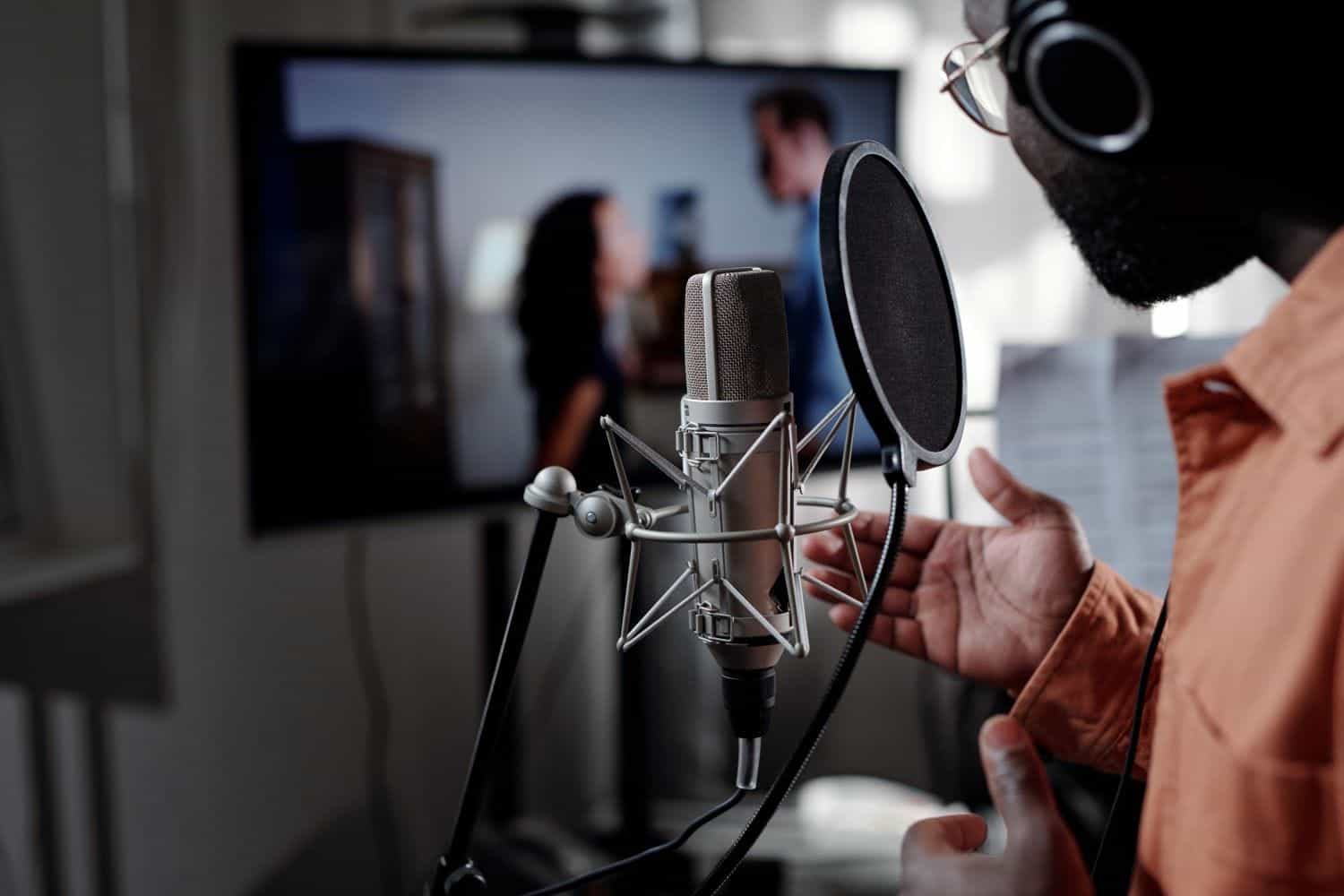
Voice Over · Cantonese
Cantonese voice over services
Cantonese carries six tones and is not Mandarin with an accent: a Mandarin read is a different language to a Hong Kong audience. Native Cantonese voice actors, cast to your brief.
85M+
Cantonese speakers
100+
Languages under one roof
4.9★
From 149 reviews
About the language
Why native Cantonese matters
Cantonese is spoken by around 85 million people — the main language of Hong Kong and Macau, widely used across Guangdong and in Chinese communities worldwide. A native Cantonese voice is what makes your message feel local to these audiences rather than imported.
Cantonese is a distinct language from Mandarin, not a dialect: it has six or more tones (versus Mandarin's four), its own vocabulary and colloquialisms, and is usually written with traditional characters. A Mandarin voice will not pass in Hong Kong — the market notices immediately. Need Mainland China instead? See our Mandarin voice over page.
Demand for Cantonese voice over typically comes from brands targeting Hong Kong, finance and retail, film and entertainment, app and games studios, and broadcasters localising for Cantonese-speaking markets. Our native voices and linguists make sure it lands naturally.
Most Cantonese scripts are not written in Cantonese. The standard practice is to write in standard written Chinese — which follows Mandarin grammar and vocabulary — and have the voice read it aloud in Cantonese. That works for formal and institutional material, and it sounds noticeably bookish for anything conversational, because nobody speaks that way. Written Cantonese exists and is used in advertising and social content, with its own characters. Add six tones, where a wrong pitch is a different word, and traditional characters throughout. Tell us whether the script should be read as written or adapted into spoken Cantonese, and we will quote both.
Hong Kong Cantonese and Guangzhou Cantonese are not identical, and for most commercial work the Hong Kong variety is what a brief means. The vocabulary differs, Hong Kong carries far more English borrowing, and the media culture that shaped the register is a Hong Kong one. If your audience is in Guangdong rather than Hong Kong, say so, because the default assumption points the other way.
Cantonese has no universally used romanisation, unlike Mandarin's pinyin, which matters the moment a script contains names. A Cantonese name written in Latin letters can be pronounced several ways and the spelling gives little guidance — Hong Kong government romanisation, Yale and Jyutping all coexist and none dominates. Send the names with the script and we will confirm the readings in advance rather than lose session time to them.
There is a large and long-established Cantonese diaspora in the UK, Canada, Australia and the United States, and content aimed at it differs in register and in reference from content aimed at Hong Kong. Tell us where the listener actually is.
Send us the script with any names and we will mark the readings for free before you book anything. You get an itemised quote, a note on whether the script should be read as written or adapted into spoken Cantonese, and a free casting of Cantonese voices performing the lines you have written. Request a Cantonese voice over quote, or ask us about pairing it with a Mandarin version recorded alongside.

How we can help
One partner for the whole Cantonese localisation job
Voice over & narration
Cantonese narration for video, e-learning, IVR, apps and commercials, with all six tones read as written.
Translation & script adaptation
English-to-Cantonese translation and adaptation by native linguists (traditional characters), so the script sounds natural when spoken — not literally translated.
Subtitling & captions
Cantonese and traditional-Chinese subtitles and captions, correctly rendered and timed for film, broadcast and social.
100+ languages under one roof
London studios + global talent network
4.9★ from 149 reviews
Content types
Cantonese voice over for every kind of content
Whatever you're making, we cast the right voice in Cantonese. Explore by use case.
Most common questions
Hong Kong or Guangzhou Cantonese?
For most commercial work a brief means Hong Kong, and that is the default we apply — the vocabulary differs, Hong Kong carries far more English borrowing, and the media culture that shaped the register is a Hong Kong one. If your audience is in Guangdong, tell us, because the assumption points the other way.
How do you handle Cantonese names in a script?
We confirm the readings before the session, free. Cantonese has no universally used romanisation — Hong Kong government spelling, Yale and Jyutping all coexist and none dominates — so a name in Latin letters can be said several ways and the spelling gives little guidance. Send the list with the script.
Do you have native Cantonese voice actors?
Yes, native Cantonese speakers from Hong Kong rather than Mandarin speakers reading Cantonese. Send us the brief and we'll shortlist and audition with your script.
What's the difference between Cantonese and Mandarin?
They are distinct languages, not accents. Cantonese (Hong Kong, Macau, Guangdong) has six-plus tones and its own vocabulary; Mandarin is the standard of Mainland China with four tones. A Cantonese audience will immediately notice a Mandarin read, so we cast native Cantonese speakers for Cantonese markets — and Mandarin voices for the Mainland.
What do you use Cantonese voice over for?
Common projects include TV and radio commercials, corporate and e-learning video, finance and retail content, film and entertainment, apps and games, and IVR/phone systems aimed at Hong Kong and Cantonese-speaking audiences.
Can you also translate and subtitle into Cantonese?
Yes. We handle the full job — translation and script adaptation by native linguists using traditional characters, Cantonese voice over, and subtitles or captions — so everything is consistent and correctly rendered.
How soon can the audio be delivered?
Most short Cantonese voice over projects are delivered within 24 to 48 hours; larger jobs are scheduled with your dedicated project manager.
Can I direct the Cantonese session remotely?
Yes. Join us in London or dial in on Source-Connect, Zoom or Teams and direct from wherever you are.
How are the finished files delivered?
Tell us the spec and we match it — uncompressed WAV, MP3, or stems delivered separately, at the sample rate, bit depth and loudness your broadcaster or platform requires.
How do I choose the right Cantonese voice?
Tell us your audience — Hong Kong or an overseas Cantonese community — the tone you want and any reference samples, and we'll shortlist native voices and record bespoke auditions to your script before you commit.
What do you need from us to quote Cantonese voice over?
Less than people expect: the script, or the draft of it, its total running time or word count, where the recording will be used, and the date you need it by. If the script is not signed off yet, send the draft anyway — we would rather quote on what exists than wait for a version that eats your deadline. A named project manager comes back with an itemised quote, normally within four working hours.
How quickly will we hear back, and who will we be dealing with?
More than half of enquiries get a reply within thirty minutes during office hours (Monday to Friday, 9am to 6pm UK time), and the itemised quote normally follows within four working hours. After that you have one dedicated project manager who owns the job from brief to final file — not a ticket queue, and not a different name on every email. If it is easier, call +44 207 095 5730 and ask for them by name.
We are still pitching and the budget is not signed off. Can we still get a Cantonese quote?
Yes, and it is one of the commonest reasons people get in touch. Tell us it is for a pitch and you get a figure you can put in front of your own client, itemised so it stands up to being picked apart, with no obligation and no follow-up sales calls if the pitch goes elsewhere. If it lands, the quote still holds and we already know the project.
Brands that trusted us with their voice
Casting, direction and recording for campaigns that ran in several markets at once.

Voice Over · Flemish
AXA — Redefining Standards
Multilingual mastery for instructional videos: a Flemish voiceover journey.

Voice Over · Czech
Betfair
Crafting authenticity in localisation: a Czech voiceover production.

Voice Over · Cantonese
BlackBerry Worldwide
Multilingual voiceover project for BlackBerry's innovative campaign.
Complete your Cantonese localisation
Services that pair with Cantonese voice over
Translation services
English-to-Cantonese translation and script adaptation by native linguists.
Subtitling & captions
Cantonese and traditional-Chinese subtitles, correctly rendered and timed.
Mandarin voice over
Targeting Mainland China? Native Mandarin voices for the Mandarin market.
Cantonese transcription
Written Cantonese or Standard Written Chinese — two records of the same audio.
From £400
/ €500 / $550
per hour in the recording studio
That hourly rate is the Basic Studio Fee: the recording session itself, studio and engineer included. Any buyout — the usage fee — is added on top and quoted separately: it depends on the markets the recording runs in, the media it runs on and how long you licence it for. Every line is itemised, and all of it carries our Price Match Promise.
Cantonese, and the two places it is spoken
Cantonese is the spoken language of Hong Kong and of Guangdong, and the two do not sound the same to a local ear: Hong Kong Cantonese carries English loanwords and a broadcast register that a Guangzhou listener hears as foreign, and the reverse holds too. Tell us which of the two the recording is for and we cast from that city, not from the language.
Full breakdown by market, spoken language and script: the market table on the Mandarin page. Longer piece on how the choice plays out over a whole project: English to Chinese Audio and Video Translation Guide.
Either way, none of it has to be settled before you write to us.
Bring your content to Hong Kong in Cantonese
Tell us about your project and we'll cast the right native Cantonese voice, in any style — with a free, no-obligation quote.
The complete solution to localise your content
Voice over

- State-of-the-art studios
- Neumann microphones
- On-hand sound engineers
- 1,000+ voice actors
Translation

- 100+ languages covered
- Tailored to your needs
- Stringent quality control
- Dedicated project managers
Subtitling

- Experienced subtitlers
- Industry-standard software
- Burn-in and graphic editing
- Open and closed captions
Transcription

- Improve accessibility
- Reach a wider audience
- Boost SEO and video views
- Maximise video engagement