
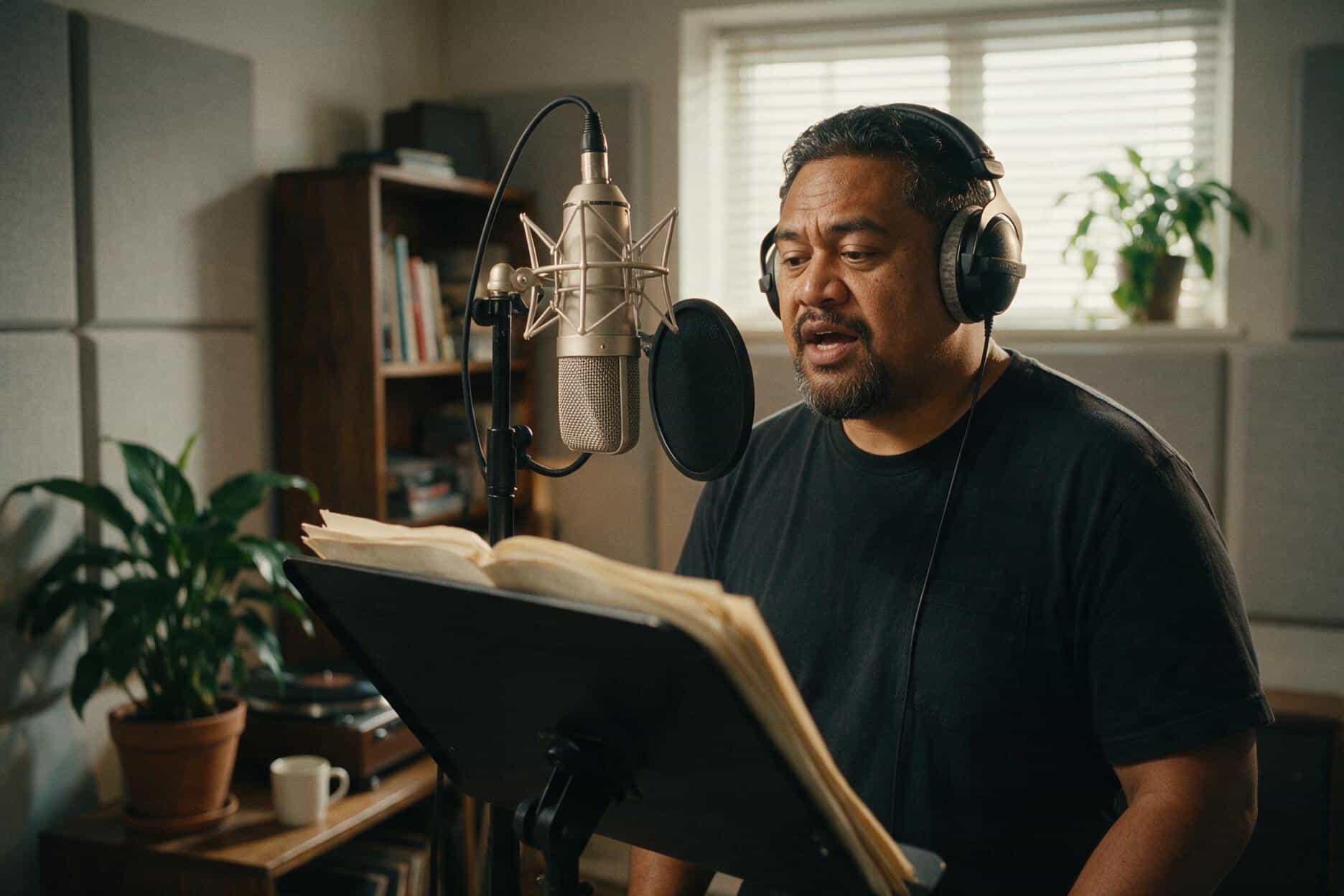
Voice Over · Samoan
Samoan voice over services
Native Samoan voice over for public health, education, government and community content — for Samoa, American Samoa and the much larger audience in New Zealand, Australia and the United States.
2
Spoken styles, one written
2
Countries where it's official
On request
Native casting
How it works
No public Samoan demos yet — here's how we cast
No sample page for Samoan, and the reason is worth knowing before you brief: the casting decision here is register, not timbre. Samoan has two spoken styles and picking the wrong one is the mistake to avoid. We audition to your script instead.
Send us your brief
Tell us who the piece is addressing, whether it is institutional or community-facing, and whether the audience is in the islands or in the diaspora.
We source and audition
We go to our vetted network of native Samoan speakers, brief them on the speaking style the content calls for, and come back with tailored auditions.
Record and deliver
You choose the voice and the register; we direct, check against picture and deliver finished audio.
Calling Samoan voice talent
We're expanding our Samoan roster
Samoan is a language we're actively growing. If you're a Samoan voice actor, we'd love to hear your demos and put you forward for paid work.
About the language
Your script is written in one style. It may need to be read in the other.
Samoan — gagana Sāmoa — is a Polynesian language, official in both Samoa and American Samoa, and spoken by large communities in New Zealand, Australia and the United States. For a lot of the work we are asked about, most of the audience is outside the islands, which quietly changes what the content is: public health, education, social services and community information rather than commercial advertising.
But the decision that actually shapes a Samoan recording is one that almost never appears in the brief, because it cannot appear in the script. Samoan has two spoken styles. The t-style, traditionally called «tautala lelei», is the one used in all writing, and in broadcasting, church, school and formal occasions. The k-style, «tautala leaga», is how the language is spoken in ordinary life — at home, among family, in the village. In it, t is pronounced k, n becomes a «ng» sound, and r becomes l.
The traditional names translate literally as "good talk" and "bad talk", and it is worth saying clearly that this is not a judgement about the speakers. The k-style is what most Samoans speak most of the time. It is a difference of setting, not of correctness.
Here is why it matters to you. Every Samoan script arrives written in t-style, because that is the only written form. So the question of which style to read it in is invisible on the page and has to be asked out loud. Get it wrong in either direction and it lands badly: a community health message read in strict t-style sounds like a government circular being read at people, and an institutional piece read in k-style sounds like nobody checked it before it went out.
There is also an orthographic detail that costs nothing to get right and is embarrassing to get wrong. Samoan writes the glottal stop (the ʻokina) and macrons over long vowels — ā, ē, ī, ō, ū. These are part of the spelling and they distinguish words from one another. Systems that don't carry them strip them silently. It makes no difference to the audio and it makes your subtitles and on-screen text wrong.
Typical work is public-health and vaccination campaigns, government and civic information, education and school communications, social services and community outreach, broadcast, and increasingly accessibility and translated content for Pacific communities in New Zealand and Australia.
Send it over even if the job is not signed off yet. We will read it, mark up what worries us and send an itemised quote — none of that costs anything. The free casting is part of it: we record shortlisted Samoan actors on your own lines and send you the takes. Get an itemised Samoan quote, or say what you are trying to achieve and we will suggest how.
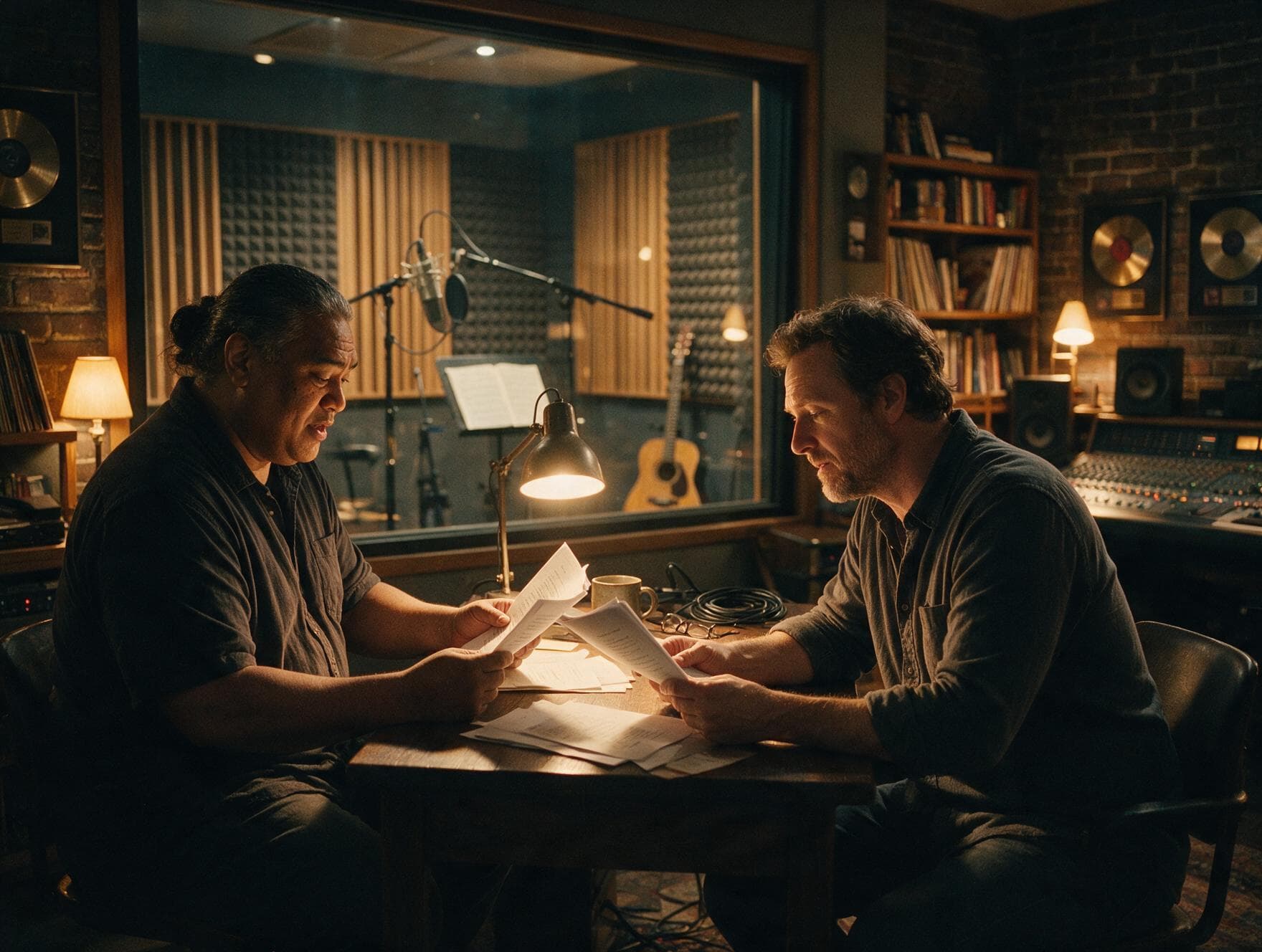
Getting Samoan right
The decisions that come before the read
One decision does most of the work here, and it is not visible in your script.
Decide t-style or k-style in the brief
Formal and broadcast content wants t-style. Community and conversational content usually wants k-style. The script cannot tell you which, because it is always written the same way.
It is register, not correctness
The traditional names translate as good and bad talk, but the k-style is how most Samoans speak most of the time. Treat it as a setting, not a standard.
Keep the ʻokina and the macrons
The glottal stop and the long-vowel marks are part of the spelling and change meaning. They affect subtitles and graphics, not the recording.
Most of the audience is abroad
New Zealand, Australia and the United States hold very large Samoan communities, which tends to make the work civic and health-related rather than commercial.
How we can help
One partner for the whole Pacific-community job
Voice over & narration
Native Samoan for public health, civic information, education, community outreach and broadcast — in the speaking style the content calls for, agreed before the session rather than discovered in it.
Translation & script adaptation
Adaptation into Samoan by native linguists, with the register matched to the audience. If the piece also ships in Australian or US English, we build the set together.
Subtitling & captions
Samoan subtitles and captions alongside the recording, with the glottal stop and macrons preserved end to end so the text is right on screen.
100+ languages under one roof
London studios + global talent network
5.0★ from 149 reviews
Content types
Samoan voice over for every kind of content
Whatever you're making, we cast the right voice in Samoan. Explore by use case.
Most common questions
Do you have Samoan voice actors?
Samoan has two registers that a demo reel cannot show you. Tautala lelei, the formal «t-style», is what church, government, broadcast and any written text uses. Tautala leaga, the everyday «k-style», is what people actually speak at home — and using it in an official context reads as disrespectful, while using the formal style in a friendly consumer ad reads as stiff. So we ask who is listening and in what setting, then record auditions in the right register against your own copy.
What is the difference between t-style and k-style?
They are the two spoken styles of Samoan. The t-style, traditionally called tautala lelei, is used in all writing and in broadcasting, church, school and formal settings. The k-style, tautala leaga, is everyday speech: t is pronounced k, n becomes a ng sound, and r becomes l. The distinction is about setting rather than correctness, and it is the single most useful thing you can specify when you brief a Samoan recording.
Which style should our content be recorded in?
As a rule of thumb, anything institutional, broadcast or official wants t-style, and anything conversational, community-facing or addressed to people rather than at them usually wants k-style. Health campaigns can go either way depending on whether the tone is authoritative or neighbourly. Tell us who the piece is for and we will recommend one — and if it genuinely could go either way, we can audition both.
Can't we just tell from the script which style it needs?
No, and this catches people out. Samoan is only written in one form, the t-style, so a script gives you no signal at all about how it should be spoken. The decision lives entirely in the brief. If nobody makes it deliberately, it gets made by default in the booth, which is how community content ends up sounding like an official announcement.
Why do the ʻokina and macrons matter?
They are part of Samoan spelling, not optional accents. The glottal stop and the macrons over long vowels distinguish words from one another, so dropping them can change what a line says. They make no difference to the audio, but they matter for subtitles, captions, lower thirds and any on-screen text, and systems that don't support them strip them without warning. Worth confirming your fonts and CMS carry them before the graphics are built.
Is our audience in Samoa or somewhere else?
Usually somewhere else, and it is worth checking before you write. Samoan is official in Samoa and American Samoa, but very large Samoan communities live in New Zealand, Australia and the United States. That affects the references that land, the mix of English loanwords that sounds natural, and often whether the piece needs an English version alongside it.
How long does it take to cast a Samoan voice?
Allow a few days more than for a major language. Our Samoan speakers are spread between Apia, Auckland and Sydney — there are more Samoans in New Zealand than in some parts of Samoa — so sourcing means working across three time zones. Brief us early and your project manager will hold to a date.
What do you use Samoan voice over for?
Public-health and vaccination campaigns, government and civic information, education and school communications, social services and community outreach, broadcast and radio, and accessibility work for Pacific communities in New Zealand and Australia.
What formats and loudness targets do you work to?
Delivered to your spec. One thing to check on the text side: the Samoan glottal stop is written with an ʻokina, a proper character rather than an apostrophe, and word processors love to convert it into a curly quote.
What do you need from us to quote Samoan voice over?
Less than people expect: the script, or the draft of it, its total running time or word count, where the recording will be used, and the date you need it by. If the script is not signed off yet, send the draft anyway — we would rather quote on what exists than wait for a version that eats your deadline. A named project manager comes back with an itemised quote, normally within four working hours.
How quickly will we hear back, and who will we be dealing with?
More than half of enquiries get a reply within thirty minutes during office hours (Monday to Friday, 9am to 6pm UK time), and the itemised quote normally follows within four working hours. After that you have one dedicated project manager who owns the job from brief to final file — not a ticket queue, and not a different name on every email. If it is easier, call +44 207 095 5730 and ask for them by name.
We are still pitching and the budget is not signed off. Can we still get a Samoan quote?
Yes, and it is one of the commonest reasons people get in touch. Tell us it is for a pitch and you get a figure you can put in front of your own client, itemised so it stands up to being picked apart, with no obligation and no follow-up sales calls if the pitch goes elsewhere. If it lands, the quote still holds and we already know the project.
Brands that trusted us with their voice
Casting, direction and recording for campaigns that ran in several markets at once.
Voice Over · Flemish
AXA — Redefining Standards
Multilingual mastery for instructional videos: a Flemish voiceover journey.
Voice Over · Czech
Betfair
Crafting authenticity in localisation: a Czech voiceover production.

Voice Over · Cantonese
BlackBerry Worldwide
Multilingual voiceover project for BlackBerry's innovative campaign.
Complete your Pacific coverage
Services that pair with Samoan
Australian English voice over
For the diaspora audience across Australasia.
US English voice over
For American Samoa and the mainland communities.
Samoan subtitling
Register changes the letter on screen, not just the tone.
Samoan transcription
'Come' depends on who you are inviting.
Samoan translation
Respect vocabulary where your audience expects it.
From £400
/ €500 / $550
per hour in the recording studio
That hourly rate is the Basic Studio Fee: the recording session itself, with the voice actor, the casting, the direction, the studio and the engineer included. Any buyout — the usage fee — is added on top and quoted separately: it depends on the markets the recording runs in, the media it runs on and how long you licence it for. Every line is itemised, and all of it carries our Price Match Promise.
Samoan read in the style the piece actually needs
Tell us who it's addressing and we'll recommend the register, then come back with native auditions and a free, no-obligation quote.
Worth reading before you brief
The complete solution to localise your content
Voice over

- State-of-the-art studios
- Neumann microphones
- On-hand sound engineers
- 1,000+ voice actors
Translation

- 100+ languages covered
- Tailored to your needs
- Stringent quality control
- Dedicated project managers
Subtitling

- Experienced subtitlers
- Industry-standard software
- Burn-in and graphic editing
- Open and closed captions
Transcription

- Improve accessibility
- Reach a wider audience
- Boost SEO and video views
- Maximise video engagement