What voice over is, why it works, and the main types — from dubbing and e-learning to commercials, games and movie trailers.
In this article
Audiovisual productions have become the mainstream channel of communication. Whether it's entertainment, information or corporate messaging, a great voice over is one of the key elements that makes your content stand out. Let's look at what voice over is, its many uses and benefits, and how to bring it into your project.
What is a voice over?
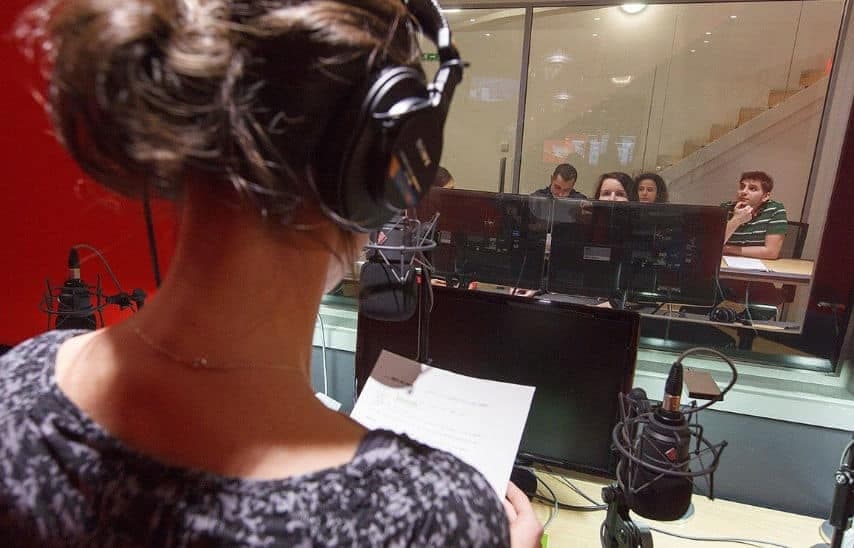
Voice over is a production technique for recording an audio track that you can use on its own or, more often, add to a video. The voice is recorded to provide information or narrate a story, usually read from a script by a professional voice actor who adds intonation and character in a professional studio. Strong narration can transform the tone and overall experience of a video.
Why are voice overs useful?
A voice over adds another layer of meaning to your production and makes it more engaging, accessible and scalable:
- Increased engagement — audiovisual material is more engaging than plain text, and a voice over helps you reach your audience more effectively.
- Expanded reach — combined with translation, voice over lets you reach international audiences and new markets.
- Enhanced accessibility — an extra channel of communication makes your message reachable by more people.
The elements of good voice over work
- Clarity — a clear script is the foundation of a great result.
- Consistency — following the client's guidelines (pronunciation, terminology, banned words) keeps the project coherent.
- Attention to detail — engineers remove noise, writers ensure terminology is correct, and every technical detail is handled.
- Confidence — the talent must sound like an expert in the subject, through acting skill and, sometimes, research.
- Good pronunciation — trained talent deliver total clarity, including specific accents such as neutral (Latin American) Spanish.
- Pacing — a slow, smooth read suits e-learning; a fast, energetic one suits a 30-second commercial.
What is voice over used for?
- Narrations — documentaries and corporate material, keeping the audience engaged.
- Characterisation — films, series and games where the talent embodies a character.
- Commercials — TV and radio campaigns that reach bigger audiences.
- Dubbing — combined with translation to carry the original message into other languages.
Types of voice over recordings and examples
- Dubbing and lip sync — replacing the on-screen actor's voice; lip sync must feel natural, while off-screen dubbing is less involved.
- Corporate video and presentations — training, HR and internal videos made available in multiple languages with a professional tone.
- Promo videos — brand and product promotion localised for viewers in different countries.
- e-Learning videos — engaging educational content delivered in the learner's language. See our e-Learning voice over services.
- Educational videos — explainers from schools, non-profits and organisations, localised for wider reach.
- On-hold / IVR messages — the first thing callers hear; a professional read sets the tone and improves engagement.
- Character and video games — a character's voice is central to immersion and to making a game memorable.
- Commercial voice over — persuasive, memorable reads that bring a product to life. See our commercial voice over services.
- Animation and cartoons — giving characters personality and depth.
- Movie trailers — building anticipation and setting the tone. See our movie trailer voice over services.
Voice over vs voice acting
The two terms are often used as synonyms. Some producers use voice over for documentaries, commercials and promos, and voice acting for character-driven work — films, games and animation — that demands creativity and characterisation.
Is it "voiceover" or "voice-over"?
The dictionary favours voice-over, but the industry also uses voice over and voiceover — all three are acceptable. We suggest matching the spelling your agency uses.
Looking to bring your project to life with the perfect voice? Get in touch for a consultation with our voice over experts.
Which type does your project need?
Commercial, corporate, e-learning, documentary, IVR — each is cast, directed and priced differently. Tell us what you're making and we'll tell you which one it is.