
Voice Over · Turkmen
Turkmen voice over services
Native Turkmen voice over for international broadcast, NGO and development content, energy-sector training and diaspora communications — with your legacy files checked before anyone books a studio.
3
Alphabets in circulation
Oghuz
Turkic branch, with Turkish
On request
Native casting
How it works
No public Turkmen demos yet — here's how we cast
No demo page here. Turkmenistan is one of the most closed media markets in the world, so the pool of people doing professional voice work is small and mostly reachable only through personal contacts. We cast each project individually.
Send us your brief and your files
Tell us who the content is for, and send any existing Turkmen scripts, subtitle files or reference documents so we can check what state they arrive in.
We source and audition
We go to our vetted network of native Turkmen speakers, brief them on the content and register, and come back with tailored auditions.
Record and deliver
You pick the Turkmen voice; we direct the session, check the read against picture and timings, and deliver broadcast-ready audio in your spec.
Calling Turkmen voice talent
We're expanding our Turkmen roster
Turkmen is a language we're actively growing. If you're a Turkmen voice actor, we'd love to hear your demos and put you forward for paid work.
About the language
Check the file before you book the studio
Turkmen is a Turkic language of the Oghuz branch, the same branch as Turkish and Azerbaijani. That closeness produces the usual assumption and the usual disappointment: a Turkish speaker follows some of it, hears a lot that is unfamiliar, and sounds plainly foreign reading it. It is a related language, not an interchangeable one.
The problem that actually derails Turkmen projects, though, is not casting. It is the state the source material arrives in, and it comes from a piece of history that has no parallel in any other language we work with.
In April 1993 Turkmenistan approved a thirty-letter Latin alphabet to replace Cyrillic. That first version used currency symbols as letters: £, $, ¥ and ¢ all appeared in it, with ¥ serving as the capital form of ÿ for the /j/ sound. In 1999 the alphabet was revised — the standard known as TDS 565 — and those symbols were swapped for ordinary diacritics, with Ý replacing ¥. The alphabet in use today carries ä, ň, ö, ü, ý and ž.
The practical consequence is that legacy Turkmen material is circulating in three mutually incompatible systems: Cyrillic, the 1993 currency-symbol Latin, and the post-1999 standard. If you hand over an older script, an archived subtitle file or reference documentation, there is a real chance it arrives garbled, half-converted, or looking like a spreadsheet of exchange rates. That is a five-minute check at the start of a project and a very expensive discovery in the middle of one, so we ask for the files up front.
It is also worth being straight about what Turkmen work usually is. Most of what we are asked for is aimed at international broadcasting, NGO and development programmes, energy-sector training and safety material, and diaspora communities, rather than domestic consumer advertising. If your project is one of those, we are on familiar ground; if it isn't, tell us and we will say honestly what we can and cannot promise.
Ask first. Book later. That order saves money more often than not. We read it at no cost and come back with what we would change and why, plus a quote broken out line by line. You also get a free casting: shortlisted Turkmen voices on your script, because a showreel only proves how someone sounded on a different job. Get an itemised Turkmen quote, or say what you are trying to achieve and we will suggest how.
Getting Turkmen right
Worth settling before the session
The casting question is the easy one. The file question is the one that costs money if it goes unasked.
Send legacy files at the briefing stage
Older Turkmen text exists in Cyrillic, in the 1993 Latin alphabet and in the post-1999 standard. Which one you have determines whether it can be used at all.
Currency symbols are not corruption
If an old file shows £, $, ¥ or ¢ mid-word, it is not damaged. It is the 1993 alphabet, and it needs converting rather than retyping from scratch.
Turkish is a relative, not a stand-in
Both are Oghuz Turkic, so a Turkish read is partly followed. It is also unmistakably foreign, which for institutional and broadcast content is the whole risk.
Know what the work usually is
Most Turkmen commissions are broadcast, development, energy-sector or diaspora content rather than domestic advertising. It shapes register and reference points.
How we can help
One partner for the whole Central Asian job
Voice over & narration
Native Turkmen for international broadcast, NGO and development campaigns, energy-sector training and safety content, and diaspora communications — with Turkish or Azerbaijani alongside when the campaign covers the wider Oghuz-speaking region.
Translation & script adaptation
Adaptation into Turkmen by native linguists, including converting legacy material out of Cyrillic or the 1993 alphabet rather than having it retyped and re-proofed from zero.
Subtitling & captions
Turkmen subtitles and captions alongside the recording, delivered in the current standard alphabet with the full character set intact end to end.
100+ languages under one roof
London studios + global talent network
5.0★ from 149 reviews
Content types
Turkmen voice over for every kind of content
Whatever you're making, we cast the right voice in Turkmen. Explore by use case.
Most common questions
Do you have Turkmen voice actors?
The first thing to settle in Turkmen is the alphabet. The language moved from Cyrillic to Latin in 1993 and the Latin script was revised more than once in the years after, so a Turkmen over fifty learned to read in Cyrillic and anyone schooled since reads Latin — and neither reads the other comfortably. Tell us which generation the content is for and we will source and audition accordingly, on your own script.
Our old Turkmen file is full of pound and dollar signs. Is it corrupted?
Almost certainly not. In 1993 Turkmenistan adopted a Latin alphabet that genuinely used £, $, ¥ and ¢ as letters — the ¥ was the capital form of ÿ, standing for the /j/ sound. It was revised in 1999 and those symbols were replaced with conventional diacritics. So a file like that is readable Turkmen in an obsolete alphabet, and it should be converted rather than retyped from scratch. Send it to us and we will tell you which system it is in.
Which alphabet should our deliverables use?
The current standard, settled in 1999, which uses ä, ň, ö, ü, ý and ž. That is what subtitles, captions and on-screen text should be delivered in. The only reason to touch the older systems is if your source material is in one of them, in which case it is a conversion job at the adaptation stage rather than something to sort out during the session.
Can a Turkish voice actor record Turkmen?
No. Turkmen and Turkish are both Oghuz Turkic, so there is real common ground and a Turkish speaker will follow parts of a Turkmen script. That is exactly what makes the mistake tempting and exactly why it fails: the read comes out understandable in places and conspicuously foreign throughout. For broadcast, institutional or safety-critical content, that is not a risk worth taking.
Is Turkmen close to Uzbek or Kazakh?
Less than the map suggests. Turkmen belongs to the Oghuz branch of Turkic, alongside Turkish and Azerbaijani, while Uzbek and Kazakh sit in different branches. Being neighbours in Central Asia does not make them mutually substitutable, and casting on geography rather than language family is one of the more common ways a project goes wrong.
What kind of Turkmen projects do you usually work on?
Most of what we are asked for is international broadcasting, NGO and development programming, public-health and humanitarian messaging, energy-sector training and safety material, and communications aimed at Turkmen communities abroad. Domestic consumer advertising is rare in our work. Tell us what you have and we will be straight with you about what we can commit to.
How long does it take to cast a Turkmen voice?
Plan for longer than a mainstream language. Sourcing in and around Turkmenistan is slow, and the honest lead time is what separates a real shortlist from whoever we could reach that week. Give us notice and we will commit to a date.
What do you use Turkmen voice over for?
International broadcast and radio, NGO and development campaigns, public-health and humanitarian information, energy-sector training and workplace safety, eLearning, corporate communications for organisations operating in the region, and content aimed at Turkmen diaspora communities.
What do the delivered audio files look like?
Broadcast-grade WAV, MP3 or stems at your platform's sample rate, bit depth and loudness. Send the spec alongside the brief.
What do you need from us to quote Turkmen voice over?
Less than people expect: the script, or the draft of it, its total running time or word count, where the recording will be used, and the date you need it by. If the script is not signed off yet, send the draft anyway — we would rather quote on what exists than wait for a version that eats your deadline. A named project manager comes back with an itemised quote, normally within four working hours.
How quickly will we hear back, and who will we be dealing with?
More than half of enquiries get a reply within thirty minutes during office hours (Monday to Friday, 9am to 6pm UK time), and the itemised quote normally follows within four working hours. After that you have one dedicated project manager who owns the job from brief to final file — not a ticket queue, and not a different name on every email. If it is easier, call +44 207 095 5730 and ask for them by name.
We are still pitching and the budget is not signed off. Can we still get a Turkmen quote?
Yes, and it is one of the commonest reasons people get in touch. Tell us it is for a pitch and you get a figure you can put in front of your own client, itemised so it stands up to being picked apart, with no obligation and no follow-up sales calls if the pitch goes elsewhere. If it lands, the quote still holds and we already know the project.
Brands that trusted us with their voice
Casting, direction and recording for campaigns that ran in several markets at once.
Voice Over · Flemish
AXA — Redefining Standards
Multilingual mastery for instructional videos: a Flemish voiceover journey.
Voice Over · Czech
Betfair
Crafting authenticity in localisation: a Czech voiceover production.
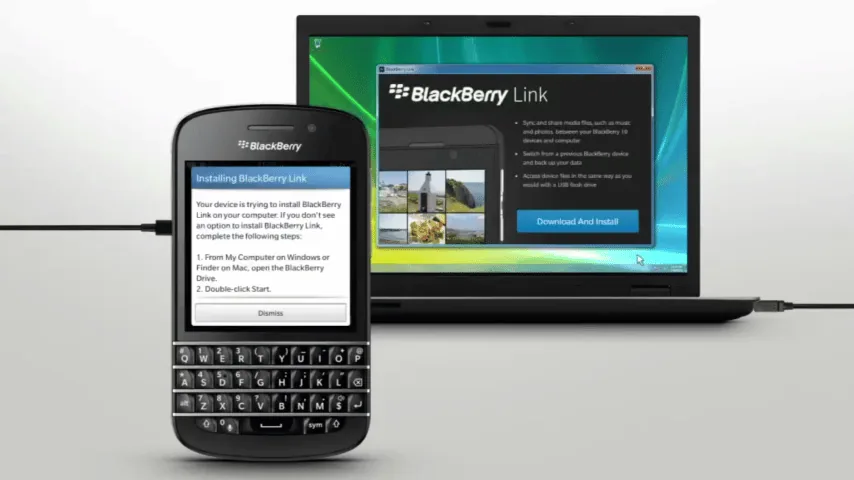
Voice Over · Cantonese
BlackBerry Worldwide
Multilingual voiceover project for BlackBerry's innovative campaign.
Complete your regional coverage
Services that pair with Turkmen
Turkish voice over
The same Oghuz branch — and not a substitute.
Azerbaijani voice over
The other Oghuz language of the Caspian.
Russian voice over
For the legacy material and the wider region.
Turkmen subtitling
Vowel length changes words but is rarely written down.
Turkmen transcription
The standard was built on one dialect out of many.
Turkmen translation
Foreign names respelled the Turkmen way, from an agreed list.
From £400
/ €500 / $550
per hour in the recording studio
That hourly rate is the Basic Studio Fee: the recording session itself, with the voice actor, the casting, the direction, the studio and the engineer included. Any buyout — the usage fee — is added on top and quoted separately: it depends on the markets the recording runs in, the media it runs on and how long you licence it for. Every line is itemised, and all of it carries our Price Match Promise.
Turkmen, with the file problem caught first
Send us the script and anything you have in the archive — we'll tell you what alphabet it's in, then come back with native auditions and a free, no-obligation quote.
The complete solution to localise your content
Voice over

- State-of-the-art studios
- Neumann microphones
- On-hand sound engineers
- 1,000+ voice actors
Translation

- 100+ languages covered
- Tailored to your needs
- Stringent quality control
- Dedicated project managers
Subtitling

- Experienced subtitlers
- Industry-standard software
- Burn-in and graphic editing
- Open and closed captions
Transcription

- Improve accessibility
- Reach a wider audience
- Boost SEO and video views
- Maximise video engagement