
Voice Over · Croatian
Croatian voice over services
Croatian, Serbian and Bosnian speakers follow one another without effort — and each market still hears which one it is getting. Native Croatian voice actors, cast for Croatia.
5M+
Croatian speakers
100+
Languages under one roof
5.0★
From 149 reviews
Are you a Croatian voice actor?
We're always adding new voices to our roster. Send us your demos and we'll consider you for upcoming Croatian projects.
About the language
Why native Croatian matters
Croatian is the official language of Croatia, spoken by around 5 million people, and one of the official languages of the European Union since the country joined in 2013. It is also co-official in Bosnia and Herzegovina and holds official status in parts of Serbia, Austria, Italy and Montenegro.
Croatian is a South Slavic language written in the Latin alphabet, with a fully phonetic orthography and a seven-case grammar. It is closely related to Serbian, Bosnian and Montenegrin, and speakers understand one another without difficulty — but each has its own standard, and the vocabulary differences are the kind a local audience picks up immediately.
In practice the distinctions that matter for a voice over are the script and the word choices. Croatian uses the Latin alphabet exclusively, where Serbian also uses Cyrillic, and Croatian tends to prefer native coinages where Serbian takes the international loanword. Casting a native Croatian voice is what keeps the read sounding local rather than regional.
Demand for Croatian voice over typically comes from tourism and hospitality, EU institutional content, pharmaceutical and medical publishers, e-learning, and brands running campaigns across the Adriatic and wider Balkan region.
Croatian, Serbian, Bosnian and Montenegrin are mutually intelligible, and that is precisely the trap. A Serbian recording will be understood perfectly well in Zagreb — and it will be recognised as Serbian, in a region where that is not a neutral observation. Croatian uses the Latin alphabet, the ijekavian forms («mlijeko», not «mleko») and its own vocabulary for a long list of everyday words. For anything customer-facing, the saving of one shared recording is rarely worth what it costs you in the room. Tell us which markets you need and we will price them properly.
Tourism is the Croatian economy, and it shapes most of the voice work we see. Hospitality, travel, destination marketing, ferry and airline content, museum and heritage audio guides — much of it produced to be heard by visitors rather than by Croatians, which changes the brief entirely. A guide narrated for an international audience needs different pacing and different assumptions from a campaign aimed at the domestic market, and the two frequently get commissioned as if they were the same job.
Croatia is an EU member and a good deal of institutional content follows from that, with terminology that has to match what the EU already publishes in Croatian rather than being invented afresh. It is unglamorous work and it is exacting, because a reader who improvises a term produces a document that does not match the official one.
Within Croatia itself there is variation worth naming. The standard is based on the Štokavian dialect with ijekavian forms, but Kajkavian around Zagreb and Čakavian along the coast and islands are genuinely distinct and audible. National broadcast uses the standard; content tied to Dalmatia or to Zagreb can be cast for it deliberately.
Tell us who the recording is actually for — visitors or Croatians — and we will cast accordingly, because it is the decision that most often gets skipped. You get an itemised quote, terminology checked against the official EU Croatian where that applies, and a free casting of Croatian voices auditioned on the copy you plan to use. Request a Croatian voice over quote, or ask us whether the same project also needs Serbian or Bosnian — we will tell you straight.
How we can help
One partner for the whole Croatian localisation job
Voice over & narration
Croatian narration for video, e-learning, IVR, games and commercials, in the Latin script and the vocabulary Croatia expects.
Translation & script adaptation
English-to-Croatian translation and adaptation by native linguists, so the script sounds natural when spoken — not literally translated.
Subtitling & captions
Croatian subtitles and captions, accurately translated and timed for film, broadcast and social.
100+ languages under one roof
London studios + global talent network
5.0★ from 149 reviews
Content types
Croatian voice over for every kind of content
Whatever you're making, we cast the right voice in Croatian. Explore by use case.
Most common questions
Is a tourism recording different from a domestic campaign?
Yes, and it is the distinction most often skipped. Audio guides, destination marketing and hospitality content are frequently produced to be heard by visitors rather than Croatians, which changes the pacing, the assumptions and often the language itself. Tell us who the recording is actually for and we will cast and direct for that audience.
Should we use a regional Croatian accent?
Only deliberately. The standard is based on Štokavian with ijekavian forms and is what national broadcast uses. Kajkavian around Zagreb and Čakavian along the coast are genuinely distinct and audible, so they work when content is tied to those places and distract when it is not. We will raise it rather than let it arrive by accident.
Can one recording cover Croatian, Serbian and Bosnian?
Technically speakers of all three understand one another, so a single recording will be comprehensible across the region. But each has its own standard and its own vocabulary preferences, and audiences notice. For anything customer-facing we recommend casting separately for each market. If budget forces a choice, tell us which market matters most and we'll cast for that one and flag the trade-off.
Is Croatian written in Cyrillic?
No. Croatian uses the Latin alphabet exclusively, with the additional letters č, ć, đ, š and ž. Serbian is written in both Cyrillic and Latin. If your project involves on-screen text as well as voice, the script choice is worth confirming before you start.
Do you have native Croatian voice actors?
Yes, voices from Croatia rather than the wider region. Send us the brief and we'll shortlist and record auditions using your script so you hear the Croatian standard, not an approximation of it.
What do you use Croatian voice over for?
Common projects include TV and radio commercials, tourism and hospitality content, corporate and e-learning video, EU institutional material, pharmaceutical and medical content, video games, and IVR/phone systems aimed at Croatia and the Adriatic region.
Can you also translate and subtitle into Croatian?
Yes. We handle the full job — translation and script adaptation by native linguists, Croatian voice over, and subtitles or captions — so everything is consistent.
What sort of turnaround should we plan for?
Most short Croatian voice over projects are delivered within 24 to 48 hours; larger jobs are scheduled with your dedicated project manager.
Can I direct the Croatian session remotely?
Yes — join us in London for the Croatian session, or direct it live over Source-Connect, Zoom or Teams and steer the read from wherever you are.
Which audio formats can you supply?
Files arrive in the format your workflow expects — WAV, MP3 or split stems — mastered to your loudness spec. Send the delivery requirements with the brief and we will match them exactly.
What do you need from us to quote Croatian voice over?
Less than people expect: the script, or the draft of it, its total running time or word count, where the recording will be used, and the date you need it by. If the script is not signed off yet, send the draft anyway — we would rather quote on what exists than wait for a version that eats your deadline. A named project manager comes back with an itemised quote, normally within four working hours.
How quickly will we hear back, and who will we be dealing with?
More than half of enquiries get a reply within thirty minutes during office hours (Monday to Friday, 9am to 6pm UK time), and the itemised quote normally follows within four working hours. After that you have one dedicated project manager who owns the job from brief to final file — not a ticket queue, and not a different name on every email. If it is easier, call +44 207 095 5730 and ask for them by name.
We are still pitching and the budget is not signed off. Can we still get a Croatian quote?
Yes, and it is one of the commonest reasons people get in touch. Tell us it is for a pitch and you get a figure you can put in front of your own client, itemised so it stands up to being picked apart, with no obligation and no follow-up sales calls if the pitch goes elsewhere. If it lands, the quote still holds and we already know the project.
Brands that trusted us with their voice
Casting, direction and recording for campaigns that ran in several markets at once.
Voice Over · Flemish
AXA — Redefining Standards
Multilingual mastery for instructional videos: a Flemish voiceover journey.
Voice Over · Czech
Betfair
Crafting authenticity in localisation: a Czech voiceover production.
Voice Over · Cantonese
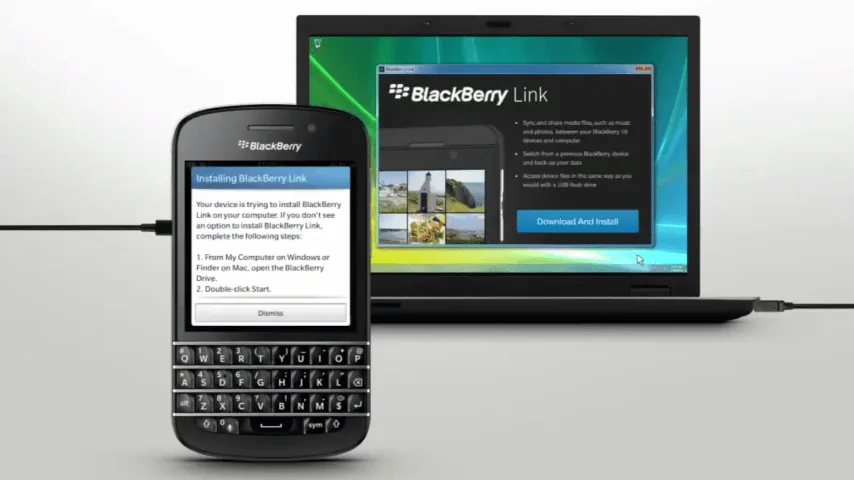
BlackBerry Worldwide
Multilingual voiceover project for BlackBerry's innovative campaign.
Complete your Croatian localisation
Services that pair with Croatian voice over
Croatian translation
In Croatia, informing the consumer in Croatian is the law.
Croatian subtitling
Croatian subtitles, with dž, lj and nj capitalised correctly.
Voice over agency
Every kind of content, in over a hundred languages, always native.
Croatian transcription
Verbatim or clean-read transcripts of audio and video.
From £400
/ €500 / $550
per hour in the recording studio
That hourly rate is the Basic Studio Fee: the recording session itself, studio and engineer included. Any buyout — the usage fee — is added on top and quoted separately: it depends on the markets the recording runs in, the media it runs on and how long you licence it for. Every line is itemised, and all of it carries our Price Match Promise.
Bring your content to Croatia in Croatian
Tell us about your project and we'll cast the right native Croatian voice, in any style — with a free, no-obligation quote.
The complete solution to localise your content
Voice over

- State-of-the-art studios
- Neumann microphones
- On-hand sound engineers
- 1,000+ voice actors
Translation

- 100+ languages covered
- Tailored to your needs
- Stringent quality control
- Dedicated project managers
Subtitling

- Experienced subtitlers
- Industry-standard software
- Burn-in and graphic editing
- Open and closed captions
Transcription

- Improve accessibility
- Reach a wider audience
- Boost SEO and video views
- Maximise video engagement