
Voice Over · Haitian Creole
Haitian Creole voice over services
Native Kreyòl voice actors for public-health, NGO, emergency and community content. If your campaign is in French, most of Haiti is not hearing it.
2
Official languages in Haiti
1
That nearly everyone speaks
48h
Delivery
Calling Haitian Creole voice talent
We're expanding our Haitian Creole roster
Haitian Creole is a language we're actively growing. If you're a Haitian Creole voice actor, we'd love to hear your demos and put you forward for paid work.
About the language
Haiti has two official languages. Only one of them reaches everyone.
Haitian Creole — «kreyòl ayisyen» — is spoken by virtually the entire population of Haiti, and has been an official language alongside French since the 1987 constitution. French is fluently commanded by a much smaller group: it is the language of administration, higher education and the elite rather than of daily life.
That gap produces the most expensive mistake made with Haiti, and it is made in good faith. The reasoning looks sound — Haiti is francophone, so French should cover it — and the result is a campaign that does not land slightly worse. It misses most of the audience it claims to address.
Which matters most in exactly the work Haiti attracts: public health, emergency and disaster communication, NGO and development programmes. Content people are meant to understand and act on. In that context the language choice is not a courtesy, it is whether the message functions.
Kreyòl is not a dialect of French. It is a creole with a French lexical base — much of the vocabulary is recognisably French-derived — but its grammar is its own and genuinely different. A French speaker does not understand Kreyòl without learning it, and a French voice actor cannot cover it. We hold separate rosters, and if your brief actually needs French our French service is a different page.
One thing worth specifying on the text side: Kreyòl has had an official phonemic spelling since 1979 — one letter, one sound — which is consistent and easy to read. Plenty of older material still circulates in French-style spellings, so it is worth asking for the official orthography rather than assuming. Beyond Haiti itself, there are large Kreyòl-speaking communities in the United States, particularly Miami and New York, and in Canada.
Start with the brief. The budget conversation gets easier afterwards. That review is free, and it is where most of the useful decisions get made. The quote that follows is itemised. We include a free casting as standard: Haitian Creole voices, your words, and no commitment attached to the result. Ask us for a Haitian Creole quote, or tell us what you have and we will tell you what is missing.
Getting Haitian Creole right
Worth settling before the session
The decision that matters is made when you pick the language, not the voice.
French does not cover Haiti
Kreyòl is spoken by nearly everyone; French is fluently held by a much smaller group. For public-health, emergency and community content, a French recording misses most of the intended audience.
Kreyòl is a language, not an accent
It has a French-derived vocabulary and its own grammar, and it is not mutually intelligible with French. A French voice actor cannot read a Kreyòl script, and we do not cast across.
Ask for the 1979 orthography
Kreyòl has an official phonemic spelling — one letter, one sound. Older French-style spellings still circulate, so specify the standard for subtitles and on-screen text.
A large audience outside Haiti
Miami, New York and parts of Canada have substantial Kreyòl-speaking communities. If your brief is diaspora-facing, tell us and we will pitch the register accordingly.
How we can help
One partner for the whole Haiti job
Voice over & narration
Native Kreyòl for public-health and emergency content, NGO communications, eLearning, community information and corporate video.
Translation & script adaptation
Kreyòl translation by native linguists in the official orthography, written as Kreyòl rather than carried across from a French version.
Subtitling & captions
Kreyòl subtitles in the standard spelling, so the on-screen text matches the read.
100+ languages under one roof
London studios + global talent network
5.0★ from 149 reviews
Content types
Haitian Creole voice over for every kind of content
Whatever you're making, we cast the right voice in Haitian Creole. Explore by use case.
Most common questions
We already have a French version. Do we need Haitian Creole too?
For Haiti, yes, and this is the point most worth getting right. Kreyòl is spoken by virtually the whole population while French is fluently held by a much smaller group, so a French recording aimed at Haiti misses most of the audience rather than reaching it imperfectly. If the content is public-health, emergency or community material that people need to act on, Kreyòl is not the optional extra — it is the version that works.
Can a French voice actor record our Kreyòl script?
No. Kreyòl draws much of its vocabulary from French but its grammar is its own, and the two are not mutually intelligible — a French speaker does not understand Kreyòl without learning it. We cast native Kreyòl speakers and keep separate rosters for the two languages.
Which spelling should our subtitles use?
The official orthography established in 1979, which is phonemic — one letter, one sound — and consistent. Older French-influenced spellings still circulate in some material, so it is worth specifying rather than assuming. We deliver in the standard spelling as default.
Is this for Haiti or for the diaspora?
We can do either, and it is worth saying which in the brief. There are large Kreyòl-speaking communities in Miami, New York and parts of Canada, and content aimed at them often sits at a slightly different register from material for Haiti itself. Tell us the audience and we cast and direct accordingly.
Can you translate our script into Kreyòl?
Yes, with native Kreyòl linguists writing from your source rather than adapting a French version. Carrying copy across from French tends to produce something over-formal that reads as translated, which is the opposite of what community-facing content needs.
Can I direct the session remotely?
Yes, and for Kreyòl that is the usual arrangement — our Kreyòl talent records through our global network rather than in London. You can direct live over Source-Connect, Zoom or Teams so you hear takes as they happen and can adjust on the spot.
What register suits public-health content?
Plain and direct. Much Kreyòl work is material people are meant to act on, and an over-formal read — often the symptom of a script translated from French — puts distance between the message and the listener. We direct for clarity and warmth, and we will flag a script pitched more formally than its audience needs.
What do you use Haitian Creole voice over for?
Public-health and vaccination campaigns, emergency and disaster communication, NGO and development programmes, community and civic information, eLearning, diaspora-facing media in the US and Canada, and corporate video.
What audio specification will we receive?
Broadcast-grade WAV, MP3 or stems at your platform's sample rate, bit depth and loudness. Send the spec alongside the brief.
What do you need from us to quote Haitian Creole voice over?
Less than people expect: the script, or the draft of it, its total running time or word count, where the recording will be used, and the date you need it by. If the script is not signed off yet, send the draft anyway — we would rather quote on what exists than wait for a version that eats your deadline. A named project manager comes back with an itemised quote, normally within four working hours.
How quickly will we hear back, and who will we be dealing with?
More than half of enquiries get a reply within thirty minutes during office hours (Monday to Friday, 9am to 6pm UK time), and the itemised quote normally follows within four working hours. After that you have one dedicated project manager who owns the job from brief to final file — not a ticket queue, and not a different name on every email. If it is easier, call +44 207 095 5730 and ask for them by name.
We are still pitching and the budget is not signed off. Can we still get a Haitian Creole quote?
Yes, and it is one of the commonest reasons people get in touch. Tell us it is for a pitch and you get a figure you can put in front of your own client, itemised so it stands up to being picked apart, with no obligation and no follow-up sales calls if the pitch goes elsewhere. If it lands, the quote still holds and we already know the project.
Brands that trusted us with their voice
Casting, direction and recording for campaigns that ran in several markets at once.
Voice Over · Flemish
AXA — Redefining Standards
Multilingual mastery for instructional videos: a Flemish voiceover journey.
Voice Over · Czech
Betfair
Crafting authenticity in localisation: a Czech voiceover production.
Voice Over · Cantonese
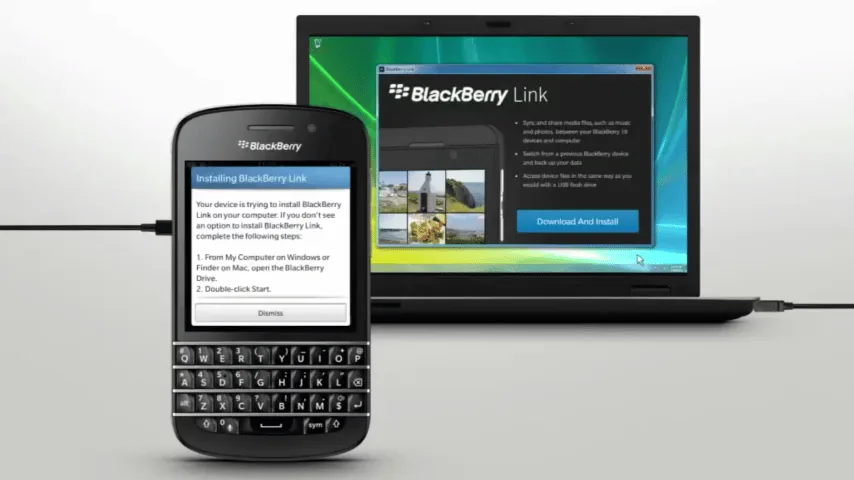
BlackBerry Worldwide
Multilingual voiceover project for BlackBerry's innovative campaign.
Complete your Caribbean coverage
Services that pair with Haitian Creole
French voice over
For the administrative and institutional layer.
English US voice over
For diaspora-facing campaigns in Miami and New York.
Translation services
Kreyòl translation in the official orthography.
Haitian Creole subtitling
French loanwords lose silent letters: diri, not du riz.
Haitian Creole transcription
A borrowed word keeps its meaning, never its spelling.
Haitian Creole translation
Kreyol, French or both, decided before the first line.
From £400
/ €500 / $550
per hour in the recording studio
That hourly rate is the Basic Studio Fee: the recording session itself, with the voice actor, the casting, the direction, the studio and the engineer included. Any buyout — the usage fee — is added on top and quoted separately: it depends on the markets the recording runs in, the media it runs on and how long you licence it for. Every line is itemised, and all of it carries our Price Match Promise.
Reach Haiti in the language Haiti speaks
Tell us what the project is and we will cast for it, with a free quote and no obligation attached.
The complete solution to localise your content
Voice over

- State-of-the-art studios
- Neumann microphones
- On-hand sound engineers
- 1,000+ voice actors
Translation

- 100+ languages covered
- Tailored to your needs
- Stringent quality control
- Dedicated project managers
Subtitling

- Experienced subtitlers
- Industry-standard software
- Burn-in and graphic editing
- Open and closed captions
Transcription

- Improve accessibility
- Reach a wider audience
- Boost SEO and video views
- Maximise video engagement