
Voice Over · Burmese
Burmese voice over services
Native Burmese voice actors for NGO, public-information, eLearning and corporate content — and subtitles delivered in Unicode, so they don't arrive as broken characters.
2
Encodings in the wild
1
That you should accept
48h
Delivery
Calling Burmese voice talent
We're expanding our Burmese roster
Burmese is a language we're actively growing. If you're a Burmese voice actor, we'd love to hear your demos and put you forward for paid work.
About the language
The most expensive Burmese mistake is an encoding, not an accent
Burmese is the official language of Myanmar, a Sino-Tibetan language written in its own rounded script, left to right and without systematic spaces between words. It is tonal, and it distinguishes aspirated from unaspirated consonants — two things a non-native reading phonetically does not reproduce, which is the usual reason to cast native.
But the problem that actually derails Burmese projects is not the voice. It is text encoding, and it catches people who have never heard of it.
For years Myanmar did not use standard Unicode for its script. It used Zawgyi, a non-standard encoding that occupies the same code points but maps them to different shapes. It spread because it arrived first and because handsets sold in the country shipped with it. The country has been migrating to Unicode since the official switch, but Zawgyi content and devices are still around.
Here is why that matters to you: a file encoded in Zawgyi and opened on a Unicode system — or the reverse — does not look slightly wrong. It looks like broken nonsense. Letters mangled, syllables out of order, text that cannot be searched or copied. And because both use the same character range, software cannot reliably detect which one it received: either way it looks like valid Burmese. So a subtitle file can leave the translator perfect and reach the player destroyed, with nobody in the chain able to read Burmese well enough to notice.
Our rule is simple: we deliver Unicode, we say so in writing, and a native speaker checks the final file in situ rather than trusting that it survived the pipeline. Typical work is NGO and development communications, public-health content, eLearning, civic and safety information, corporate video and broadcast and diaspora media.
The first conversation is the one that saves money. The script review is on the house. So is the honest opinion about whether the approach is right. The free casting is included — Burmese voices reading your copy, delivered as takes you can share internally. Get a free Burmese quote, or tell us the market and the deadline and we will take it from there.
Getting Burmese right
Worth settling before the session
One of these will cost you a re-delivery if you skip it, and it has nothing to do with the audio.
Specify Unicode, in writing
Zawgyi and Unicode occupy the same code points, so no tool can reliably tell them apart — the text looks valid either way and only renders as nonsense at the far end. Put the requirement in the brief rather than assuming.
Have a native check the final file
Not the translation — the delivered artefact, in the player or on the page. It is the only reliable test, because an encoding mismatch survives every automated check in the chain.
Tonal, with aspiration contrasts
Pitch distinguishes words, and aspirated and unaspirated consonants are separate sounds. A non-native approximation collapses both, so we cast native speakers only.
Literary or spoken register
Burmese separates a formal literary variety, used for news and official content, from everyday speech. Tell us which the content calls for and we direct for it.
How we can help
One partner for the whole Burmese job
Voice over & narration
Native Burmese for NGO and public-information content, eLearning, corporate video and broadcast, directed for register and pace.
Translation & script adaptation
Burmese translation by native linguists, delivered in Unicode with the encoding confirmed rather than assumed.
Subtitling & captions
Burmese subtitles in Unicode, checked by a native speaker in the player before we call them done.
100+ languages under one roof
London studios + global talent network
5.0★ from 149 reviews
Content types
Burmese voice over for every kind of content
Whatever you're making, we cast the right voice in Burmese. Explore by use case.
Most common questions
Our Burmese subtitles came back as broken characters. What happened?
Almost certainly an encoding mismatch between Zawgyi and Unicode. For years Myanmar used Zawgyi, a non-standard encoding that occupies the same code points as Unicode but maps them to different shapes, so a file made in one and opened in the other renders as nonsense rather than as slightly-wrong text. The fix is to re-deliver in Unicode and have a native speaker confirm it in the actual player.
What is Zawgyi and do we need to worry about it?
It is a legacy Burmese encoding that became the de facto standard in Myanmar before the country migrated to Unicode, and it is still in circulation on older content and devices. You should worry about it to exactly this extent: specify Unicode in your brief and make sure someone who reads Burmese checks the final file. Software cannot detect the difference reliably, because both look like valid Burmese text.
Can a Thai or Chinese voice actor cover Burmese?
No. Burmese is Sino-Tibetan and unrelated to Thai; it is a separate language from Chinese with its own script, tone system and aspiration contrasts. We cast native Burmese speakers. If your campaign spans several Southeast Asian languages we record each with its own talent and schedule the sessions together.
Should we record in literary or spoken Burmese?
It depends on the content. Literary Burmese is what news bulletins, official material and formal education use; spoken Burmese is what a conversational or community-facing piece needs. Tell us the audience and use case and we will recommend one and direct for it.
Can you translate our script into Burmese?
Yes, with native Burmese linguists, delivered in Unicode as standard. For public-health and safety material we would also suggest a terminology pass up front, since the accepted wording matters more than usual when the audience is meant to act on it.
Do you handle the on-screen text as well as the audio?
Yes, and for Burmese we would recommend it rather than splitting the job. The encoding risk lives in the text side, so keeping the subtitles, captions and any on-screen graphics with the same team that recorded the audio means one native speaker signs off on the whole delivery.
What do you use Burmese voice over for?
NGO and development communications, public-health and safety campaigns, eLearning, civic and government information, corporate video and internal communications, documentary narration, and broadcast and diaspora media.
What sort of turnaround should we plan for?
Most short Burmese projects are delivered within 24 to 48 hours; longer or multi-voice work is scheduled with your dedicated project manager, who confirms a firm date up front. The time difference is handled at our end.
How are the finished files delivered?
Your Burmese audio is delivered to your specification: uncompressed WAV, MP3 where size matters, stems where the mix happens elsewhere, at the LUFS target you set.
What do you need from us to quote Burmese voice over?
Less than people expect: the script, or the draft of it, its total running time or word count, where the recording will be used, and the date you need it by. If the script is not signed off yet, send the draft anyway — we would rather quote on what exists than wait for a version that eats your deadline. A named project manager comes back with an itemised quote, normally within four working hours.
How quickly will we hear back, and who will we be dealing with?
More than half of enquiries get a reply within thirty minutes during office hours (Monday to Friday, 9am to 6pm UK time), and the itemised quote normally follows within four working hours. After that you have one dedicated project manager who owns the job from brief to final file — not a ticket queue, and not a different name on every email. If it is easier, call +44 207 095 5730 and ask for them by name.
We are still pitching and the budget is not signed off. Can we still get a Burmese quote?
Yes, and it is one of the commonest reasons people get in touch. Tell us it is for a pitch and you get a figure you can put in front of your own client, itemised so it stands up to being picked apart, with no obligation and no follow-up sales calls if the pitch goes elsewhere. If it lands, the quote still holds and we already know the project.
Brands that trusted us with their voice
Casting, direction and recording for campaigns that ran in several markets at once.
Voice Over · Flemish
AXA — Redefining Standards
Multilingual mastery for instructional videos: a Flemish voiceover journey.
Voice Over · Czech
Betfair
Crafting authenticity in localisation: a Czech voiceover production.
Voice Over · Cantonese
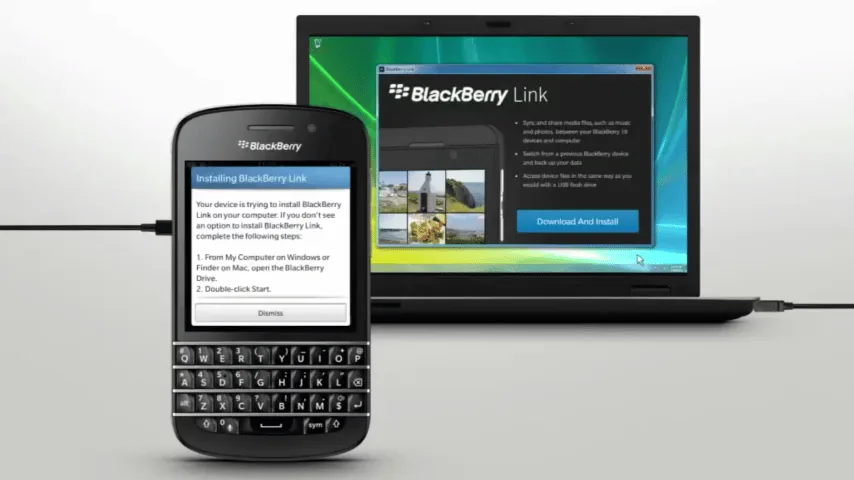
BlackBerry Worldwide
Multilingual voiceover project for BlackBerry's innovative campaign.
Complete your Southeast Asia coverage
Services that pair with Burmese
Thai voice over
Myanmar's neighbour, and a separate language family.
Khmer voice over
Cambodia, often localised in the same regional push.
Burmese subtitling
No spaces, so every line break is decided.
Burmese transcription
Verbatim or clean-read transcripts of audio and video.
Burmese translation
Delivered in Unicode, with old Zawgyi files converted.
From £400
/ €500 / $550
per hour in the recording studio
That hourly rate is the Basic Studio Fee: the recording session itself, with the voice actor, the casting, the direction, the studio and the engineer included. Any buyout — the usage fee — is added on top and quoted separately: it depends on the markets the recording runs in, the media it runs on and how long you licence it for. Every line is itemised, and all of it carries our Price Match Promise.
Burmese that arrives intact
Tell us about your project and we'll handle the recording and the encoding — with a free, no-obligation quote.
The complete solution to localise your content
Voice over

- State-of-the-art studios
- Neumann microphones
- On-hand sound engineers
- 1,000+ voice actors
Translation

- 100+ languages covered
- Tailored to your needs
- Stringent quality control
- Dedicated project managers
Subtitling

- Experienced subtitlers
- Industry-standard software
- Burn-in and graphic editing
- Open and closed captions
Transcription

- Improve accessibility
- Reach a wider audience
- Boost SEO and video views
- Maximise video engagement