

Voice Over · Vietnamese
Vietnamese voice over services
Native Vietnamese voice actors for corporate video, eLearning, advertising and more. Northern, Central and Southern accents, all recorded in broadcast-quality studios.
86M
Native speakers
3
Regional accents
48h
Delivery
Are you a Vietnamese voice actor?
We're always adding new voices to our roster. Send us your demos and we'll consider you for upcoming Vietnamese projects.
About Vietnamese voice over
Find the right Vietnamese voice for your project
Vietnamese is a tonal language, where the same syllable can carry a completely different meaning depending on its pitch contour. The northern standard has six tones; in the south there are five, because two of them have merged. It is the official language of Vietnam, spoken natively by around 86 million people, with established communities across the diaspora.
The written form is quốc ngữ, a Latin-based script shared across the country, so the real variation is regional and spoken. Northern Vietnamese, centred on Hanoi, is the variety used in national broadcasting and education. Central Vietnamese, around Huế, has a reputation for being the hardest for other speakers to follow. Southern Vietnamese, centred on Ho Chi Minh City, reads as more relaxed and contemporary.
Which voice you want also depends on what the content is for. Public information calls for a calm, steady delivery. Advertising works best expressive and engaging. Corporate training and eLearning need a clear, structured tone so comprehension holds across regions. Tell us the use case and we will shortlist accordingly.
At GoLocalise, we work with professional Vietnamese voice actors who record in approved studios. We stay on top of every step, from script review and casting through to editing and final delivery, to ensure the voice you go out with matches the audience and content you are producing for.
Vietnamese has six tones, and they are the language rather than an accent on top of it. The same syllable said with a different tone is a different word, and the tones are written — every diacritic on the page is doing work. A reader who treats them as optional produces something that is not merely accented but wrong, and the audience hears it immediately. There is no version of this that a careful non-native manages.
North and South are the real casting decision. Hanoi speech is the broadcast standard and what national institutional content uses; Ho Chi Minh City speech differs in pronunciation and in a good deal of everyday vocabulary, and the South is the larger commercial market. Neither is a dialect of the other in any dismissive sense — audiences in each place know at once which one is reading. If your content is commercial and aimed at the South, a Hanoi read is a decision rather than a default, and it is worth making it consciously.
The diacritics stack, with a tone mark sitting above or below a vowel that already carries a modifier, and that is where fonts and platforms fail. Subtitles clip the upper marks against a tight line height, systems normalise the characters wrongly, and the result is text that a Vietnamese reader cannot parse. It is a text problem rather than an audio one and it survives to delivery because it looks approximately right. We test the rendering on your platform.
Vietnamese is monosyllabic and compact, so the written text often takes less space than the English it came from — one of the few languages where timing works in your favour. We will tell you where you have gained room rather than quietly leaving it unused.
Forms of address are built from kinship terms rather than a single pronoun, so the script has to know the relative age and status of speaker and listener. English has none of this, and a translated script arrives with it decided by accident. In customer-facing content it is the difference between sounding warm and sounding presumptuous.
Send us the script and tell us North or South, and we will do the rest before you commit. We will check the diacritics render on your platform, flag the forms of address, quote the job itemised, and record a free casting of Vietnamese voices auditioned against your own material in the variety you need. [Request a Vietnamese voice over quote](/get-a-quote?help=Vietnamese%20voice%20over), or ask us which variety fits your market and we will tell you straight.

Voice over rates
Professional Vietnamese voice-over recordings
From £400
/ €500 / $550
per hour in the recording studio
That is the voice over recording session itself. Any buyout — the usage fee — is added on top and quoted separately: it depends on the markets the recording runs in, the media it runs on and how long you licence it for. Every line is itemised, and all of it carries our Price Match Promise.
For short corporate content, phone prompts and internal communications.
- Up to 150 words
- 1 revision included
- Output in .wav or .mp3
- 48h turnaround
A managed service end to end, built for eLearning, advertising and longer projects.
- Any word count
- Casting + script review
- Post-production included
- Dedicated project manager
Case study
Vietnamese voice over case study
International outreach · VietnameseFood for Life
A client committed to disseminating crucial information across Africa and Asia came to us for Vietnamese voiceover services. The initiative involved localising four videos aimed at addressing significant issues within rural communities.
Our role covered translating the English scripts into Vietnamese and then producing the voiceover. We leveraged our global network of translators to make sure the translations were accurate and culturally resonant, and our search for the right voice talent was conducted with particular care given the project’s reach.
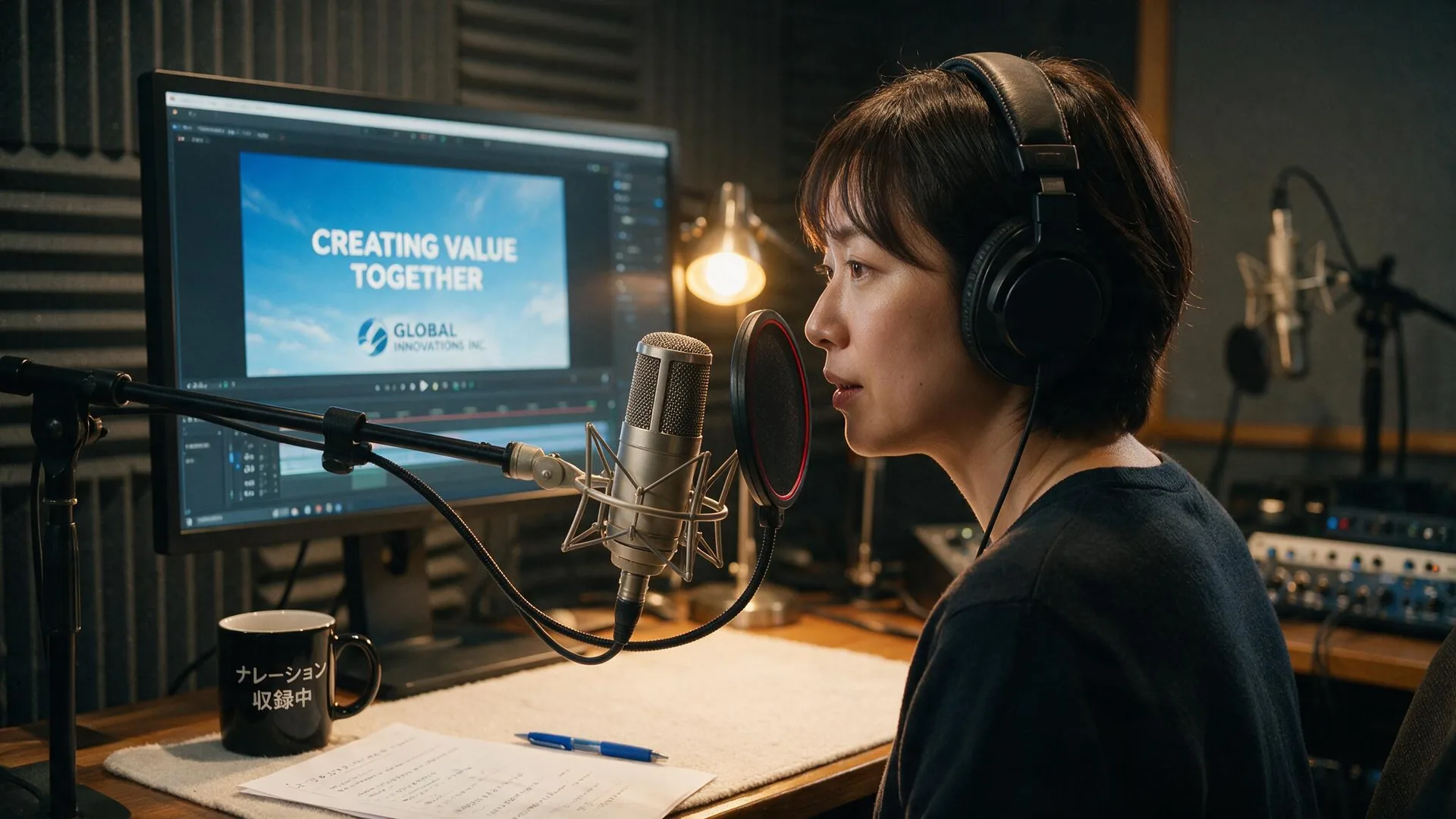
The dubbing was done in our London studios, with the client present in the session. Their direct involvement provided immediate direction and kept the workflow moving under tight deadlines, and our sound engineers finished the work ready for distribution in the target regions.
“The finished voiceover met the client’s high expectations, contributing to a successful international campaign. Their satisfaction with our services has fostered an ongoing partnership.”
— GoLocalise
Trusted by global brands
We have used GoLocalise on a regular basis for projects in a number of languages. The service we receive is great. The team is always friendly and professional. The voiceovers we receive are of a very high quality and the turnaround is extremely quick. We are very happy to recommend GoLocalise to other businesses.

We’ve worked with the GoLocalise team on countless video projects and have always had the same consistent, great experience. Not only are they responsive and quick on turnaround, I can always trust the VO will be done right – they are always 100% clear with communication and ensure their talent is prepared to record by asking necessary questions upfront before recording. Highly recommended and will definitely work with them on future projects.

It was a pleasure to work with David and the team at GoLocalise. David gave me lots of help and advice, guiding me through my first subtitling project. He really knows his stuff! The experience was completely pain-free. I would not hesitate to recommend GoLocalise – outstanding work at a good price.

They’re reliable, adaptive and obsessed with quality. And while you can never be 100% guaranteed of perfection, you can be sure GoLocalise will go the extra mile to get it right every time. Whether that’s hiring extra resources, hopping on multiple calls or even changing their internal processes, they’ll do what it takes. We’ve worked with them now for over 5 years and we are truly thankful to have such a strong localisation partner for our business.
How can we help you?
One project manager, start to finish
Brief review
We review the material you send, agree the register and settle the audience question, so the casting brief is precise rather than approximate.
Casting
We shortlist by region first — northern or southern Vietnamese — because that choice is audible before the tone is.
Recording & production
With the voice chosen, we book the studio, run the Vietnamese session and take care of the edit and the post afterwards.
Delivery
The finished recording arrives ready to use, in your chosen format and on schedule.
Usually back with you within 24 to 48 hours
A dedicated producer looking after your project
Professional native Vietnamese voice actors
Broadcast-quality rooms, wherever the voice is based
Content types
Vietnamese voice over for every kind of content
Whatever you're making, we cast the right voice in Vietnamese. Explore by use case.
Two ways in: browse Vietnamese voice over by content type above, or go deeper on a specific project below.
Not sure which fits? Tell us about your project and we'll recommend the right voice.
In-depth guides
Popular Vietnamese projects, in depth
Dedicated pages with detailed guidance and native voices for the Vietnamese projects we're asked for most.
Most common questions
Should we record Northern or Southern Vietnamese?
It depends on the content. Hanoi speech is the broadcast standard and what national and institutional work uses; Ho Chi Minh City speech differs in pronunciation and everyday vocabulary, and the South is the larger commercial market. Audiences in each know immediately which they are hearing, so for commercial content aimed at the South a Hanoi read should be a conscious decision rather than a default.
Why do our Vietnamese subtitles look broken?
Usually the stacked diacritics. Vietnamese places a tone mark above or below a vowel that already carries a modifier, and tight line heights clip the upper marks while some systems normalise the characters wrongly. The result is text a Vietnamese reader cannot parse, and it survives to delivery because it looks approximately right. We test the rendering on your platform before handing over.
Can a fluent learner record Vietnamese?
No. Vietnamese has six tones and they are written into every word — a reader who treats the diacritics as decoration produces text that is wrong rather than accented, and the audience hears it in the first line. We cast native speakers, and for this language it is not a preference we bend on.
Which Vietnamese accent do I need?
Most projects work well with Northern Vietnamese, the standard variety used in national broadcasting and understood across the country. Where the content calls for it, Southern Vietnamese suits modern, city-facing content set in or around Ho Chi Minh City, while Central Vietnamese is the right choice when the audience is specifically from that region.
Do I need a localised script, or can I use the same text across Vietnam?
The written form is shared, but spoken Vietnamese differs enough between regions that a voice actor from one area can sound slightly off to listeners from another. For national campaigns, Northern Vietnamese is the safest default. If your content is location-specific, matching the accent to the setting makes it land more naturally.
How quickly can a Vietnamese voice-over project be delivered?
Most short projects are delivered within 24 to 48 hours, though the exact turnaround depends on script length and talent availability. At the start of your project, your project manager will confirm the timeline.
Why does Vietnamese need a native voice actor?
Vietnamese is a tonal language: tone determines meaning, emotion and intent. A non-native read does not just sound off, it can change what the words mean. Pacing works the same way — the rhythm is shaped by tone placement and vowel length, and a native speaker adjusts timing intuitively so the narration sounds effortless.
How much does a Vietnamese voice over cost?
Before the price, the decision that shapes it: Hanoi or Ho Chi Minh City. Northern Vietnamese is the broadcast standard and carries authority; the southern accent is what most of the commercial audience actually speaks, and it uses different everyday vocabulary as well as different tones. Picking wrong does not make you unintelligible, it makes you sound like you are addressing somebody else. The quote is a session fee plus a usage licence sized to the media, itemised, with our Price Match Promise.
Do you offer Vietnamese dubbing, subtitling and translation as well?
Yes — and check your fonts before you sign off any on-screen text. Vietnamese stacks tone marks on top of vowels that already carry diacritics, and a great many display faces either clip the upper marks or drop them, which changes the word.
What file formats do you deliver Vietnamese voice overs in?
We deliver Vietnamese voice over in whatever format you need — WAV, MP3, AIFF and more — at broadcast specifications, as separate files or a single mix, ready to drop straight into your project.
Ready to start your Vietnamese voice over project?
Hand us the Vietnamese script and the brief and the right voices come back to you.
Professional voice over services for your audio and video productions
Voice over

- State-of-the-art studios
- Neumann microphones
- On-hand sound engineers
- 1,000+ voice actors
Translation

- 100+ languages covered
- Tailored to your needs
- Stringent quality control
- Dedicated project managers
Subtitling

- Experienced subtitlers
- Industry-standard software
- Burn-in and graphic editing
- Open and closed captions
Transcription

- Improve accessibility
- Reach a wider audience
- Boost SEO and video views
- Maximise video engagement