
Voice Over · Hmong
Hmong voice over services
Native Hmong voice actors for public-health, school district, civic and community content. A Southeast Asian language whose largest commissioning market is the United States.
2
Main varieties: White and Green
3
US states with the largest communities
48h
Delivery
Calling Hmong voice talent
We're expanding our Hmong roster
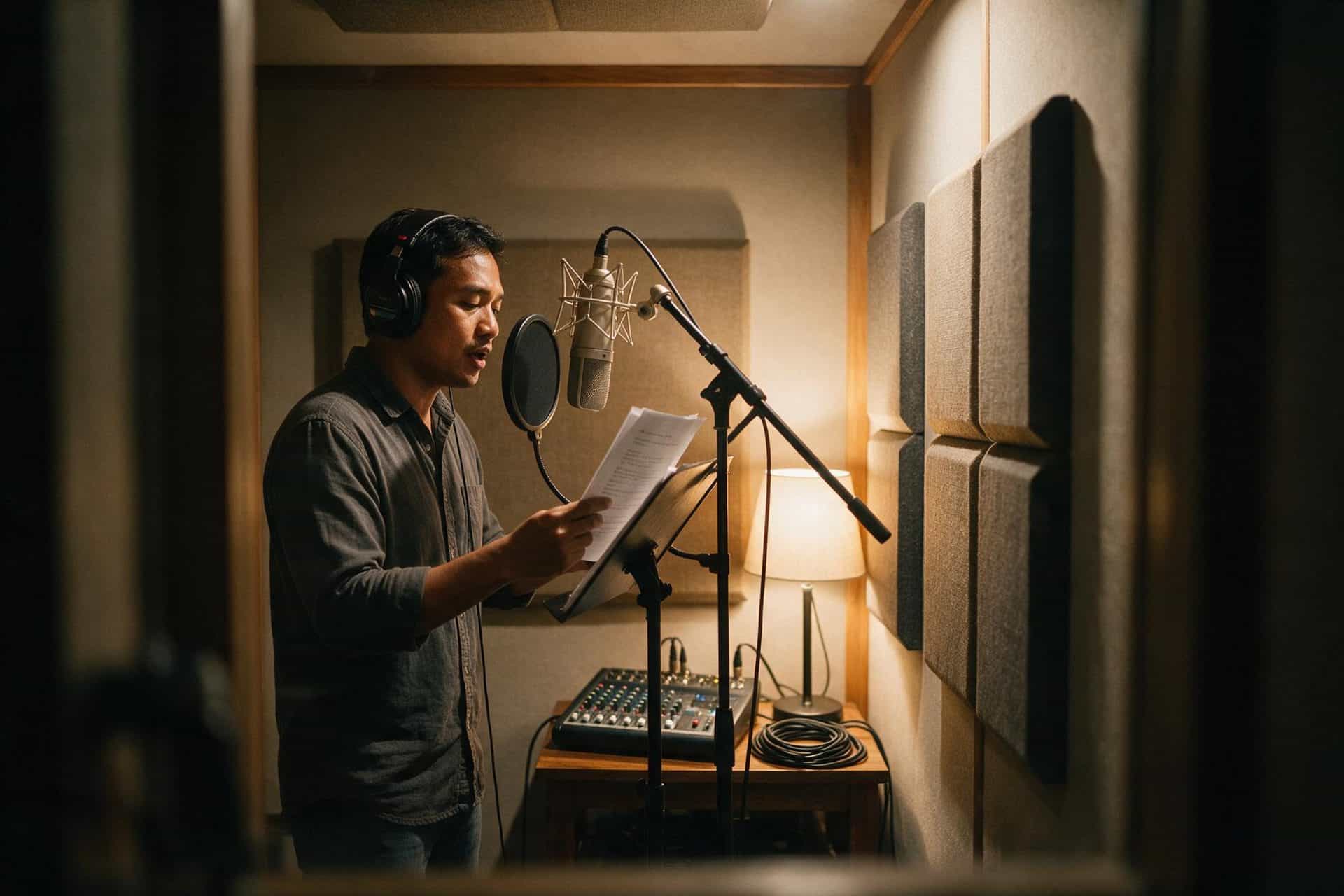
Hmong is a language we're actively growing. If you're a Hmong voice actor, we'd love to hear your demos and put you forward for paid work.
About the language
A Southeast Asian language, mostly commissioned from America
Hmong is a Hmong-Mien language spoken across southern China, Vietnam, Laos and Thailand. But the organisation commissioning a Hmong voice over is, more often than not, American.
The reason is historical. After the Vietnam War and the conflict in Laos, tens of thousands of Hmong were resettled in the United States, and the largest communities today are in Minnesota, Wisconsin and California, with several generations now born there.
That makes Hmong a US public-services language. School districts, state health departments, courts and social services produce Hmong material because they are required to serve that population — and that, rather than content aimed at Asia, is where most of the real demand sits. It changes the brief: the cultural reference points are American, the register is institutional but warm, and the client is usually a public body in a specific state.
There is a casting decision to make, and it is binary. Hmong has two main varieties among resettled speakers — White Hmong and Green (or Blue) Hmong — and they differ enough that a speaker knows immediately which one they are hearing. Serious public campaigns often produce both versions for exactly that reason, and if your budget allows it, we would recommend the same.
One thing to protect on the text side: Hmong is tonal, and its standard Latin orthography marks tone with a final consonant that is not pronounced. Spellcheckers and translation tools that do not know the system quietly 'correct' those letters and destroy the tone. If your workflow passes Hmong text through anything automated, tell us and we will check the output.
Tell us what you are making before you settle how to make it. Free to review, and quick. You get back a short list of what to decide and a quote with nothing hidden in it. And the free audition is on us. Your script, read by shortlisted Hmong actors, so nobody is judged on a demo cut for something else. Ask about Hmong voice over, or send the brief and we will reply with a shortlist.
Getting Hmong right
What to sort out first
The audience is probably closer to home than the language suggests.
Most Hmong work is US-facing
Minnesota, Wisconsin and California hold the largest communities, and school districts, health departments and courts are the usual commissioners. Write for an American context unless your brief says otherwise.
White or Green Hmong
Two varieties, distinguishable instantly by a native listener. Tell us which the community you serve speaks — and for public campaigns, consider producing both.
Do not let a spellchecker near it
Tone is marked by a silent final consonant in the standard orthography. Automated tools treat those letters as typos and change them, which changes the words. Keep Hmong text out of generic QA passes.
Tonal, so no approximating
Pitch distinguishes meaning, and a non-native reading phonetically produces something a Hmong audience hears as wrong straight away. We cast native speakers only.
How we can help
One partner for the whole Hmong job
Voice over & narration
Native Hmong for public-health, school district, civic and community content, directed for an American institutional context.
Translation & script adaptation
Hmong translation by native linguists, in the standard orthography and checked so the tone marking survives the pipeline.
Subtitling & captions
Hmong subtitles to go with the recording, proofed by a native reader rather than passed through automated QA.
100+ languages under one roof
London studios + global talent network
5.0★ from 149 reviews
Content types
Hmong voice over for every kind of content
Whatever you're making, we cast the right voice in Hmong. Explore by use case.
Most common questions
White Hmong or Green Hmong — which do we need?
It depends on the community you are serving, and a native listener identifies the difference immediately. If you are a school district or health department, the answer usually follows from your local population. For public campaigns with reach across several communities, producing both versions is common practice and we can schedule the two sessions together, which is cheaper than commissioning them separately.
Our audience is in Minnesota, not Asia. Is that normal?
It is the norm rather than the exception. Most Hmong voice over is commissioned in the United States — Minnesota, Wisconsin and California hold the largest communities following post-war resettlement — by school districts, state health departments, courts and social services. We write and direct for that context by default, so tell us only if your project is the other case.
Our Hmong text keeps getting altered in review. Why?
Almost certainly the tone marking. Hmong's standard Latin orthography marks tone with a final consonant that is not pronounced, and spellcheckers and translation tools treat those letters as errors and 'fix' them — which changes the word. Keep Hmong text out of generic automated QA, and have a native speaker check the final file. We do that as standard.
Can a Thai, Lao or Chinese speaker cover Hmong?
No. Hmong belongs to the Hmong-Mien family, separate from Thai, Lao and Chinese, and it is not mutually intelligible with any of them despite the geographical overlap. It is also tonal, so an approximated read collapses distinctions that carry meaning. We cast native Hmong speakers.
Can I direct the session remotely?
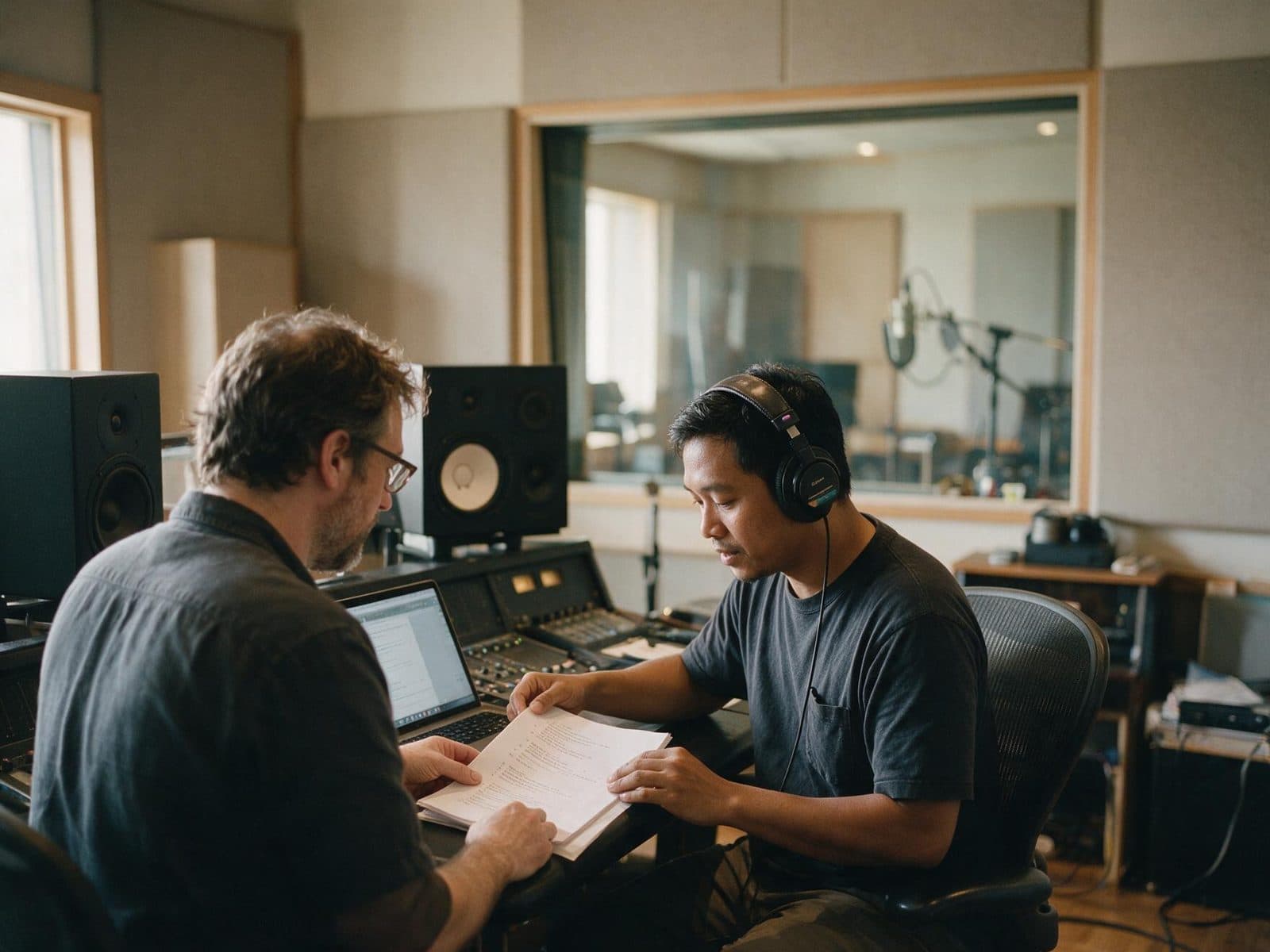
Yes, and for Hmong that is the usual arrangement — our Hmong talent records through our global network rather than in London. You can direct live over Source-Connect, Zoom or Teams so you hear takes as they happen and can adjust on the spot, which also suits US time zones.
Can you translate our script into Hmong?
Yes, with native Hmong linguists, in the standard orthography. For public-health and civic material we would also suggest agreeing terminology up front, since consistency across a set of materials matters when the audience is meant to act on them.
What register works for public-service content?
Institutional but warm, and unhurried. Much Hmong work is material people need to understand and act on — health guidance, school communications, court information — so clarity does more than polish, and an over-formal read puts distance between the message and the listener. We direct for that.
What do you use Hmong voice over for?
Public-health and vaccination campaigns, school district communications, court and legal information, social services and benefits guidance, community and civic content, eLearning, and broadcast and community media in the United States.
What formats and loudness targets do you work to?
Your Hmong audio is delivered to your specification: uncompressed WAV, MP3 where size matters, stems where the mix happens elsewhere, at the LUFS target you set.
What do you need from us to quote Hmong voice over?
Less than people expect: the script, or the draft of it, its total running time or word count, where the recording will be used, and the date you need it by. If the script is not signed off yet, send the draft anyway — we would rather quote on what exists than wait for a version that eats your deadline. A named project manager comes back with an itemised quote, normally within four working hours.
How quickly will we hear back, and who will we be dealing with?
More than half of enquiries get a reply within thirty minutes during office hours (Monday to Friday, 9am to 6pm UK time), and the itemised quote normally follows within four working hours. After that you have one dedicated project manager who owns the job from brief to final file — not a ticket queue, and not a different name on every email. If it is easier, call +44 207 095 5730 and ask for them by name.
We are still pitching and the budget is not signed off. Can we still get a Hmong quote?
Yes, and it is one of the commonest reasons people get in touch. Tell us it is for a pitch and you get a figure you can put in front of your own client, itemised so it stands up to being picked apart, with no obligation and no follow-up sales calls if the pitch goes elsewhere. If it lands, the quote still holds and we already know the project.
Brands that trusted us with their voice
Casting, direction and recording for campaigns that ran in several markets at once.
Voice Over · Flemish
AXA — Redefining Standards
Multilingual mastery for instructional videos: a Flemish voiceover journey.

Voice Over · Czech
Betfair
Crafting authenticity in localisation: a Czech voiceover production.

Voice Over · Cantonese
BlackBerry Worldwide
Multilingual voiceover project for BlackBerry's innovative campaign.
Complete your community coverage
Services that pair with Hmong
US English voice over
The other half of most US public-service campaigns.
Vietnamese voice over
Often commissioned alongside for the same programmes.
Translation services
Hmong translation with the tone marking intact.
Hmong transcription
The final letter spells the tone. One letter out and it is a different real word.
From £400
/ €500 / $550
per hour in the recording studio
That hourly rate is the Basic Studio Fee: the recording session itself, with the voice actor, the casting, the direction, the studio and the engineer included. Any buyout — the usage fee — is added on top and quoted separately: it depends on the markets the recording runs in, the media it runs on and how long you licence it for. Every line is itemised, and all of it carries our Price Match Promise.
Reach Hmong communities where they actually are
Tell us the community and the variety and we'll cast the right native voice — with a free, no-obligation quote.
The complete solution to localise your content
Voice over

- State-of-the-art studios
- Neumann microphones
- On-hand sound engineers
- 1,000+ voice actors
Translation

- 100+ languages covered
- Tailored to your needs
- Stringent quality control
- Dedicated project managers
Subtitling

- Experienced subtitlers
- Industry-standard software
- Burn-in and graphic editing
- Open and closed captions
Transcription

- Improve accessibility
- Reach a wider audience
- Boost SEO and video views
- Maximise video engagement