
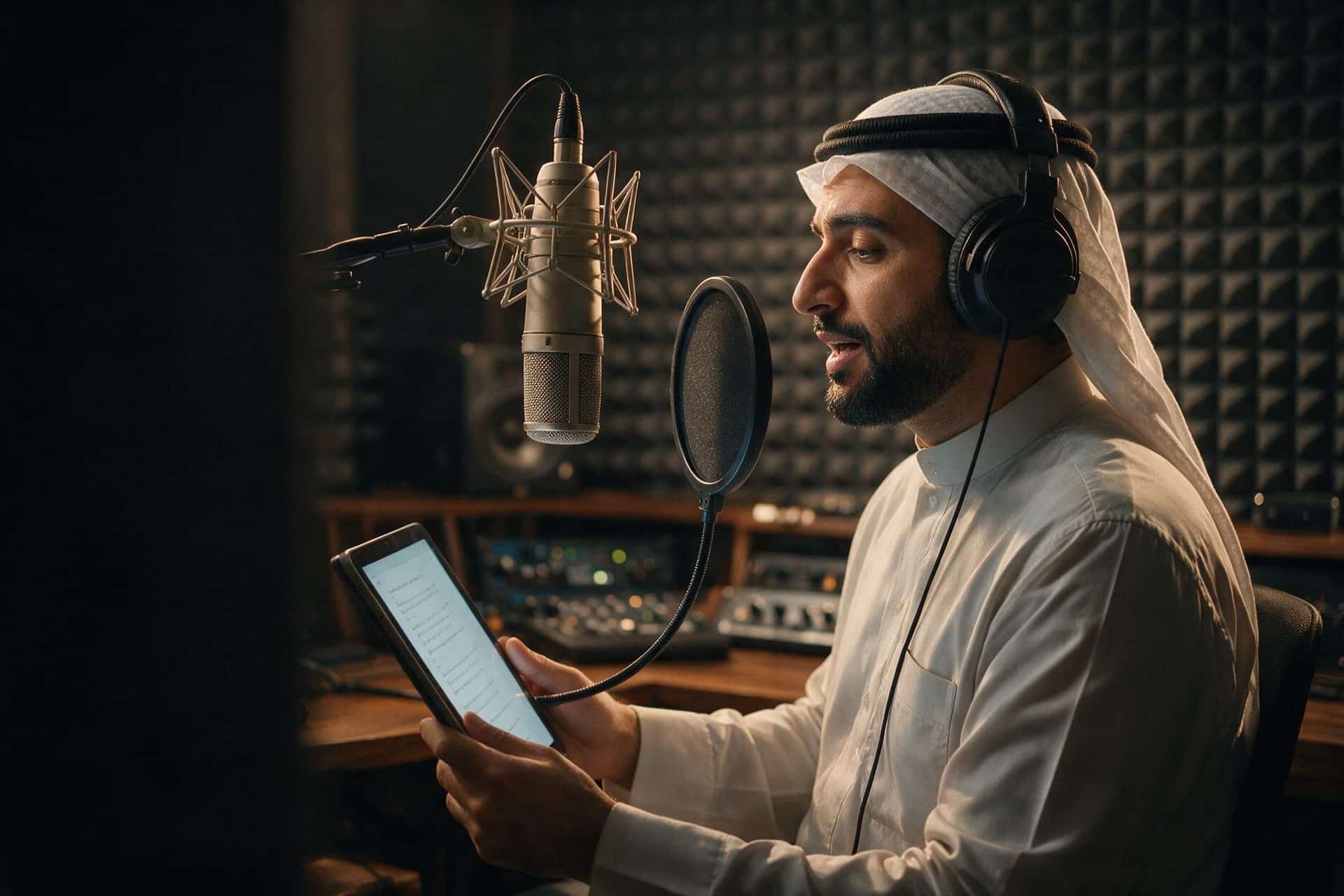
Voice Over · Hebrew
Hebrew voice over services
Native Hebrew voice actors for corporate video, eLearning, advertising and more. Standard Israeli and community accents, all recorded in broadcast-quality studios.
9M
Speakers
Official
Language of Israel
48h
Delivery
Calling Hebrew voice talent
We're expanding our Hebrew roster
Hebrew is a language we're actively growing. If you're a Hebrew voice actor, we'd love to hear your demos and put you forward for paid work.
About Hebrew voice over
Find the right Hebrew voice for your project
Hebrew is a Northwest Semitic language and the official language of Israel. After centuries of surviving mainly as a liturgical and written language, it was revived as an everyday spoken tongue in the late nineteenth and early twentieth centuries. It is the most widely cited case of a language brought back from written form to daily speech, and today it is the everyday language of the great majority of Israel's population, with around 9 million speakers.
Modern Hebrew pronunciation is largely uniform, with a standard Israeli accent that carries across most contemporary media. Beneath that, the historical community traditions of Ashkenazi, Sephardi, Mizrahi and Yemenite speakers still shape how the language sounds in religious, cultural and older-generation contexts. Some reads come across as contemporary and Tel Aviv-facing, others as more traditional or liturgical in flavour. Tell us which you are after and we cast to that brief.
We produce Hebrew for tech and fintech, tourism, eLearning and broadcast, handling the gendered grammar and right-to-left captions up front so the finished piece reads and sounds right on every screen. At GoLocalise, we work with professional Hebrew voice actors who record in approved studios and stay on top of every step, from script review and casting through to editing and final delivery.
Hebrew does not write its vowels, and that is the central fact of reading it aloud. Outside children's books, poetry and religious texts, the vowel marks are simply absent, so the same sequence of consonants can be several different words and the reader has to know which one from context and from experience. A fluent learner reads Hebrew slowly and guesses wrong on unfamiliar words, particularly names and technical vocabulary. This is why we cast native speakers for Hebrew without exception, and it is not a preference we can be talked out of.
Names in a Hebrew script are where sessions stop. A transliterated name in Latin letters gives no indication of how it should be said, and a Hebrew name written without vowels gives barely more to a reader who has not met it before. Send the list with the script and we will confirm the readings in advance, at no cost, rather than discovering them with the clock running.
Hebrew is written right to left, and your Latin words and numbers are not. Brand names, product codes, URLs and figures sitting inside a Hebrew line have to be positioned explicitly, and players and editing systems that assume a left-to-right world get it wrong in ways that look like nonsense rather than like a small error. That is a subtitle and on-screen-text problem rather than an audio one, but it arrives on the same project, and we check it on your target platform.
Modern Hebrew is a revived language with a short standard history, and its everyday register moves fast — the gap between formal written Hebrew and how Israelis actually speak is wide enough to matter. Institutional and educational content sits close to the written standard; advertising and social content that stays there sounds like an official notice. It is worth deciding rather than defaulting.
Hebrew is also compact. It generally takes fewer characters and often fewer syllables than the English it came from, which is a rare and useful problem: a Hebrew version can come in under the timing rather than over it, leaving room to breathe or to add a line. We will tell you where you have gained space rather than quietly leaving it.
Send us the script with the names and we will mark the readings for free before you book anything. You get an itemised quote, a check on the right-to-left handling for whatever platform the file is going to, and a free casting of Hebrew voices reading the copy you will be shipping. [Request a Hebrew voice over quote](/get-a-quote?help=Hebrew%20voice%20over), or just send the brief and you will get back a shortlist.
Israeli Hebrew runs on acronyms, and they are read as words rather than spelled out. Institutions, government bodies, military terms and everyday organisations all appear in contracted form, and a script that expands them reads as stilted while one that leaves them unexplained loses an audience outside Israel. Which way to go depends on whether your listener is in the country or in the diaspora, and it is worth telling us.
The Israeli working week runs Sunday to Thursday, which is a scheduling fact rather than a linguistic one but it shapes every project we run in Hebrew: studio availability, approvals and turnaround all sit on a different week from the rest of Europe. Friday afternoons and Saturdays are effectively unavailable. Factor it into your deadline and we will build the schedule around it rather than discovering the mismatch halfway through.
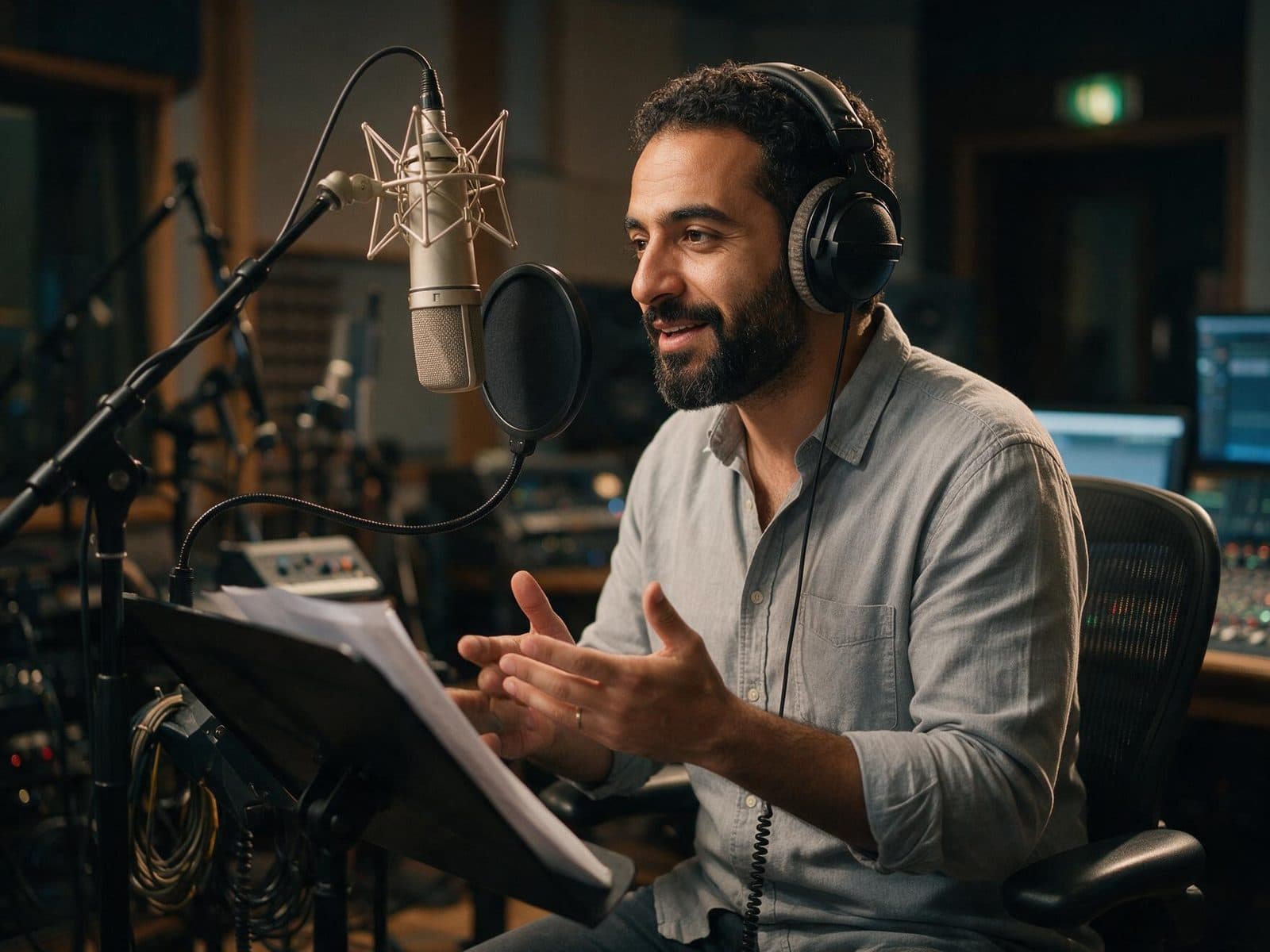
Voice over rates
Professional Hebrew voice-over recordings
From £400
/ €500 / $550
per hour in the recording studio
That is the voice over recording session itself. Any buyout — the usage fee — is added on top and quoted separately: it depends on the markets the recording runs in, the media it runs on and how long you licence it for. Every line is itemised, and all of it carries our Price Match Promise.
Built for brief corporate pieces, telephone systems and internal communication.
- Up to 150 words
- 1 revision included
- Files as .wav or .mp3
- 48h turnaround
A managed service end to end, built for eLearning, advertising and longer projects.
- Any word count
- Casting + script review
- Post-production included
- Dedicated project manager
Trusted by global brands
We have used GoLocalise on a regular basis for projects in a number of languages. The service we receive is great. The team is always friendly and professional. The voiceovers we receive are of a very high quality and the turnaround is extremely quick. We are very happy to recommend GoLocalise to other businesses.

We’ve worked with the GoLocalise team on countless video projects and have always had the same consistent, great experience. Not only are they responsive and quick on turnaround, I can always trust the VO will be done right – they are always 100% clear with communication and ensure their talent is prepared to record by asking necessary questions upfront before recording. Highly recommended and will definitely work with them on future projects.
It was a pleasure to work with David and the team at GoLocalise. David gave me lots of help and advice, guiding me through my first subtitling project. He really knows his stuff! The experience was completely pain-free. I would not hesitate to recommend GoLocalise – outstanding work at a good price.
They’re reliable, adaptive and obsessed with quality. And while you can never be 100% guaranteed of perfection, you can be sure GoLocalise will go the extra mile to get it right every time. Whether that’s hiring extra resources, hopping on multiple calls or even changing their internal processes, they’ll do what it takes. We’ve worked with them now for over 5 years and we are truly thankful to have such a strong localisation partner for our business.
How can we help you?
One project manager, start to finish
Brief review
We read the Hebrew script, take in your style notes and confirm who the audience is, so nothing has to be guessed once recording starts.
Casting
We search our Hebrew voice talent database and send you a shortlist of demos in the tone you want, whether warm, authoritative, energetic or conversational.
Recording & production
Once the casting is settled we handle the rest: studio booking, session direction, editing and post-production.
Delivery
Files delivered to spec and on time, ready to drop into the edit.
Delivery generally inside 48 hours
The same project manager throughout
Professional native Hebrew voice actors
Recorded in approved broadcast-standard studios
Most common questions
How do you handle Hebrew acronyms in a script?
By asking who is listening. Israeli Hebrew uses acronyms constantly and reads them as words, so expanding them reads as stilted to an audience in Israel — but leaving them unexplained loses a diaspora audience. It is a decision about the listener rather than a style rule, and we settle it at script review.
Why do you only use native Hebrew voice actors?
Because Hebrew does not write its vowels. Outside children's books and religious texts the vowel marks are absent, so the same consonants can be several different words and the reader has to know which from context. A fluent learner reads slowly and guesses wrong on unfamiliar words and names. It is not something preparation fixes, and it is audible immediately.
How do you handle names in a Hebrew script?
We confirm the readings before the session, without charging for it. A transliterated name in Latin letters gives no indication of how it should be said, and a Hebrew name written without vowels gives a reader who has not met it very little more. Send the list with the script and we will mark it up rather than lose session time to it.
Will Hebrew subtitles handle our brand name and figures correctly?
Not automatically, and this is where Hebrew projects most often go wrong. Hebrew runs right to left while Latin words and numbers run left to right, so brand names, product codes and figures inside a Hebrew line need positioning explicitly. Systems that assume a left-to-right world produce results that look like nonsense. We check it on your target platform.
Which Hebrew accent do I need?
Most projects work well with the standard, neutral Israeli accent, which carries across contemporary media. Where the content calls for it, the Ashkenazi, Sephardi, Mizrahi or Yemenite pronunciation traditions suit religious, historical or culturally specific material. Tell us the audience and the register you are after and we cast to that brief.
Is Hebrew the same as Yiddish?
No, and they are not even from the same language family. Hebrew is Semitic; Yiddish is Germanic, closer to German than to Hebrew. What they share is the alphabet, since Yiddish is written in Hebrew letters, along with a substantial layer of Hebrew and Aramaic vocabulary inside an otherwise Germanic grammar. A Yiddish recording does not read as natural Hebrew to an Israeli audience.
How quickly can a Hebrew voice-over project be delivered?
While most short projects are delivered within 24 to 48 hours, the exact turnaround depends on script length and talent availability. At the start of your Hebrew project, your project manager will confirm the timeline.
Can you deliver Hebrew subtitles and on-screen text too, right-to-left?
Yes. Hebrew runs right to left, and that affects more than the words: punctuation, numerals, Latin brand names and any English quoted inside the line all need handling so they do not flip or reorder. We produce Hebrew subtitles and captions set correctly for direction, and we check on-screen text against your video rather than delivering a file and hoping it renders.
Will the Hebrew recording match the length of my English original?
Not automatically. Hebrew is a compact language and a recorded script often comes out shorter than its English source, which matters when the audio has to sit against existing video. We review the script for timing before the session so the read can be paced to fit.
How much does a Hebrew voice over cost?
Every Hebrew voice over is quoted individually. Recording starts from an all-inclusive Basic Studio Fee covering studio time and a sound engineer, with a usage licence added for broadcast, advertising or online campaigns. Hebrew rates depend on script length, talent and how the audio is used — send your script for an exact, no-obligation quote, backed by our Price Match Promise.
What file formats do you deliver Hebrew voice overs in?
We supply Hebrew recordings to broadcast specification in any common format (WAV, MP3, AIFF and others), as individual takes or one ready-to-use mix.
What do you use Hebrew voice over for?
Typical projects include app and software localisation, hi-tech and startup explainers, e-learning, tourism, museum guides and corporate video for Israeli audiences. Share your script and we'll shortlist the right voices.
Can I direct the Hebrew session remotely?
Yes. Attend in person at our London studios or direct live over Source-Connect, Zoom or Teams, so you get exactly the delivery you want without travelling.
Ready to start your Hebrew voice over project?
Share your Hebrew script and we will find the right voice for it, usually within hours.
Professional voice over services for your audio and video productions
Voice over

- State-of-the-art studios
- Neumann microphones
- On-hand sound engineers
- 1,000+ voice actors
Translation

- 100+ languages covered
- Tailored to your needs
- Stringent quality control
- Dedicated project managers
Subtitling

- Experienced subtitlers
- Industry-standard software
- Burn-in and graphic editing
- Open and closed captions
Transcription

- Improve accessibility
- Reach a wider audience
- Boost SEO and video views
- Maximise video engagement