
ADR — automated dialogue replacement — is how film and TV productions fix or change dialogue after the shoot. Here's what it is, why it's used, how it differs from dubbing, and what a session looks like.
In this article
ADR stands for Automated Dialogue Replacement(sometimes called Additional Dialogue Recording). It is the process of re-recording an actor's lines in a studio, after filming, and syncing them precisely to the picture. If you have ever noticed a line in a film that sounds a touch cleaner than the rest of the scene, there is a good chance it was replaced with ADR.
Why productions use ADR
On a live set, audio is at the mercy of the environment. ADR gives the production a clean, controllable recording when the original can't be used. The most common reasons:
- Noisy locations — traffic, wind, aircraft or crew noise bleeding into the take.
- Overlapping dialogue that can't be separated in the mix.
- Script or performance changes decided after the shoot.
- Censorship or rating edits — swapping a word for a broadcast or regional cut.
- Unusable production sound where the mic simply didn't capture a clean take.
ADR vs dubbing
The two are often confused because both sync new audio to picture. The difference is purpose. ADR normally re-records the original actor in the original language to fix or change their own lines. Dubbing replaces the dialogue in a different language, performed by other voice actors matched to the on-screen mouths — which is a localisation task. If your goal is to reach audiences in new languages, that is dubbing, not ADR.
How an ADR session works
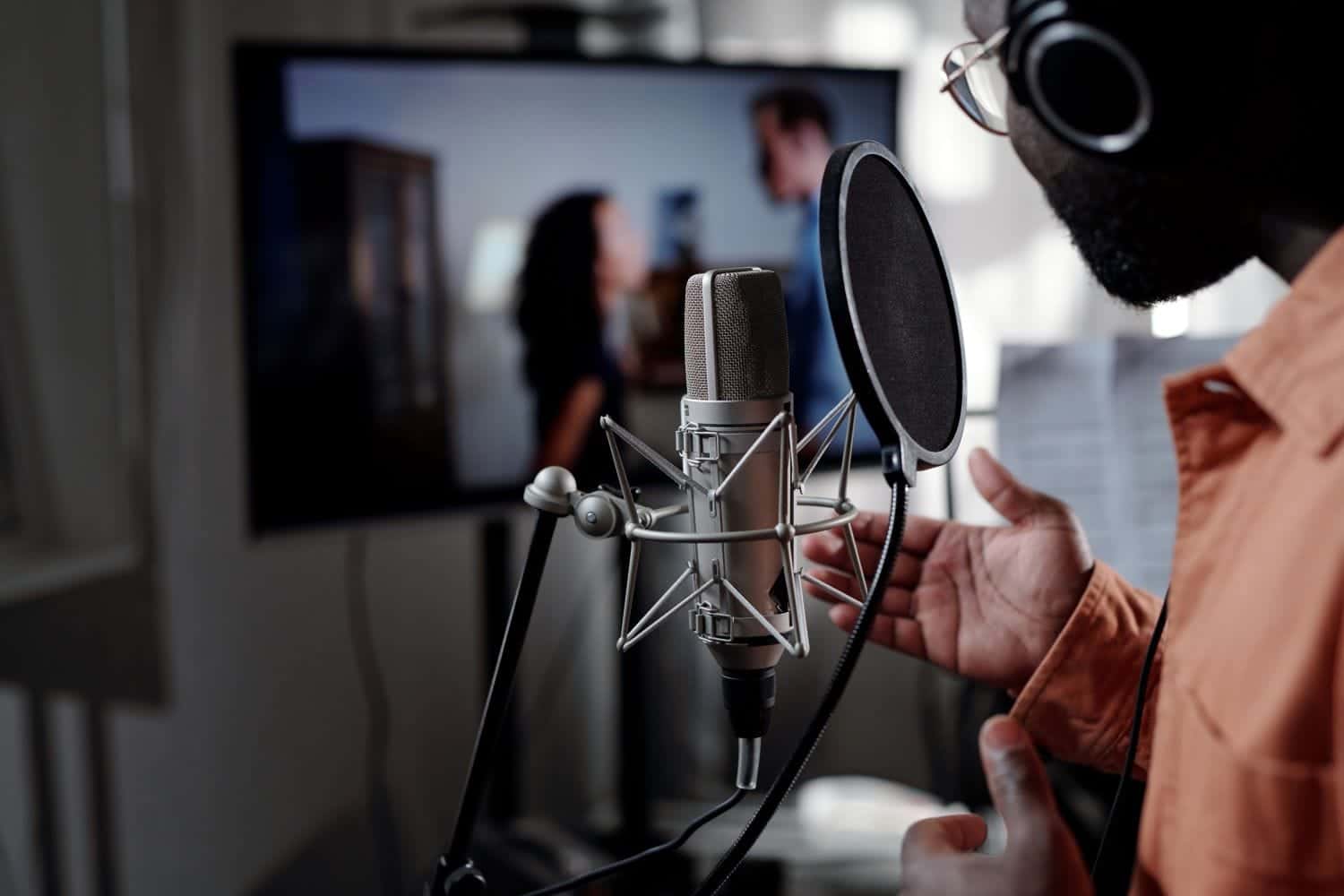
In a typical session the actor watches the scene on a loop, hears the original take as a guide, and performs the line again in time with their on-screen mouth. An engineer captures it in a treated booth and a director shapes the delivery so it matches the emotion and energy of the original performance. The editor then places the new recording frame-accurately against the picture. Increasingly, ADR is also done remotely through connected studios, with talent in one location and the director guiding from another.
Getting ADR right
Good ADR is invisible: the replaced line sits seamlessly inside the scene in timing, tone and room sound. That takes a proper booth, an experienced engineer and a director's ear. We run ADR sessions in our Central-London studios and can extend into voice work and cross-language dubbing when a project needs it. Tell us about your projectand we'll plan the session.