
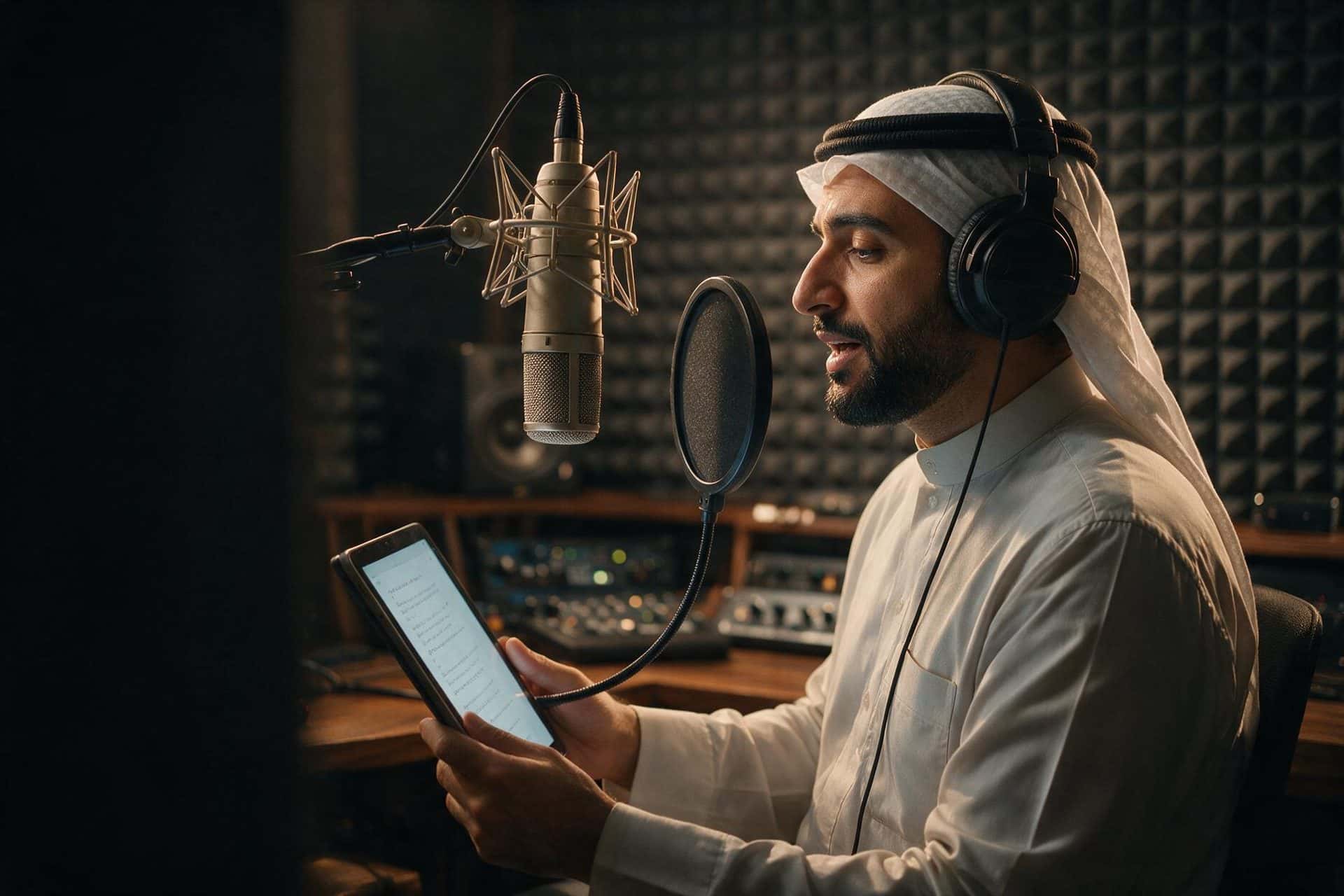
Arabic spans more than 20 countries, and the gap between formal Modern Standard Arabic and local dialects is wide. Here's how to choose the right one for your voice over.
“Arabic” covers a formal written standard used across the region and a family of spoken dialects that vary significantly from country to country. The right choice depends on whether you want formal reach or local warmth. Browse voices on the Arabic voice over page.
Modern Standard Arabic (MSA)
The formal variety understood across the entire Arab world — the language of news, education and official communication. Ideal for pan-Arab campaigns, corporate and institutional content where a single recording needs to reach every market.
Regional dialects at a glance
- Egyptian — the film, TV and dubbing capital of the Arab world; its dialect is understood almost everywhere, making it a strong choice for entertainment and pan-Arab content.
- Gulf — spoken across the UAE, Saudi Arabia, Qatar and neighbours; the right fit for high-value government, banking and luxury brand work in the Gulf.
- Levantine — Lebanese, Syrian, Jordanian and Palestinian; dominant in Arab drama and series, with an approachable, contemporary feel.
- Maghrebi — North African (Morocco, Algeria, Tunisia), a distinctive Darija blending Arabic with French and Berber influences.
- Iraqi — a distinct sound where local audiences respond best to genuinely Iraqi talent.
- Sudanese — distinct enough that native talent makes a real difference in how local a message feels.
How to choose
For reach and formality, choose Modern Standard Arabic. For advertising, entertainment and anything that needs to feel local, choose the dialect of the market you're speaking to. Hear samples on the Arabic voice over page, or send us your briefand we'll cast the right voice.
Casting for a brand advert rather than an Arabic-speaking audience? You may want English with an Arabic accent — native Arabic voices performing in English.