
Voice Over · Basque
Basque voice over services
Native Basque voice over for institutional, broadcast, corporate and cultural content. Euskara Batua for public-facing work, and the Spanish version timed to match — because in the Basque Country the two almost always ship together.
Batua
The standard that goes on air
1968
Year the standard was set
On request
Native casting
How it works
No public Basque demos yet — here's how we cast
No demo list for Basque — the professional pool is small enough that a public sample page would be out of date within weeks. We cast to the brief.
Send us your brief
Tell us whether this is institutional or character work, whether there is a Spanish version it has to sit alongside, and any reference voices you have in mind.
We source and audition
We go to our vetted network of native Basque speakers, brief them on register — Batua or regional — and come back with tailored auditions.
Record and deliver
You choose the voice; we direct the session against picture and hand back finished audio.
Calling Basque voice talent
We're expanding our Basque roster
Basque is a language we're actively growing. If you're a Basque voice actor, we'd love to hear your demos and put you forward for paid work.
About the language
The Basque version usually has to fit the Spanish one
Basque — euskara — is co-official with Spanish in the Basque Autonomous Community and in the Basque-speaking part of Navarre, and is spoken across the border in the French Basque Country, where it has no official status. It is a language isolate: not Indo-European, and unrelated to Spanish, French or anything else still spoken.
That last fact is the one everybody leads with, and it is not the one that decides your project. This is the one that does: because Basque is co-official, public administration, health, education and public broadcasting produce everything in two languages. So the brief is very rarely "a voice over in Basque". It is the Basque version of something that also exists in Spanish, and the two have to line up — same duration, same sync points, same on-screen text positions.
Which runs straight into the technical problem worth planning for. Basque is agglutinative and orders its sentences differently, so it runs long against Spanish. If the picture was cut tight to the Spanish track, the Basque read will not fit, and no amount of pace in the booth fixes that honestly. It is solved at adaptation, by writing to the timing — which is a different job from translating and then hoping.
The second decision is register, and it is easy to get badly wrong. Euskara Batua is the unified standard developed by Euskaltzaindia, the Basque language academy, from 1968 onwards. It is what schools, government and broadcasters use, and it is what any institutional or public-facing piece should be recorded in. The regional varieties — Bizkaian, Gipuzkoan and the continental dialects — belong in drama, character work and campaigns with a deliberately local address. A strongly marked dialect in a government announcement does not read as authentic; it reads as a joke.
Typical work is institutional and public-information campaigns, health and education material, broadcast and documentary narration, museum and cultural interpretation, corporate video for companies operating in the region, and eLearning delivered bilingually.
Most projects are won or lost at script stage, not in the studio. That review is free, and it is where most of the useful decisions get made. The quote that follows is itemised. You will also hear a free audition — real Basque candidates on your own copy, with no obligation to book any of them. Request a free Basque casting, or set out the requirement and we will tell you what is realistic.
Getting Basque right
What to decide before recording
Most Basque projects are decided by two things: register, and how the Basque track has to sit against the Spanish one.
Batua for anything institutional
The unified standard is what audiences expect from government, health, education and broadcast. Save the regional varieties for drama and character.
Expect it to run long
Basque is agglutinative and orders sentences differently, so it expands against Spanish. We flag the timing at adaptation rather than asking a voice actor to rush.
Plan the bilingual pair together
If the Spanish and Basque versions ship as a set, commissioning them together is cheaper and avoids the Basque track being forced into a cut it was never written for.
Basque is not a Spanish dialect
It is a language isolate with no relation to Spanish at all. A Spanish speaker gets nothing from it, so nothing about the audience can be assumed from the Spanish version.
How we can help
One partner for the whole bilingual deliverable
Voice over & narration
Native Basque for institutional and public-information content, broadcast and documentary, cultural interpretation and corporate video — in Batua or a regional read, as the brief requires.
Translation & script adaptation
Adaptation into Basque by native linguists, written to the timing rather than translated and then squeezed. If you need the Spanish version too, we build the pair together.
Subtitling & captions
Basque subtitles and captions alongside the recording, with the reading-speed limits respected even where the text expands.
100+ languages under one roof
London studios + global talent network
5.0★ from 149 reviews
Content types
Basque voice over for every kind of content
Whatever you're making, we cast the right voice in Basque. Explore by use case.
Most common questions
Do you have Basque voice actors?
Basque is a language isolate — it is not related to Spanish, to French, or to any other living language on earth, and it was spoken in these valleys before Indo-European arrived in Europe. That has a practical consequence for casting: a translator or voice actor with good Spanish gives you nothing here, because there is nothing to transfer. Every Basque booking is sourced from genuine native speakers and auditioned on your own script.
Should we record in Batua or in a regional variety?
Batua for anything institutional, public-facing or broadcast. Euskara Batua is the unified standard set by Euskaltzaindia from 1968 and used in schools, government and the media, so it is what audiences expect from that kind of content. Regional varieties like Bizkaian or Gipuzkoan are the right choice for drama, character work and deliberately local campaigns, where a marked accent is the point.
Will the Basque version fit our Spanish timings?
Not automatically, and this is the most common problem we see. Basque is agglutinative and orders sentences differently, so the same content runs longer than in Spanish. If your picture was cut tight to the Spanish track, we handle it at adaptation by writing to the available time rather than asking the voice actor to speed up. Send us the Spanish version and the picture and we will tell you before you book where the pressure points are.
Can a Spanish voice actor cover Basque?
No. Basque is a language isolate — it is not related to Spanish, or to French, or to any other living language. Speaking Spanish gives you no access to it whatsoever. Many Basque speakers are bilingual, but that is a fact about people, not about the languages, and it does not make one substitutable for the other.
Can you deliver the Spanish and Basque versions together?
Yes, and it is usually the better way to do it. Most Basque work we take on is one half of a bilingual deliverable, so commissioning the pair together lets us adapt both to the same picture, keep the sync points aligned and keep terminology consistent across the two. It also tends to cost less than treating them as separate projects.
What about the French Basque Country?
Basque is spoken there too, though it has no official status on the French side and the continental dialects differ from those spoken in Spain. If your content is aimed at that audience specifically, tell us and we will take it into account when we source. For most institutional and commercial work the Batua standard is what you want.
How long does it take to cast a Basque voice?
Allow extra time. With around 750,000 speakers, most of them bilingual in Spanish or French, the pool of people who work professionally in Basque rather than in Spanish is genuinely narrow. Brief us early and we will name a date we can hold.
What do you use Basque voice over for?
Institutional and public-information campaigns, health and education material, broadcast and documentary narration, museum and cultural interpretation, corporate video for companies operating in the Basque Country, eLearning delivered bilingually, and accessibility work such as audio description.
How do you deliver the finished recording?
Delivered however your spec sheet says: masters or compressed, stems or a mix, at your loudness target.
What do you need from us to quote Basque voice over?
Less than people expect: the script, or the draft of it, its total running time or word count, where the recording will be used, and the date you need it by. If the script is not signed off yet, send the draft anyway — we would rather quote on what exists than wait for a version that eats your deadline. A named project manager comes back with an itemised quote, normally within four working hours.
How quickly will we hear back, and who will we be dealing with?
More than half of enquiries get a reply within thirty minutes during office hours (Monday to Friday, 9am to 6pm UK time), and the itemised quote normally follows within four working hours. After that you have one dedicated project manager who owns the job from brief to final file — not a ticket queue, and not a different name on every email. If it is easier, call +44 207 095 5730 and ask for them by name.
We are still pitching and the budget is not signed off. Can we still get a Basque quote?
Yes, and it is one of the commonest reasons people get in touch. Tell us it is for a pitch and you get a figure you can put in front of your own client, itemised so it stands up to being picked apart, with no obligation and no follow-up sales calls if the pitch goes elsewhere. If it lands, the quote still holds and we already know the project.
Brands that trusted us with their voice
Casting, direction and recording for campaigns that ran in several markets at once.
Voice Over · Flemish
AXA — Redefining Standards
Multilingual mastery for instructional videos: a Flemish voiceover journey.
Voice Over · Czech
Betfair
Crafting authenticity in localisation: a Czech voiceover production.
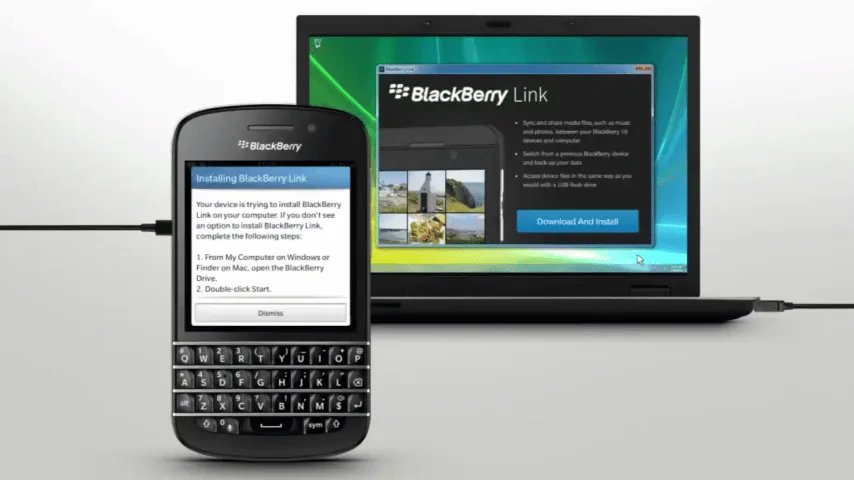
Voice Over · Cantonese
BlackBerry Worldwide
Multilingual voiceover project for BlackBerry's innovative campaign.
Complete your bilingual deliverable
Services that pair with Basque
Spanish voice over
The other half of most Basque projects.
French voice over
For the continental Basque Country and beyond.
Basque subtitling
Case marked once, at the phrase end.
Basque transcription
Verbatim or clean-read transcripts of audio and video.
Basque translation
The form of address agreed before anything is recorded.
From £400
/ €500 / $550
per hour in the recording studio
That hourly rate is the Basic Studio Fee: the recording session itself, with the voice actor, the casting, the direction, the studio and the engineer included. Any buyout — the usage fee — is added on top and quoted separately: it depends on the markets the recording runs in, the media it runs on and how long you licence it for. Every line is itemised, and all of it carries our Price Match Promise.
Basque that fits the cut it has to live in
Send us the script and the Spanish version and we'll tell you where the timings will bite — with a free, no-obligation quote.
The complete solution to localise your content
Voice over

- State-of-the-art studios
- Neumann microphones
- On-hand sound engineers
- 1,000+ voice actors
Translation

- 100+ languages covered
- Tailored to your needs
- Stringent quality control
- Dedicated project managers
Subtitling

- Experienced subtitlers
- Industry-standard software
- Burn-in and graphic editing
- Open and closed captions
Transcription

- Improve accessibility
- Reach a wider audience
- Boost SEO and video views
- Maximise video engagement