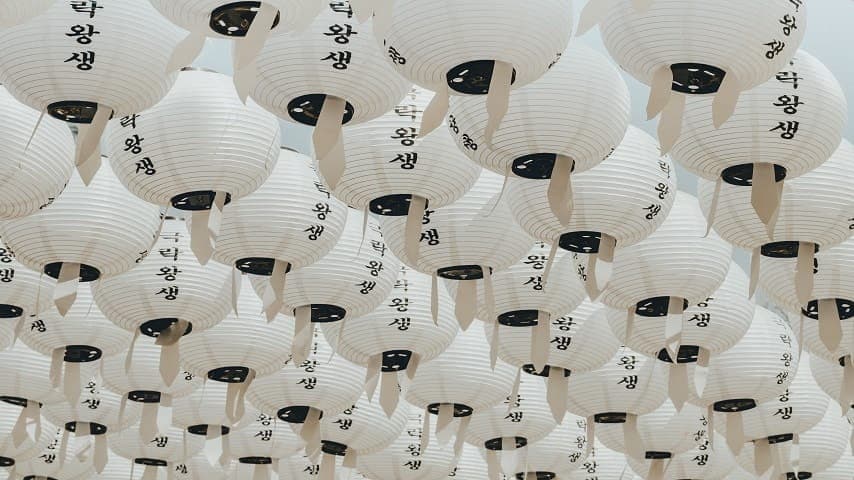
What are the key differences between North and South Korean? These questions arise when faced with a Korean-to-English translation project.
In this article
How different is the South Korean language from North Korean? Can they understand each other? What are the key differences between North and South Korean?
These questions arise when faced with a Korean-to-English translation project.
Despite their long, shared history, these two neighbouring countries exist in a fragile state of peace.
Over the seven decades since their separation, their economies, societies, and political situations have diverged as North and South Korea developed.
But has this separation affected the Korean language spoken in each country?
Korean Language Overview
Did you know that the Korean language is considered to be a language isolate? Which means it doesn’t share a common ancestor with other languages!
However, due to its geographical and political closeness with China over many centuries, many loanwords entered the Korean language.
The Chinese language also influenced the Korean writing system, as a complex writing system was developed using Chinese characters.
Differences Between North and South Korean
The Korean alphabet was invented in 1446 and is now the standard writing system used in both North and South Korea.
The two countries actually refer to the alphabet using different terms – it’s hangŭl in the South but Chosŏn’gul in the North.
Korean Dialects
As a mountainous country, these natural geographical divisions also led to the rise of different Korean dialects across the peninsula.
After the division into North and South Korea, the Seoul (or Gyŏnggi) accent became the ‘standard’ version used in Seoul, whereas the Pyong’an dialect is used in Pyŏngyang.
Sound Changes
As expected, there are some differences between the two dialects, most noticeably sound changes in certain consonants at the beginning of words.
For example, the consonant ‘r’ (ㄹ) has been replaced by ‘n’ (ㄴ) or deleted at the start of many words in South Korea, while North Korea has retained this pronunciation as can be in the comparisons below:
| English | North Korea | South Korea |
|---|---|---|
| Girl | Ryŏja (려자) | Yŏja (여자) |
| Practice | Ryŏnsŭp (련습) | Yŏnsŭp (연습) |
| Lee (Surname) | Ri (리) | Ee (이) |
Formality in Korean Translation
When translating Korean to English, another key difference that has been noted is the formality level of speech found in the two countries.
Both North and South Korea have differing levels of formality that depend on the status or age of the speakers. These can be grouped into roughly three levels: low, middle, and high.
- The low form can be thought of the way you would talk to your friends or people younger than you.
- The middle level is more the way you would address someone older than you, a new person, or used when you want to be polite.
- The super-polite level that is used when talking to someone much higher in superiority (your boss, for example), in business, or when working in customer service.
In South Korean to English translation, the middle level of formality is most commonly used. In North Korean, the high level of formality is the standard when addressing people.
Loanwords differences
Another difference between Korean in North and South Korea is the presence of loanwords.
South Korean Loanwords
Historically many Chinese loanwords entered the Korean vernacular, thousands of which are still used in South Korea today. In fact, it’s estimated that around 60% of South Korean vocabulary are Sino-Korean words.
Additionally, thousands of English loanwords can be found in the everyday language used in South Korea, and used within Korean translation.
North Korean Loanwords
By contrast, North Korea has worked on reducing the number of loanwords entering the language and being used by its people, instead focussing on finding pure Korean alternatives.
Walk down the street in Seoul, and you might hear one person refer to another as their chinggu (친구; friend). This is a commonly used Sino-Korean word.
In North Korea, one might refer to another as dongmu (동무). This is a pure Korean word for ‘friend’ and has come to have the connotation of ‘comrade’ due to its frequent use in the North.
North Korea also has pure Korean alternatives for examples of English loanwords that are used in South Korea.
During summer, South Koreans may choose to cool down with an aisŭkŭlim (아이스크림). While in the North they might go for an ŏlŭmgwaja (얼음과자; literally ‘ice snack’).
Of course, there are still some loanwords present in North Korean. However, reflecting their political history, some of these have a Russian influence.
Korean Translation Nowadays
The previous differences are clearly having an effect on Korean translation.
While the North and South Korean are mutually intelligible, the North’s continued isolation and focus on linguistic purity could push it to diverge even further from that of the South.
One consequence of this is the difficulty that can be faced by refugees coming to the South from the North. Not only do they face a culture shock, but they also face increasing communication issues which make integration more complicated. We estimate that there’s a 38% difference in everyday vocabulary. There’s also a 66% difference in specialist terms between the two Korean Languages, so visitors have a lot to learn!
Joint Dictionaries for Korean Translation
North and South Korea occasionally put forward combined teams, such as in sporting events. This collaboration can be tricky, as each side can have different terms for the same concept.
Thus, it’s necessary for the two to work together to create dictionaries of terms for use within Korean translation.
As an anecdote, at the 2018 Winter Olympics, hosted by South Korea, North and South Korea fielded a joint women’s ice hockey team. So, a joint dictionary had to be agreed upon.
For example, the South Koreans refer to the goalkeeper as golkipŏ (골키퍼). While the North Korean team refer to the position as munjigi (문지기; lit. door keeper).
Unification is, for many, the ultimate goal that the two countries are working towards.
The gyeoremal-keusajeon Project
This project aims to have a unified dictionary for a Korean translation of around 330,000 terms agreed upon by delegates from both sides.
The project has been running for over 17 years and is around 76% complete. The political situation has hampered progress, but South Korea has tried to continue the project.
Fun Fact! There are two different counting systems in Korean: Counting objects, telling your age and expressing the time in hours are done differently than when we count money, calculate distance, express the time in minutes and so on!
If you’d like to discuss your Korean to English translation project, call us at +44 207 095 5730 or email projects@golocalise.com for a quote.
At GoLocalise, as well as providing audio and video translation services for several years, we also provide voice-over services in any language or accent, subtitling, and captioning services.
We’d love to hear from you whether you need voice-overs or subtitles.
Need your audio or video translated?
Native linguists adapt your content for new markets — subtitles, voice over or dubbing — end to end, in 100+ languages.