Movie dubbing services
Get a quoteProfessional movie dubbing services
For most of a film's international audience, the dub *is* the film. They will never hear the original performances — only the ones you commission. That makes dubbing less a translation task than a second casting of the picture, and it is why a weak dub can undo years of work on the original.
At GoLocalise, we provide movie dubbing for feature films, documentaries and series — casting native talent to the performances already on screen, directing to the original intent, and delivering mix-ready audio for every territory in your release.
- Voices cast against the original performance, matched for age, register and character rather than picked from a demo
- Lip-sync, phrase-sync and UN-style voice over — the right technique for the format and budget
- Directed sessions with a voice director working to the original film, not just a script
- Every language managed centrally, so all territory versions stay faithful to the same film
Explore some examples of our Movie Dubbing Artists
A dub is judged on whether the audience forgets it is a dub. That depends less on the individual voice than on how it sits against the face, the scene and the rest of the cast.
Loading…
Types of movie dubbing we produce
Not every project needs full lip-sync, and paying for it where it is not required is one of the most common ways film localisation budgets get spent badly. These are the four approaches we work in.
Lip-sync dubbing
The full craft: translated dialogue adapted so it matches the mouth movements, timing and emotional beats of the actor on screen. Standard for theatrical features and premium series in major dubbing markets. The most demanding and most expensive option — and the only one that makes a film feel native.
Phrase-sync dubbing
Dialogue matched to the start and end of each line rather than to individual mouth movements. Considerably faster and cheaper than full lip-sync, and often indistinguishable in scenes where the speaker is off-camera or in wide shot. Common for documentaries, factual series and streaming catalogue titles.
UN-style voice over
The original audio is lowered rather than replaced, with the translated voice laid over the top. Standard for documentary interviews, news and factual content, where audiences expect to hear traces of the original speaker and authenticity matters more than seamlessness.
ADR and voice replacement
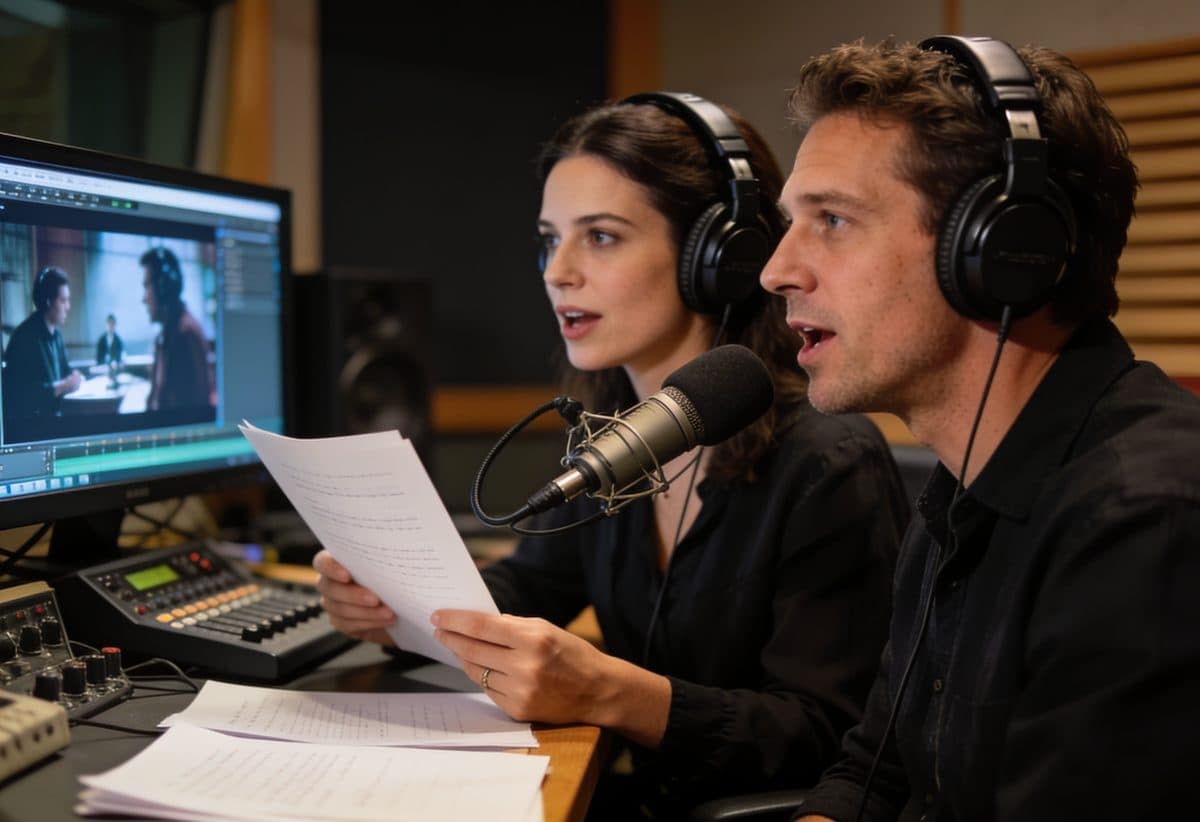
Re-recording dialogue in the original language — to fix production audio, replace a line, or adjust a performance after the shoot. Recorded to picture in our London studios, matched to the original take so it drops invisibly into the existing mix.
How our movie dubbing process works
Dubbing a film is the most involved work we do. Script adaptation, casting, direction, recording, sync and mix all have to align, usually across several languages at once, and a decision made badly at the start surfaces expensively at the mix. Every project runs through a dedicated project manager:
Script & picture review
Translation & adaptation
Lip-sync detection
Voice casting per role
Directed dubbing sessions
Sync editing & mixing
Linguistic & technical QA
Mix-ready delivery
Adaptation, casting, direction, recording and QA all sit inside one workflow — which is how a dubbed film arrives in sync, in character and ready for the final mix.
Why choose professional movie dubbing?
Dubbing is acting, not reading. A performer has to hit another actor's timing, match their emotional register, and stay inside the movement of a mouth they cannot control — all at once, and usually without having seen the film before that morning. Very few voices can do it convincingly, which is why we cast dubbing separately from every other kind of voice work.
A bad dub is more damaging than no dub. Audiences forgive subtitles. They do not forgive a voice that does not fit the face, dialogue that lands a beat late, or a performance that flattens a scene the original played carefully. In markets where dubbing is the norm, the dub is the only version most viewers will ever see — and it is the version they will judge the film on.
Films live a long time and travel far. A title moves from theatrical to streaming to broadcast to home formats, often for years and across dozens of territories. The dub travels with it the whole way, and redoing it later costs several times what doing it properly once would have.
Consistency across languages is a production problem, not a linguistic one. Split a release across local suppliers in each market and the versions drift — different casting logic, different direction, different technical specs. Managing every language through one team is what keeps a film recognisably the same film wherever it plays.
How to plan a movie dubbing project
Decide the dubbing technique before you budget. Full lip-sync, phrase-sync and UN-style voice over differ in cost by a wide margin, and the right choice depends on the content and the market rather than on ambition. A documentary rarely needs lip-sync; a theatrical feature in Germany or Spain almost always does.
Lock picture before you start, if at all possible. Dubbing is timed to the frame, so a re-cut after recording means re-adapting the script, re-recording the affected lines and re-syncing the mix. Late picture changes are the single most common cause of dubbing budgets running over.
Supply the M&E stems early. Dubbing needs a music-and-effects track with the original dialogue removed in order to drop new voices into the mix cleanly. If no M&E exists, it has to be reconstructed — which is a real piece of work and should be scoped at the start rather than discovered mid-project.
When we scope film dubbing at GoLocalise, these are the four areas we resolve first
Dubbing technique and sync level
Character casting and voice matching
M&E stems and mix requirements
Territories, formats and delivery specs
Movie dubbing pricing & project options
Dubbing is quoted on runtime, cast size, sync level and language count — four variables that move largely independently. A 40-minute documentary with two narrators and phrase-sync is a different job from a 110-minute feature with twelve speaking roles in full lip-sync, even in the same language. That is why we scope per project. The tiers below are reference points showing how film dubbing projects typically come together:

Bronze
For factual content in one language, using UN-style voice over or phrase-sync. Includes:
- Script translation by native linguists
- Professional dubbing voice recording
- Sync editing and audio clean-up
- Delivery in the format your mix requires

Silver
For drama and premium content in one language, with directed lip-sync. Includes:
- Translation and lip-sync script adaptation
- Character casting with your sign-off
- Directed dubbing sessions to picture
- Sync editing, mixing and linguistic QA

Gold
For international releases dubbed across multiple territories. Includes:
- Adaptation and casting managed per market
- Directed sessions in every language
- Central linguistic and technical QA
- Mix-ready delivery plus subtitles in SRT
Custom dubbing projects
A feature dubbed into a dozen languages with lip-sync throughout? A documentary series with one narrator across every episode? A back catalogue being localised for a streaming launch? Most film dubbing looks like this, so tell us the runtime, the cast and the territories and we will quote around it.
Get a tailored quote for your projectMovie dubbing for multilingual and global releases
A film released across many territories is not one dubbing project but a dozen running in parallel, each with its own cast, director, schedule and delivery spec — all of which have to produce versions that feel like the same film.
GoLocalise runs that from the centre. One brief and one project manager cover every language, with casting, direction and QA held to a single standard from the original language outward.
Native dubbing casts for every market
Audiences forgive a lot, but rarely a voice that does not fit the face on screen. Age, register, accent and delivery all read differently from one market to the next, and the wrong casting breaks the illusion the whole dub depends on.
For each language we shortlist native dubbing actors who suit the character and the local audience, and you sign off every principal voice before sessions begin.
The result is a film that plays as though it were made for each market it reaches.
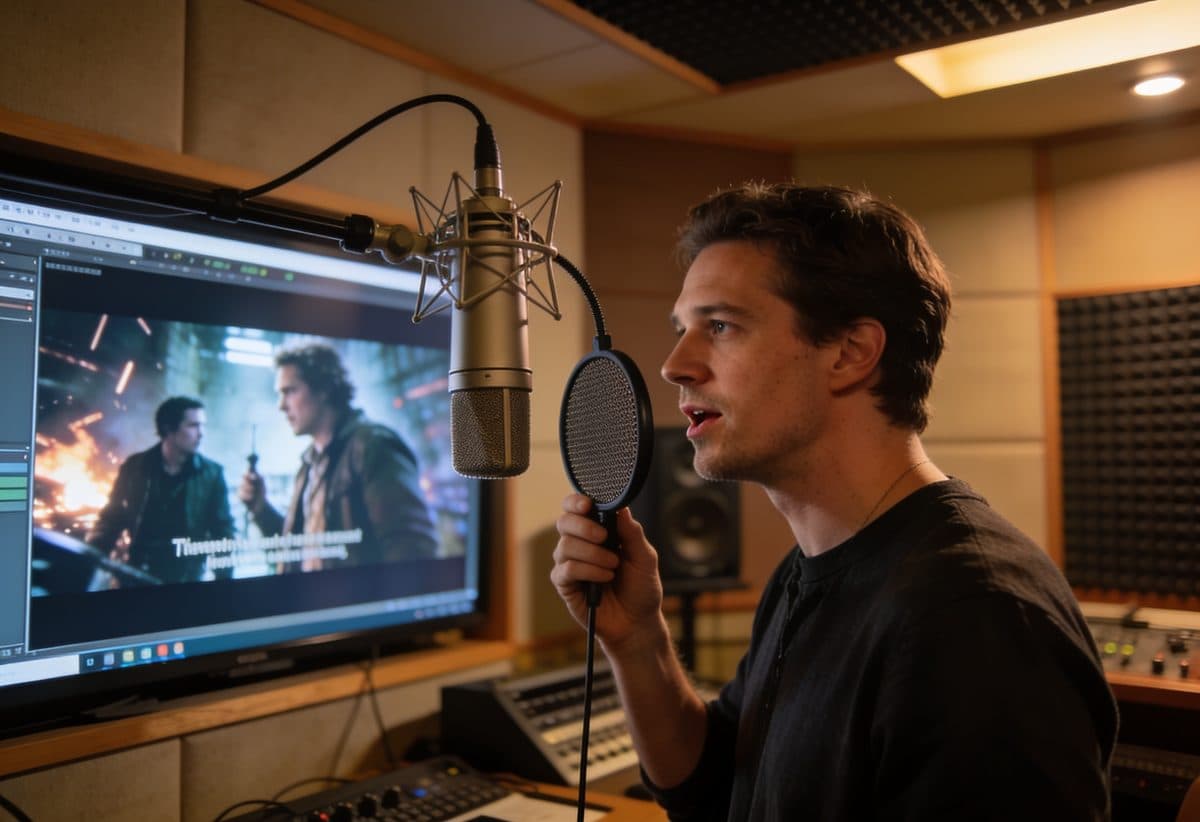
One film, one performance across languages
Viewers in each market only ever hear their own version, but the production has to answer for all of them together. Versions that drift in tone slowly pull the film out of shape across territories.
We direct every language against the original performance and a shared set of references, keeping intent, energy and characterisation aligned from one version to the next.
Watch the versions back to back and they should feel like the same film — that is the standard we work to.
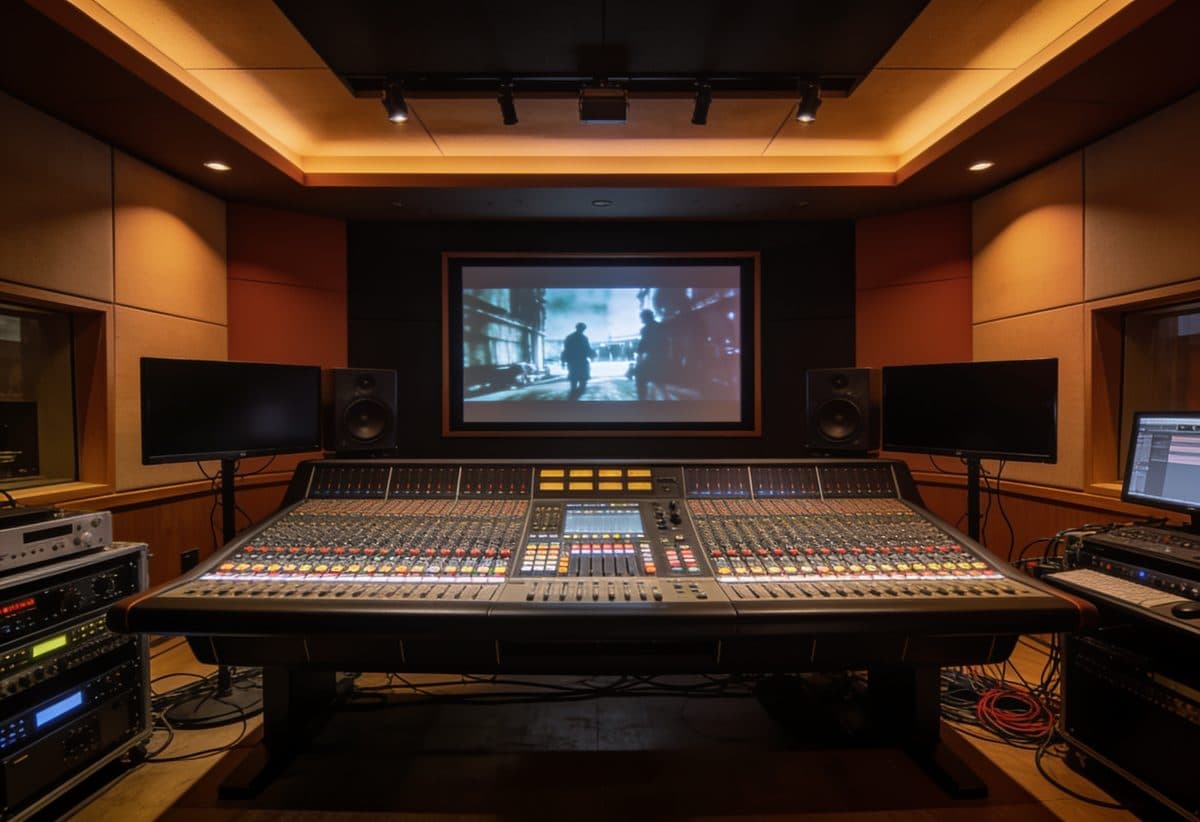
Centralised production and quality control
Multi-language dubbing multiplies deadlines, technical specs and approval rounds, and splitting it across local suppliers multiplies the risk of one version going wrong unnoticed.
We keep the whole release inside one workflow, with every version passing linguistic and technical QA — including sync and levels against picture — before delivery.
You receive mix-ready files for every market, consistent, cleared and on the agreed schedule.


Trusted to deliver by the world top brands


What our happy customers say
We have used GoLocalise on a regular basis for projects in a number of languages. The service we receive is great. The team is always friendly and professional. The voiceovers we receive are of a very high quality and the turnaround is extremely quick. We are very happy to recommend GoLocalise to other businesses.

We’ve worked with the GoLocalise team on countless video projects and have always had the same consistent, great experience. Not only are they responsive and quick on turnaround, I can always trust the VO will be done right – they are always 100% clear with communication and ensure their talent is prepared to record by asking necessary questions upfront before recording. Highly recommended and will definitely work with them on future projects.
It was a pleasure to work with David and the team at GoLocalise. David gave me lots of help and advice, guiding me through my first subtitling project. He really knows his stuff! The experience was completely pain-free. I would not hesitate to recommend GoLocalise – outstanding work at a good price.

They’re reliable, adaptive and obsessed with quality. And while you can never be 100% guaranteed of perfection, you can be sure GoLocalise will go the extra mile to get it right every time. Whether that’s hiring extra resources, hopping on multiple calls or even changing their internal processes, they’ll do what it takes. We’ve worked with them now for over to 5 years and we are truly thankful to have such a strong localisation partner for our business.
Other movie voice over services
Dubbing is one part of releasing a film internationally. If your project needs more than a dub, these are the two places to look next.
Movie voice over
The hub for all our film voice work — narration, documentary and off-screen voices, with guidance on which service a project actually needs.
Find out moreMovie trailer voice over
Epic, dramatic and comedic trailer reads for theatrical trailers, teasers and TV spots, mixed to campaign spec.
Find out moreSubtitling services
Broadcast-standard subtitles and captions in SRT, VTT, STL and TTML — often commissioned alongside a dub for the same release.
Find out moreFAQs
Movie dubbing is the process of replacing a film's original dialogue with a performance in another language, recorded to match the timing and, where required, the lip movements of the actors on screen. It involves translating and adapting the script so it fits the picture, casting voices against the original performances, directing the sessions, then syncing and mixing the result into the film's final audio.
Not sure where to start?
We guide you from brief to final delivery.
Voice over, subtitling, and localisation — all in one place.
Simple, reliable, and built around you.
Professional voice over services for your audio and video productions
Voice over

- State-of-the-art studios
- Neumann microphones
- On-hand sound engineers
- 1,000+ voice actors
Translation

- 600+ languages covered
- Tailored to your needs
- Stringent quality control
- Dedicated project managers
Subtitling

- Experienced subtitlers
- Industry-standard software
- Burn-in and graphic editing
- Open and closed captions
Transcription

- Improve accessibility
- Reach a wider audience
- Boost SEO and video views
- Maximise video engagement